
Adult ADHD Medication Side Effects in Pennsylvania and Delaware: What to Track and When to Follow Up
Starting ADHD medication can bring questions about side effects, sleep, appetite, mood, focus, and timing. Learn what adults in Pennsylvania and Delaware should track and when to follow up with an ADHD medication management provider.
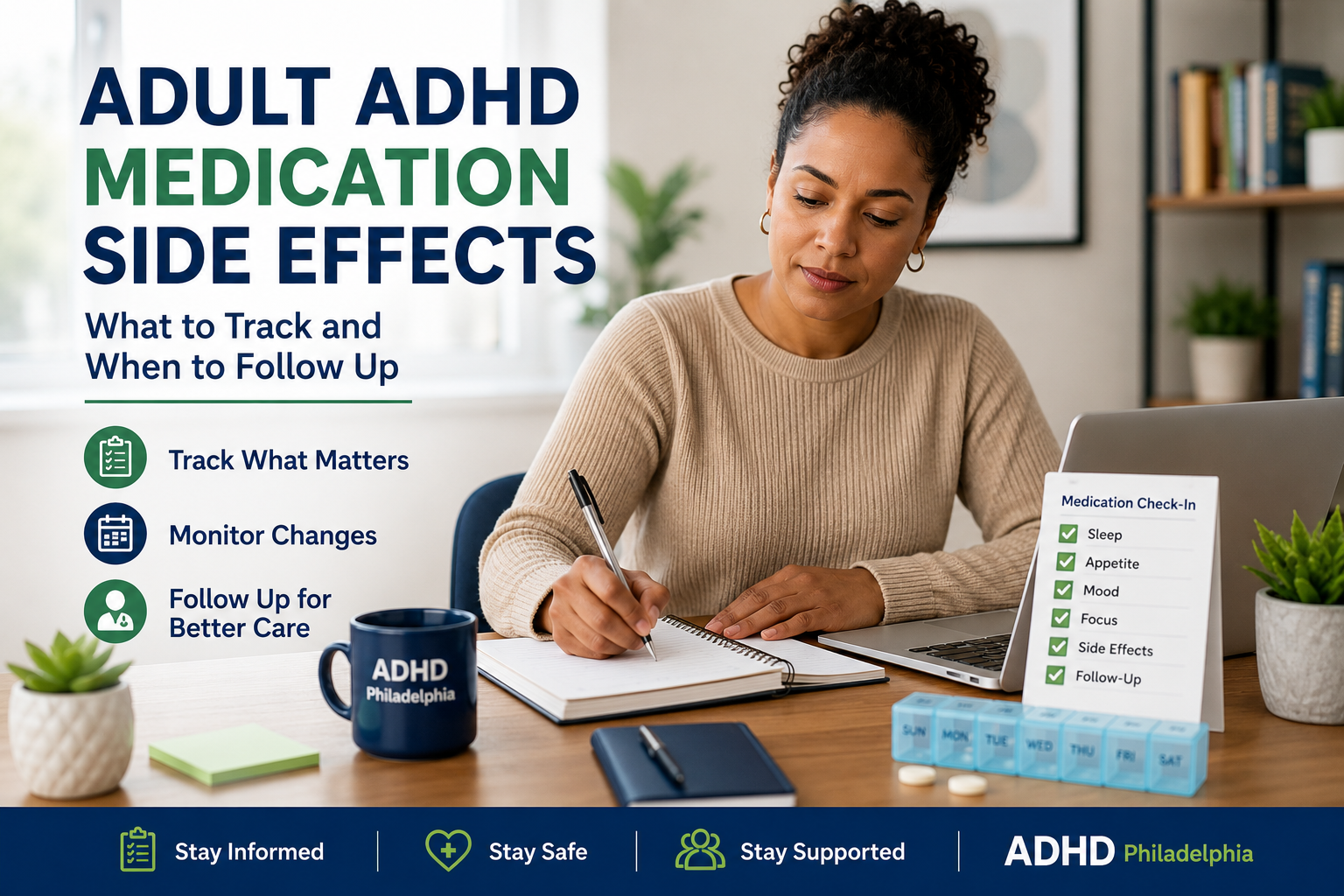
Starting ADHD medication can feel hopeful, but it can also bring questions.
Is this side effect normal?
How long should I wait before saying something?
Is the medication working, or am I just feeling different?
Should I track sleep, appetite, mood, focus, or blood pressure?
Adult ADHD medication management should not be a guessing game. Side effects, benefits, timing, and daily functioning all matter. The more clearly you can describe your experience, the easier it is for your provider to adjust the treatment plan safely and thoughtfully.
At ADHD Philadelphia, we provide ADHD treatment and medication management for adults in Pennsylvania and Delaware. The goal is not just to start medication. The goal is to monitor how treatment affects your real life.
Why Side Effect Tracking Matters
ADHD medication can help some adults improve focus, task initiation, follow-through, and daily functioning. But medication response is not the same for everyone.
Some adults notice improvement quickly.
Some need dose adjustments.
Some need a different medication.
Some experience side effects that need to be addressed.
Some find that medication helps focus but does not fully solve overwhelm, procrastination, routines, or emotional regulation.
Tracking side effects helps your provider understand the difference between a medication that is helping, a dose that needs adjustment, and a treatment plan that may need to change.
If you are just beginning treatment, you may want to first read Adult ADHD Medication Management in Pennsylvania and Delaware: What to Know Before Starting Treatment.
Common ADHD Medication Side Effects Adults May Notice
Side effects can vary depending on the medication, dose, timing, health history, sleep, nutrition, and other medications.
Adults may want to track changes in:
Sleep
Appetite
Headaches
Dry mouth
Stomach discomfort
Nausea
Anxiety
Irritability
Mood changes
Feeling emotionally flat
Feeling overstimulated
Heart rate or blood pressure concerns
Medication wearing off too early
Medication lasting too long
Fatigue or tiredness
Rebound symptoms later in the day
Not every person will experience these concerns. Some adults tolerate medication well. Others need adjustments. The important point is that side effects should be discussed, not ignored.
Side Effects Do Not Always Mean Treatment Has Failed
Many adults worry that reporting side effects means they will lose access to care or that medication will automatically be stopped.
That is not the goal of good follow-up care.
Side effects are clinical information. They help guide the next step.
For example:
If medication works but wears off too early, timing may need to be reviewed.
If medication helps focus but disrupts sleep, the dose or schedule may need adjustment.
If appetite is affected, meal timing and medication timing may need discussion.
If anxiety increases, the provider may need to look at dose, medication type, sleep, caffeine, anxiety history, or other factors.
If focus improves but emotional regulation does not, treatment may need to include therapy-informed strategies or executive function support.
This is why adult ADHD medication follow-up care is so important after medication starts.
What to Track During the First Few Weeks
You do not need a complicated spreadsheet.
A simple note in your phone can be enough.
Try tracking:
What time you take the medication
Whether you ate before taking it
When you first notice benefit
When the benefit seems strongest
When it wears off
Your focus level
Task completion
Mood
Anxiety
Irritability
Sleep quality
Appetite
Headaches or stomach discomfort
Any missed doses
Any unusual symptoms
One useful format is:
“Medication taken at 8 AM. Focus improved from 9 AM to 1 PM. Appetite lower at lunch. Felt irritable around 3 PM. Slept okay.”
That kind of detail can help your provider make better treatment decisions than a general statement like, “I think it works sometimes.”
Sleep Is One of the Most Important Things to Track
Sleep can strongly affect ADHD symptoms.
Poor sleep can worsen attention, memory, irritability, motivation, emotional regulation, and follow-through. It can also make it harder to know whether medication is helping.
When tracking sleep, pay attention to:
What time you fall asleep
How often you wake up
Whether you feel rested
Whether medication seems to interfere with sleep
Whether caffeine, stress, screen time, or schedule changes may be contributing
If sleep gets worse after starting or changing medication, bring that up during follow-up care.
Appetite and Nutrition Matter Too
Some ADHD medications can affect appetite.
Adults may notice they are less hungry during the day, skipping meals, or eating very little until evening. This can lead to headaches, irritability, fatigue, or a medication “crash” later in the day.
Helpful things to track include:
Breakfast before medication
Lunch appetite
Dinner appetite
Hydration
Headaches
Energy dips
Irritability later in the day
You do not have to solve this alone. Bring the pattern to your provider so the treatment plan can be reviewed.
Mood, Anxiety, and Emotional Changes Should Be Discussed
Adult ADHD can overlap with anxiety, depression, trauma-related stress, and burnout. Medication can sometimes improve emotional regulation, but some adults may notice anxiety, irritability, or feeling unlike themselves.
Track changes such as:
Feeling calmer
Feeling more anxious
Feeling emotionally flat
Feeling more irritable
Feeling more impatient
Mood swings
Increased restlessness
Changes in motivation
A thoughtful adult ADHD diagnosis process and ongoing monitoring can help clarify whether symptoms are related to ADHD, medication response, another mental health concern, sleep, stress, or a combination of factors.
Stimulant Medication Side Effect Monitoring
Stimulant medications may be helpful for some adults with ADHD, but they require careful monitoring.
At ADHD Philadelphia, adults are encouraged to review the Medication Management & Stimulant Treatment Policy so expectations are clear before and during treatment.
Monitoring may include discussion of:
Benefits
Side effects
Sleep
Appetite
Mood
Blood pressure or heart rate concerns
Medication timing
Refill expectations
Safe storage
Substance use considerations
Misuse or diversion risk
PDMP review when appropriate
Whether additional medical clearance, EKG, urine drug screening, or in-person care may be needed
This structure helps support safe prescribing and responsible care.
Non-Stimulant Medication Side Effect Monitoring
Non-stimulant ADHD medications may be a good option for some adults, especially when stimulants are not preferred, not tolerated, or not clinically appropriate.
Non-stimulants may work more gradually, so tracking may need to happen over several weeks rather than just a few days.
Adults may want to track:
Focus
Impulsivity
Mood
Sleep
Energy
Fatigue
Drowsiness
Digestive symptoms
Blood pressure or heart rate concerns, depending on medication
Overall functioning
If you are unsure about medication options, you may also want to read about stimulant vs non-stimulant ADHD medications.
When to Contact Your Provider
You should contact your provider if side effects are uncomfortable, persistent, worsening, or interfering with daily functioning.
You should also reach out if:
You feel significantly more anxious or irritable
Sleep becomes difficult
Appetite changes are affecting nutrition
You feel emotionally unlike yourself
Medication seems too strong
Medication does not seem to help
Medication wears off too early
You are unsure whether symptoms are side effects or ADHD symptoms
You accidentally take medication differently than prescribed
You have concerns about safe use
If symptoms feel urgent, severe, or unsafe, seek immediate medical help or emergency care.
ADHD Medication Side Effect Support in Pennsylvania
Adults in Pennsylvania may seek ADHD medication support when they are starting treatment, changing doses, experiencing side effects, or wondering whether medication is helping enough.
Whether you live in Philadelphia, Bala Cynwyd, Pittsburgh, Allentown, Reading, Erie, Harrisburg, Lancaster, West Chester, Bryn Mawr, Delaware County, or elsewhere in Pennsylvania, ADHD medication management should include structured follow-up and clear communication.
If you are still at the beginning of care, you may want to review adult ADHD testing in Pennsylvania and Delaware before starting treatment.
ADHD Medication Side Effect Support in Delaware
Adults in Delaware may also need support with ADHD medication monitoring, side effects, and treatment adjustments.
If you live in Wilmington, Newark, Dover, Middletown, Bear, Smyrna, Milford, Seaford, Rehoboth Beach, or elsewhere in Delaware, follow-up care can help determine whether treatment is improving daily life safely and effectively.
You can review ADHD Philadelphia’s Pennsylvania and Delaware ADHD locations to learn more about service areas.
Treatment Should Be Monitored, Not Rushed
ADHD medication can be helpful, but good care requires more than a prescription.
A strong treatment plan should include education, side effect monitoring, follow-up appointments, safe prescribing practices, and strategies for daily functioning.
If you are building a broader plan, you may also find it helpful to read Adult ADHD Treatment Plans in Pennsylvania and Delaware: Medication, Therapy, and Executive Function Support.
You deserve ADHD care that is thoughtful, structured, and responsive to your actual experience.
Book Now: Adult ADHD Medication Management in Pennsylvania and Delaware
ADHD Philadelphia provides adult ADHD testing, diagnosis, treatment, and medication management for adults in Pennsylvania and Delaware.
If you are starting ADHD medication, experiencing side effects, or wondering whether your current treatment plan is working, the next step is to schedule an appointment.
Schedule an adult ADHD evaluation or treatment appointment today.
Educational content only. This blog is not medical advice, not a diagnosis, and not a substitute for individualized care. If you are in crisis or feel unsafe, call 988 or go to the nearest emergency room.

Adult ADHD Medication Follow-Up Care in Pennsylvania and Delaware: Why Monitoring Matters
Starting ADHD medication is not the finish line. Follow-up care helps adults in Pennsylvania and Delaware monitor benefits, side effects, dose response, sleep, appetite, and daily functioning so ADHD treatment can stay safe, structured, and individualized.

Adult ADHD Medication Follow-Up Care in Pennsylvania and Delaware: Why Monitoring Matters
Starting ADHD medication is not the finish line.
For many adults, it is the beginning of a more structured treatment process. The first prescription is only one part of care. Follow-up appointments help determine whether the medication is working, whether the dose is appropriate, whether side effects are manageable, and whether the treatment plan is actually improving daily life.
At ADHD Philadelphia, we provide ADHD treatment and medication management for adults in Pennsylvania and Delaware. The goal is not just to start medication. The goal is to monitor treatment carefully, adjust when needed, and help adults function with more clarity, consistency, and confidence.
Why Follow-Up Care Matters After Starting ADHD Medication
ADHD treatment should be measured by more than whether you “feel something.”
The real question is whether treatment is helping you function better in your actual life.
Follow-up care gives you and your provider a chance to look at:
Focus
Task initiation
Follow-through
Time management
Emotional regulation
Sleep
Appetite
Anxiety or irritability
Work or school performance
Home responsibilities
Side effects
How long the medication lasts
Whether the medication wears off too early or too late
Whether the treatment plan still fits your goals
This is especially important because adult ADHD affects more than attention. It can affect planning, prioritizing, starting tasks, finishing tasks, remembering responsibilities, managing emotions, and staying consistent when life gets complicated.
If you are still learning about treatment options, you may want to first read Adult ADHD Medication Management in Pennsylvania and Delaware: What to Know Before Starting Treatment.
Medication Response Can Change Over Time
Some adults notice improvement quickly after starting ADHD medication. Others need time, dose adjustments, or a different medication approach.
A medication may help with focus but not task initiation.
It may improve work performance but interfere with sleep.
It may reduce procrastination but increase appetite suppression.
It may work well in the morning but fade too early in the afternoon.
It may help attention but not fully address overwhelm, anxiety, or emotional reactivity.
That does not always mean treatment failed. It may mean the plan needs careful adjustment.
This is why follow-up appointments are so important. ADHD medication management is a process, not a one-time decision.
What Happens During an ADHD Medication Follow-Up Appointment?
A follow-up appointment is usually focused on how treatment is working in daily life.
Your provider may ask questions such as:
What has improved since starting medication?
What has not improved?
Are you starting tasks more easily?
Are you finishing more of what you begin?
Are you less forgetful?
Are you managing time better?
How is your sleep?
How is your appetite?
Are you feeling more anxious, irritable, or emotionally flat?
How long does the medication seem to last?
Are there any side effects?
Are there concerns about misuse, overuse, or taking medication differently than prescribed?
Follow-up care should feel collaborative. You should be able to talk honestly about what is helping, what is not helping, and what feels uncomfortable.
Side Effects Should Be Discussed Early
Many adults worry that if they report side effects, their provider will immediately stop treatment. But side effects are exactly the kind of information that should be discussed during follow-up.
Common medication-related concerns may include:
Appetite changes
Sleep difficulty
Headaches
Dry mouth
Stomach discomfort
Increased anxiety
Irritability
Feeling too activated
Feeling emotionally blunted
Medication wearing off too soon
Medication lasting too long
Changes in blood pressure or heart rate
Not every person experiences side effects, and side effects vary by medication and individual history. The point of follow-up care is to identify concerns early and adjust thoughtfully when needed.
Stimulant Medication Follow-Up Care
Stimulant medications can be helpful for some adults with ADHD, but they require structured monitoring.
At ADHD Philadelphia, adults are encouraged to review the Medication Management & Stimulant Treatment Policy so expectations are clear before and during treatment.
Stimulant follow-up care may include discussion of:
Medication effectiveness
Duration of benefit
Side effects
Sleep and appetite
Blood pressure or heart rate concerns
Refill timing
Safe storage
Controlled-substance expectations
PDMP review when appropriate
Medication misuse or diversion risk
Whether an in-person visit, EKG, urine drug screen, or additional medical clearance may be needed
This kind of structure is not meant to punish patients. It is meant to support safe, responsible prescribing.
Non-Stimulant Medication Follow-Up Care
Non-stimulant ADHD medications may be appropriate for some adults, especially when stimulants are not preferred, not tolerated, or not clinically appropriate.
Non-stimulants may take longer to show full benefit. Because of that, follow-up care often focuses on gradual symptom change, side effects, mood, sleep, energy, and whether the medication is helping enough over time.
Adults who are unsure about medication options may also find it helpful to read about stimulant vs non-stimulant ADHD medications.
The right medication is not always the one that works fastest. The right medication is the one that fits your symptoms, health history, treatment goals, and safety needs.
What to Track Between ADHD Medication Appointments
You do not need a complicated system to track medication response.
A simple note on your phone or planner can be enough.
Try tracking:
What time you take the medication
When it starts helping
When it seems to wear off
Focus level
Task completion
Mood
Anxiety
Sleep
Appetite
Side effects
Missed doses
Work or school functioning
Home responsibilities
This gives your provider more useful information than trying to remember everything during the appointment.
A simple sentence can help:
“Medication helped most with focus from 9 AM to 2 PM, but I felt irritable when it wore off.”
That kind of information can guide treatment more effectively.
Follow-Up Care Helps Separate ADHD From Other Concerns
ADHD rarely exists in isolation.
Some adults also experience anxiety, depression, trauma-related stress, sleep problems, substance use concerns, burnout, or medical conditions that affect energy and attention.
Follow-up care helps your provider understand whether ADHD medication is improving the main symptoms or whether another concern also needs attention.
This matters because difficulty focusing is not always only ADHD. A thoughtful adult ADHD diagnosis process and ongoing follow-up can help clarify the bigger picture.
ADHD Follow-Up Care in Pennsylvania
Adults in Pennsylvania may seek ADHD follow-up care when they have started treatment but still need monitoring, dose adjustment, support with side effects, or help understanding whether medication is working.
Whether you live in Philadelphia, Bala Cynwyd, Pittsburgh, Allentown, Reading, Erie, Harrisburg, Lancaster, West Chester, or another part of Pennsylvania, ADHD care should be structured and individualized.
If you are at the beginning of the process, you may also want to review adult ADHD testing in Pennsylvania and Delaware before starting treatment.
ADHD Follow-Up Care in Delaware
Adults in Delaware also benefit from structured ADHD follow-up care after starting medication.
If you live in Wilmington, Newark, Dover, Middletown, Bear, Milford, Smyrna, or elsewhere in Delaware, follow-up appointments can help determine whether treatment is improving daily functioning and whether any changes are needed.
You can also review ADHD Philadelphia’s Pennsylvania and Delaware ADHD locations to learn more about service areas.
Follow-Up Care Is Part of Taking ADHD Seriously
Many adults wait years before seeking ADHD treatment.
By the time they finally start, they may hope one appointment or one medication will fix everything quickly. But meaningful ADHD care usually works best when it is structured, monitored, and adjusted over time.
Follow-up appointments help turn treatment into a plan.
They help answer:
Is this working?
Is this safe?
Is this dose right?
Are side effects manageable?
Is daily functioning improving?
Do we need to change the approach?
What else would help besides medication?
You deserve care that does more than hand you a prescription. You deserve care that helps you understand your symptoms, monitor your progress, and move forward with support.
Book Now: Adult ADHD Follow-Up Care in Pennsylvania and Delaware
ADHD Philadelphia provides adult ADHD testing, diagnosis, treatment, and medication management for adults in Pennsylvania and Delaware.
If you are starting ADHD treatment, considering medication, or need structured follow-up care, the next step is to schedule an appointment.
Schedule an adult ADHD evaluation or treatment appointment today.
Educational content only. This blog is not medical advice, not a diagnosis, and not a substitute for individualized care. If you are in crisis or feel unsafe, call 988 or go to the nearest emergency room.

Adult ADHD Medication Management in Pennsylvania and Delaware: What to Know Before Starting Treatment
Thinking about ADHD treatment? Learn what adult ADHD medication management in Pennsylvania and Delaware should include, from diagnosis and treatment planning to side effects, follow-up care, and safe prescribing practices.

Starting ADHD treatment can bring a lot of questions. Thoughtful medication management can help adults in Pennsylvania and Delaware move forward with clarity and support.
Starting ADHD treatment can bring up a lot of questions.
Many adults wonder if medication is the right choice, what the evaluation process looks like, whether stimulants are safe, what side effects to expect, and how follow-up care works. Some people feel hopeful. Others feel nervous. Many feel both at the same time.
If you are considering ADHD treatment, it helps to understand what thoughtful medication management should look like.
At ADHD Philadelphia, we provide ADHD treatment and medication management for adults in Pennsylvania and Delaware. The goal is not just to write a prescription. The goal is to understand your symptoms, review your history, discuss risks and benefits, and create a plan that supports your daily functioning.
Why Adults Consider ADHD Medication Management
Adults often seek ADHD treatment because symptoms continue to affect work, school, relationships, home responsibilities, or emotional well-being.
You may be thinking about treatment if you struggle with:
Difficulty starting tasks
Trouble finishing what you begin
Poor time management
Disorganization
Forgetfulness
Emotional overwhelm
Restlessness
Difficulty following through
Chronic procrastination
Trouble managing competing responsibilities
For many adults, medication management is considered after adult ADHD testing in Pennsylvania and Delaware has helped clarify that ADHD may be part of the picture.
Medication Is Only One Part of ADHD Treatment
Medication can be helpful, but it is not the only part of treatment.
Some adults benefit from stimulant medication. Others may do better with non-stimulant options. Some people combine medication with therapy, coaching-style support, better sleep habits, executive function tools, calendar systems, and lifestyle changes.
A good treatment plan should fit the person, not force the person to fit the plan.
That is why a thoughtful adult ADHD diagnosis matters before treatment starts. Difficulty focusing can overlap with anxiety, depression, trauma, poor sleep, burnout, or other concerns, so the right treatment depends on understanding the full picture.
What to Expect Before Starting ADHD Medication
Before starting ADHD medication, a responsible provider should review several important areas with you.
This may include:
Current symptoms
Past mental health history
Medical history
Heart health history
Current medications
Substance use history
Sleep patterns
Anxiety or depression symptoms
Goals for treatment
Past experiences with ADHD medication, if any
A provider should also talk with you about the benefits, possible side effects, follow-up expectations, and safe use of medication.
If you are new to the process, it may help to review the ADHD Patient Journey so you know what to expect from consultation through treatment planning.
Common Questions Adults Ask About ADHD Medication
Adults often ask practical questions before starting treatment.
Will medication change my personality?
ADHD medication should not turn you into a different person. The goal is usually to improve focus, reduce impulsivity, support follow-through, and help daily tasks feel more manageable.
Are stimulants the only option?
No. Some adults use stimulant medications, while others use non-stimulant medications. Treatment depends on your symptoms, medical history, response pattern, and preferences.
What about side effects?
Possible side effects vary by medication and person. A provider should discuss possible appetite changes, sleep changes, anxiety, increased heart rate, headaches, irritability, or other side effects before treatment begins.
How often will I need follow-up?
Follow-up depends on the medication type, how stable symptoms are, and how your body responds. Medication management should include ongoing monitoring rather than a one-time decision.
What Safe ADHD Medication Management Should Include
Good ADHD medication management should be structured and clear.
It should include:
A confirmed or carefully considered diagnosis
Discussion of risks and benefits
Review of side effects
Monitoring for effectiveness
Monitoring for misuse risk when appropriate
Clear follow-up expectations
Thoughtful dose adjustments when needed
Review of sleep, mood, appetite, and functioning
A plan for what to do if medication is not helping
At ADHD Philadelphia, we also encourage adults to review the Medication Management & Stimulant Treatment Policyso expectations are clear before treatment begins.
ADHD Treatment in Pennsylvania
Adults in Pennsylvania may seek medication management when ADHD symptoms continue to interfere with work performance, organization, time management, relationships, or daily functioning.
Whether you live in Philadelphia, Bala Cynwyd, Pittsburgh, Allentown, Harrisburg, Lancaster, West Chester, or elsewhere in Pennsylvania, treatment should feel structured, respectful, and individualized.
Medication is not about “trying harder.” It is about using evidence-based tools to support how your brain functions in real life.
If you are still early in the process, it may also help to understand how ADHD testing works for adults in Pennsylvania and Delaware.
ADHD Treatment in Delaware
Adults in Delaware also seek ADHD treatment when symptoms start interfering with work, school, parenting, organization, or emotional stability.
If you live in Wilmington, Newark, Dover, Middletown, Bear, or elsewhere in Delaware, medication management should include regular follow-up, symptom review, and a treatment plan designed around your needs.
You can also explore ADHD Philadelphia’s Pennsylvania and Delaware ADHD locations to learn more about the areas served.
Starting Treatment Does Not Mean You Failed
Many adults carry shame before starting medication.
They may think they should be able to manage on their own. They may worry treatment means they were not disciplined enough, strong enough, or organized enough.
But starting treatment does not mean you failed.
It means you are taking your symptoms seriously and giving yourself the opportunity to function with more clarity, consistency, and support.
If shame has kept you stuck, you may also relate to why adult ADHD makes follow-through so difficult even when you care.
When to Reach Out
You may want to reach out for ADHD treatment if:
You were recently diagnosed and want to discuss medication options
You were diagnosed in the past but never started treatment
You have been trying to manage symptoms on your own but still feel overwhelmed
You are curious whether medication could help you function more consistently
You want a more structured treatment plan
The right next step is not always medication, but a thoughtful evaluation and treatment discussion can help you make an informed decision.
Book Now: Adult ADHD Treatment in Pennsylvania and Delaware
ADHD Philadelphia provides adult ADHD testing, diagnosis, and treatment for adults in Pennsylvania and Delaware.
If you are thinking about starting ADHD treatment or medication management, the next step is to schedule an appointment and discuss your options.
Schedule an adult ADHD evaluation or treatment appointment today.
Educational content only. This blog is not medical advice, not a diagnosis, and not a substitute for individualized care. If you are in crisis or feel unsafe, call 988 or go to the nearest emergency room.

Why Adults With ADHD Struggle With Focus — and How Treatment Helps the Brain Work Better
Adults with ADHD often struggle with focus, organization, and motivation. Learn how ADHD affects the brain and how professional testing and treatment in Philadelphia and Delaware can help improve attention and daily functioning.
Why Adults With ADHD Struggle With Focus — and How Treatment Helps the Brain Work Better
Many adults believe their difficulty focusing is simply a matter of discipline or motivation. They may blame themselves for procrastination, unfinished projects, or feeling overwhelmed by tasks that seem easy for others.
However, for millions of adults, these struggles are not a character flaw. They are often symptoms of Attention-Deficit/Hyperactivity Disorder (ADHD) — a neurodevelopmental condition that affects how the brain regulates attention, motivation, and executive functioning.
Understanding what is happening in the brain can help people realize that effective treatment is available and that improvement is possible.
ADHD Is a Brain Regulation Condition
ADHD affects the brain systems responsible for executive functioning, which includes:
Sustaining attention
Organizing tasks
Managing time
Prioritizing responsibilities
Regulating impulses
Maintaining motivation
These skills rely heavily on activity in the prefrontal cortex, a region of the brain responsible for planning, decision-making, and attention regulation.
Research shows that people with ADHD often experience differences in dopamine and norepinephrine signaling within these brain networks, which can make it more difficult to maintain consistent attention and motivation.
This means a person with ADHD can focus, but often struggles to do so when they need to, for as long as they need to, or on tasks that are not immediately rewarding. manual-executive-function-adhd-…
Common Signs of Undiagnosed Adult ADHD
Many adults do not realize their symptoms may be related to ADHD. Some of the most common experiences include:
• Difficulty finishing projects
• Losing focus during conversations
• Forgetting appointments or deadlines
• Feeling overwhelmed by organization tasks
• Procrastinating even on important responsibilities
• Struggling with time management
• Frequently switching between tasks without completing them
Because ADHD often persists from childhood into adulthood, many people have lived with these challenges for years without realizing there may be an underlying explanation.
Why ADHD Often Goes Undiagnosed in Adults
Adult ADHD is commonly overlooked for several reasons:
1️⃣ Symptoms may have been misunderstood during childhood
2️⃣ Adults develop coping strategies that mask symptoms
3️⃣ Many people assume ADHD only affects children
4️⃣ Symptoms overlap with stress, anxiety, or depression
As a result, adults may struggle silently while assuming their challenges are simply part of their personality.
The Good News: ADHD Is Treatable
The encouraging reality is that ADHD is one of the most treatable conditions in mental health.
Treatment may include:
Evidence-based medication options
Behavioral strategies
Executive function skill development
Structured routines and planning systems
Stimulant and non-stimulant medications are among the most researched and effective treatments available for ADHD when prescribed and monitored appropriately. manual-advances-management-adhd
Many adults experience significant improvement in focus, productivity, and overall quality of life once treatment begins.
ADHD Testing and Treatment in Pennsylvania and Delaware
At ADHDPhiladelphia.com, we specialize in evaluating and treating adult ADHD through a structured, professional process designed to help individuals better understand their symptoms and develop an effective treatment plan.
Services include:
Adult ADHD evaluation
Medication management when appropriate
Ongoing monitoring and follow-up care
Personalized treatment planning
Appointments begin through secure telehealth, allowing patients to receive care from the comfort of home.
When appropriate, in-person appointments may be scheduled after the initial telehealth visit.
When to Consider ADHD Testing
You may want to consider an evaluation if you regularly experience:
• Persistent difficulty focusing
• Chronic procrastination
• Trouble organizing tasks
• Problems finishing projects
• Frequent mental overwhelm
• Difficulty managing responsibilities
Seeking professional evaluation can provide clarity and help determine whether ADHD may be contributing to these challenges.
Moving Forward
If you believe ADHD may be affecting your focus or daily functioning, professional evaluation can provide answers and help guide effective treatment options.
You can learn more about testing and treatment options at: