Adult ADHD Medication Side Effects in Pennsylvania and Delaware: What to Track and When to Follow Up
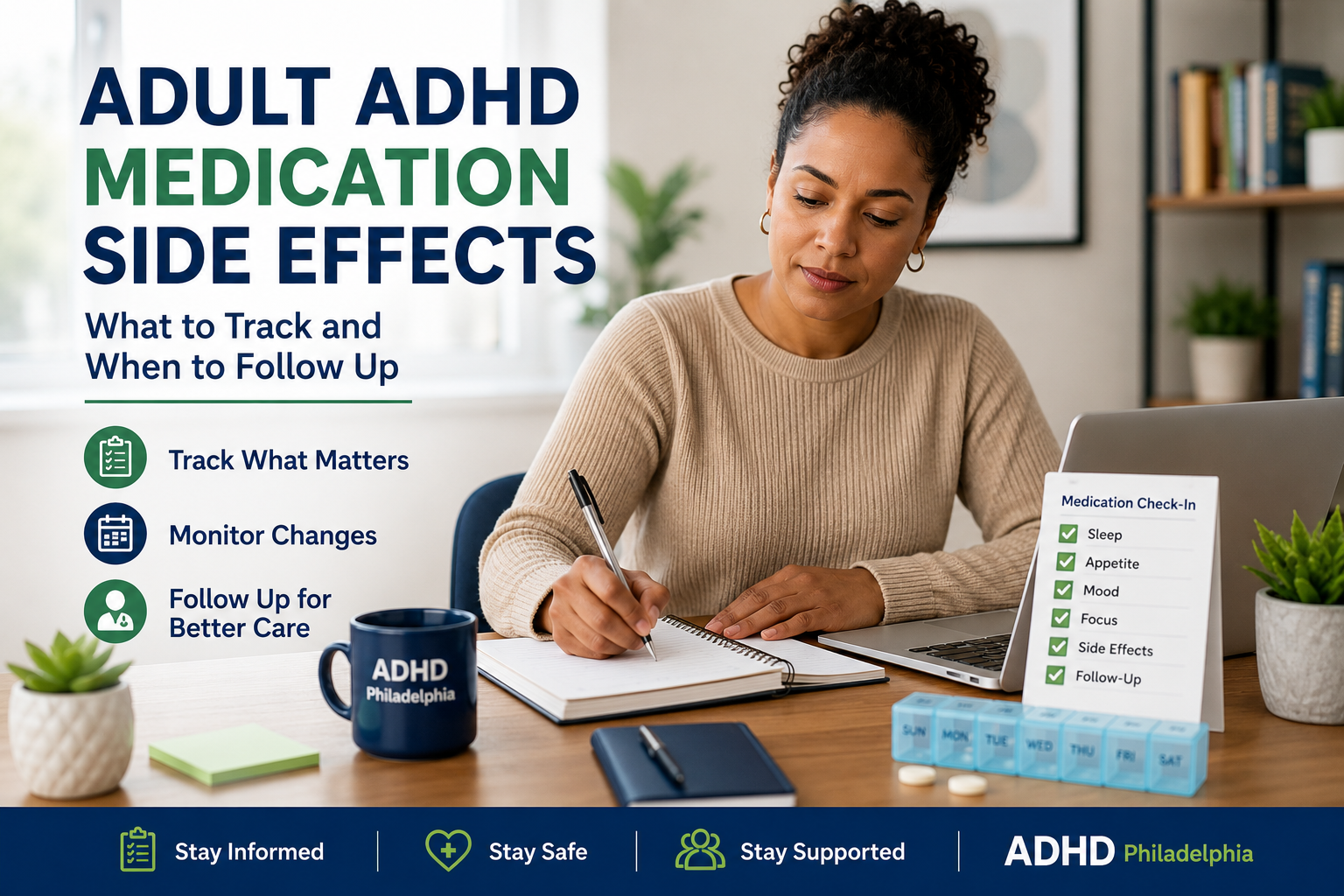
Starting ADHD medication can feel hopeful, but it can also bring questions.
Is this side effect normal?
How long should I wait before saying something?
Is the medication working, or am I just feeling different?
Should I track sleep, appetite, mood, focus, or blood pressure?
Adult ADHD medication management should not be a guessing game. Side effects, benefits, timing, and daily functioning all matter. The more clearly you can describe your experience, the easier it is for your provider to adjust the treatment plan safely and thoughtfully.
At ADHD Philadelphia, we provide ADHD treatment and medication management for adults in Pennsylvania and Delaware. The goal is not just to start medication. The goal is to monitor how treatment affects your real life.
Why Side Effect Tracking Matters
ADHD medication can help some adults improve focus, task initiation, follow-through, and daily functioning. But medication response is not the same for everyone.
Some adults notice improvement quickly.
Some need dose adjustments.
Some need a different medication.
Some experience side effects that need to be addressed.
Some find that medication helps focus but does not fully solve overwhelm, procrastination, routines, or emotional regulation.
Tracking side effects helps your provider understand the difference between a medication that is helping, a dose that needs adjustment, and a treatment plan that may need to change.
If you are just beginning treatment, you may want to first read Adult ADHD Medication Management in Pennsylvania and Delaware: What to Know Before Starting Treatment.
Common ADHD Medication Side Effects Adults May Notice
Side effects can vary depending on the medication, dose, timing, health history, sleep, nutrition, and other medications.
Adults may want to track changes in:
Sleep
Appetite
Headaches
Dry mouth
Stomach discomfort
Nausea
Anxiety
Irritability
Mood changes
Feeling emotionally flat
Feeling overstimulated
Heart rate or blood pressure concerns
Medication wearing off too early
Medication lasting too long
Fatigue or tiredness
Rebound symptoms later in the day
Not every person will experience these concerns. Some adults tolerate medication well. Others need adjustments. The important point is that side effects should be discussed, not ignored.
Side Effects Do Not Always Mean Treatment Has Failed
Many adults worry that reporting side effects means they will lose access to care or that medication will automatically be stopped.
That is not the goal of good follow-up care.
Side effects are clinical information. They help guide the next step.
For example:
If medication works but wears off too early, timing may need to be reviewed.
If medication helps focus but disrupts sleep, the dose or schedule may need adjustment.
If appetite is affected, meal timing and medication timing may need discussion.
If anxiety increases, the provider may need to look at dose, medication type, sleep, caffeine, anxiety history, or other factors.
If focus improves but emotional regulation does not, treatment may need to include therapy-informed strategies or executive function support.
This is why adult ADHD medication follow-up care is so important after medication starts.
What to Track During the First Few Weeks
You do not need a complicated spreadsheet.
A simple note in your phone can be enough.
Try tracking:
What time you take the medication
Whether you ate before taking it
When you first notice benefit
When the benefit seems strongest
When it wears off
Your focus level
Task completion
Mood
Anxiety
Irritability
Sleep quality
Appetite
Headaches or stomach discomfort
Any missed doses
Any unusual symptoms
One useful format is:
“Medication taken at 8 AM. Focus improved from 9 AM to 1 PM. Appetite lower at lunch. Felt irritable around 3 PM. Slept okay.”
That kind of detail can help your provider make better treatment decisions than a general statement like, “I think it works sometimes.”
Sleep Is One of the Most Important Things to Track
Sleep can strongly affect ADHD symptoms.
Poor sleep can worsen attention, memory, irritability, motivation, emotional regulation, and follow-through. It can also make it harder to know whether medication is helping.
When tracking sleep, pay attention to:
What time you fall asleep
How often you wake up
Whether you feel rested
Whether medication seems to interfere with sleep
Whether caffeine, stress, screen time, or schedule changes may be contributing
If sleep gets worse after starting or changing medication, bring that up during follow-up care.
Appetite and Nutrition Matter Too
Some ADHD medications can affect appetite.
Adults may notice they are less hungry during the day, skipping meals, or eating very little until evening. This can lead to headaches, irritability, fatigue, or a medication “crash” later in the day.
Helpful things to track include:
Breakfast before medication
Lunch appetite
Dinner appetite
Hydration
Headaches
Energy dips
Irritability later in the day
You do not have to solve this alone. Bring the pattern to your provider so the treatment plan can be reviewed.
Mood, Anxiety, and Emotional Changes Should Be Discussed
Adult ADHD can overlap with anxiety, depression, trauma-related stress, and burnout. Medication can sometimes improve emotional regulation, but some adults may notice anxiety, irritability, or feeling unlike themselves.
Track changes such as:
Feeling calmer
Feeling more anxious
Feeling emotionally flat
Feeling more irritable
Feeling more impatient
Mood swings
Increased restlessness
Changes in motivation
A thoughtful adult ADHD diagnosis process and ongoing monitoring can help clarify whether symptoms are related to ADHD, medication response, another mental health concern, sleep, stress, or a combination of factors.
Stimulant Medication Side Effect Monitoring
Stimulant medications may be helpful for some adults with ADHD, but they require careful monitoring.
At ADHD Philadelphia, adults are encouraged to review the Medication Management & Stimulant Treatment Policy so expectations are clear before and during treatment.
Monitoring may include discussion of:
Benefits
Side effects
Sleep
Appetite
Mood
Blood pressure or heart rate concerns
Medication timing
Refill expectations
Safe storage
Substance use considerations
Misuse or diversion risk
PDMP review when appropriate
Whether additional medical clearance, EKG, urine drug screening, or in-person care may be needed
This structure helps support safe prescribing and responsible care.
Non-Stimulant Medication Side Effect Monitoring
Non-stimulant ADHD medications may be a good option for some adults, especially when stimulants are not preferred, not tolerated, or not clinically appropriate.
Non-stimulants may work more gradually, so tracking may need to happen over several weeks rather than just a few days.
Adults may want to track:
Focus
Impulsivity
Mood
Sleep
Energy
Fatigue
Drowsiness
Digestive symptoms
Blood pressure or heart rate concerns, depending on medication
Overall functioning
If you are unsure about medication options, you may also want to read about stimulant vs non-stimulant ADHD medications.
When to Contact Your Provider
You should contact your provider if side effects are uncomfortable, persistent, worsening, or interfering with daily functioning.
You should also reach out if:
You feel significantly more anxious or irritable
Sleep becomes difficult
Appetite changes are affecting nutrition
You feel emotionally unlike yourself
Medication seems too strong
Medication does not seem to help
Medication wears off too early
You are unsure whether symptoms are side effects or ADHD symptoms
You accidentally take medication differently than prescribed
You have concerns about safe use
If symptoms feel urgent, severe, or unsafe, seek immediate medical help or emergency care.
ADHD Medication Side Effect Support in Pennsylvania
Adults in Pennsylvania may seek ADHD medication support when they are starting treatment, changing doses, experiencing side effects, or wondering whether medication is helping enough.
Whether you live in Philadelphia, Bala Cynwyd, Pittsburgh, Allentown, Reading, Erie, Harrisburg, Lancaster, West Chester, Bryn Mawr, Delaware County, or elsewhere in Pennsylvania, ADHD medication management should include structured follow-up and clear communication.
If you are still at the beginning of care, you may want to review adult ADHD testing in Pennsylvania and Delaware before starting treatment.
ADHD Medication Side Effect Support in Delaware
Adults in Delaware may also need support with ADHD medication monitoring, side effects, and treatment adjustments.
If you live in Wilmington, Newark, Dover, Middletown, Bear, Smyrna, Milford, Seaford, Rehoboth Beach, or elsewhere in Delaware, follow-up care can help determine whether treatment is improving daily life safely and effectively.
You can review ADHD Philadelphia’s Pennsylvania and Delaware ADHD locations to learn more about service areas.
Treatment Should Be Monitored, Not Rushed
ADHD medication can be helpful, but good care requires more than a prescription.
A strong treatment plan should include education, side effect monitoring, follow-up appointments, safe prescribing practices, and strategies for daily functioning.
If you are building a broader plan, you may also find it helpful to read Adult ADHD Treatment Plans in Pennsylvania and Delaware: Medication, Therapy, and Executive Function Support.
You deserve ADHD care that is thoughtful, structured, and responsive to your actual experience.
Book Now: Adult ADHD Medication Management in Pennsylvania and Delaware
ADHD Philadelphia provides adult ADHD testing, diagnosis, treatment, and medication management for adults in Pennsylvania and Delaware.
If you are starting ADHD medication, experiencing side effects, or wondering whether your current treatment plan is working, the next step is to schedule an appointment.
Schedule an adult ADHD evaluation or treatment appointment today.
Educational content only. This blog is not medical advice, not a diagnosis, and not a substitute for individualized care. If you are in crisis or feel unsafe, call 988 or go to the nearest emergency room.