Many adults living with ADHD eventually ask the same question:
“What medication is best for ADHD — stimulants or non-stimulants?”
Understanding the difference can help patients feel more informed and confident about treatment decisions.
At ADHDPhiladelphia.com, we work with adults across Pennsylvania and Delaware who are seeking clear information about ADHD medications and how they affect the brain.
The goal is always the same: help the brain regulate focus, motivation, and executive function more effectively.
Some adults seek treatment for anxiety before realizing their symptoms may actually be related to ADHD. Because the two conditions can overlap, it’s important to understand the difference. Our article on ADHD vs anxiety in adults explains how clinicians distinguish between these conditions.
How ADHD Affects the Brain
ADHD is a neurodevelopmental condition that affects how the brain regulates attention, organization, and impulse control.
The brain regions most involved include:
• Prefrontal cortex
• Anterior cingulate cortex
• Dopamine reward pathways
• Norepinephrine attention systems
These systems help regulate:
• focus
• motivation
• working memory
• task completion
• emotional regulation
When these systems are underactive or dysregulated, everyday tasks can feel significantly harder than they should.
Medication is one of the tools that can help restore more balanced signaling in these networks.
What Are Stimulant ADHD Medications?
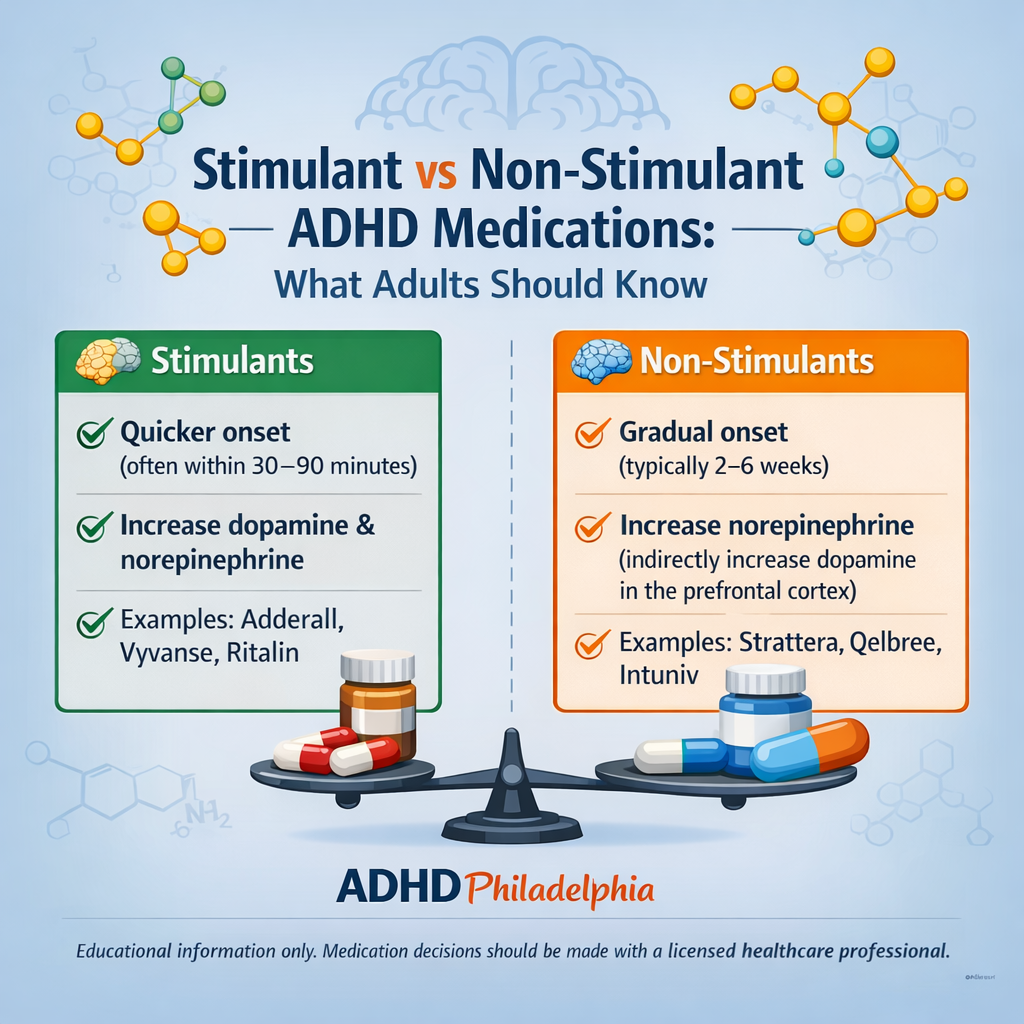
Stimulant medications are the most commonly prescribed treatment for ADHD.
They work by increasing the availability of dopamine and norepinephrine, two neurotransmitters that help regulate attention and motivation.
Common stimulant medications include:
• Adderall (amphetamine salts)
• Vyvanse (lisdexamfetamine)
• Ritalin (methylphenidate)
• Concerta (extended-release methylphenidate)
These medications help improve:
• sustained focus
• mental clarity
• task initiation
• impulse control
For many adults, stimulants work quickly and effectively and are often considered first-line treatment.
What Are Non-Stimulant ADHD Medications?
Non-stimulant medications are another option for treating ADHD.
They typically work more gradually by affecting norepinephrine signaling or other regulatory systems in the brain.
Examples include:
• Atomoxetine (Strattera)
• Guanfacine (Intuniv)
• Clonidine
• Certain antidepressants used off-label
Non-stimulants may be recommended when:
• stimulants cause side effects
• there is a medical reason stimulants are not appropriate
• patients prefer a non-stimulant option
• there is concern about misuse or dependence
These medications often take several weeks to reach full effectiveness.
How Doctors Decide Which Medication Is Best
Choosing the right ADHD medication is a personalized process.
Clinicians typically consider:
• symptom severity
• previous medication history
• sleep patterns
• anxiety or mood symptoms
• work demands
• medical history
The goal is to find a treatment plan that helps the brain function better while minimizing side effects.
ADHD Treatment Is More Than Medication
Medication can be a powerful tool, but it works best alongside other strategies:
• structured routines
• sleep optimization
• exercise
• ADHD coaching
• therapy when needed
Many adults experience meaningful improvement when treatment is individualized and monitored carefully.
ADHD Testing and Treatment in Pennsylvania and Delaware
If you’re an adult struggling with focus, procrastination, or mental overload, an ADHD evaluation may help provide answers.
At ADHDPhiladelphia.com, we provide:
✔ Adult ADHD evaluations
✔ Medication management
✔ Telehealth appointments across Pennsylvania and Delaware
✔ Ongoing treatment monitoring
Many adults discover that ADHD has been affecting their work, education, and daily life for years without realizing it.
The good news is that effective treatments are available.
Schedule an ADHD Evaluation
Learn more or schedule an appointment at:
https://www.ADHDPhiladelphia.com
—
Charles T
Psychiatric Nurse Practitioner
Adult ADHD Specialist