
Adult ADHD Medication Side Effects in Pennsylvania and Delaware: What to Track and When to Follow Up
Starting ADHD medication can bring questions about side effects, sleep, appetite, mood, focus, and timing. Learn what adults in Pennsylvania and Delaware should track and when to follow up with an ADHD medication management provider.
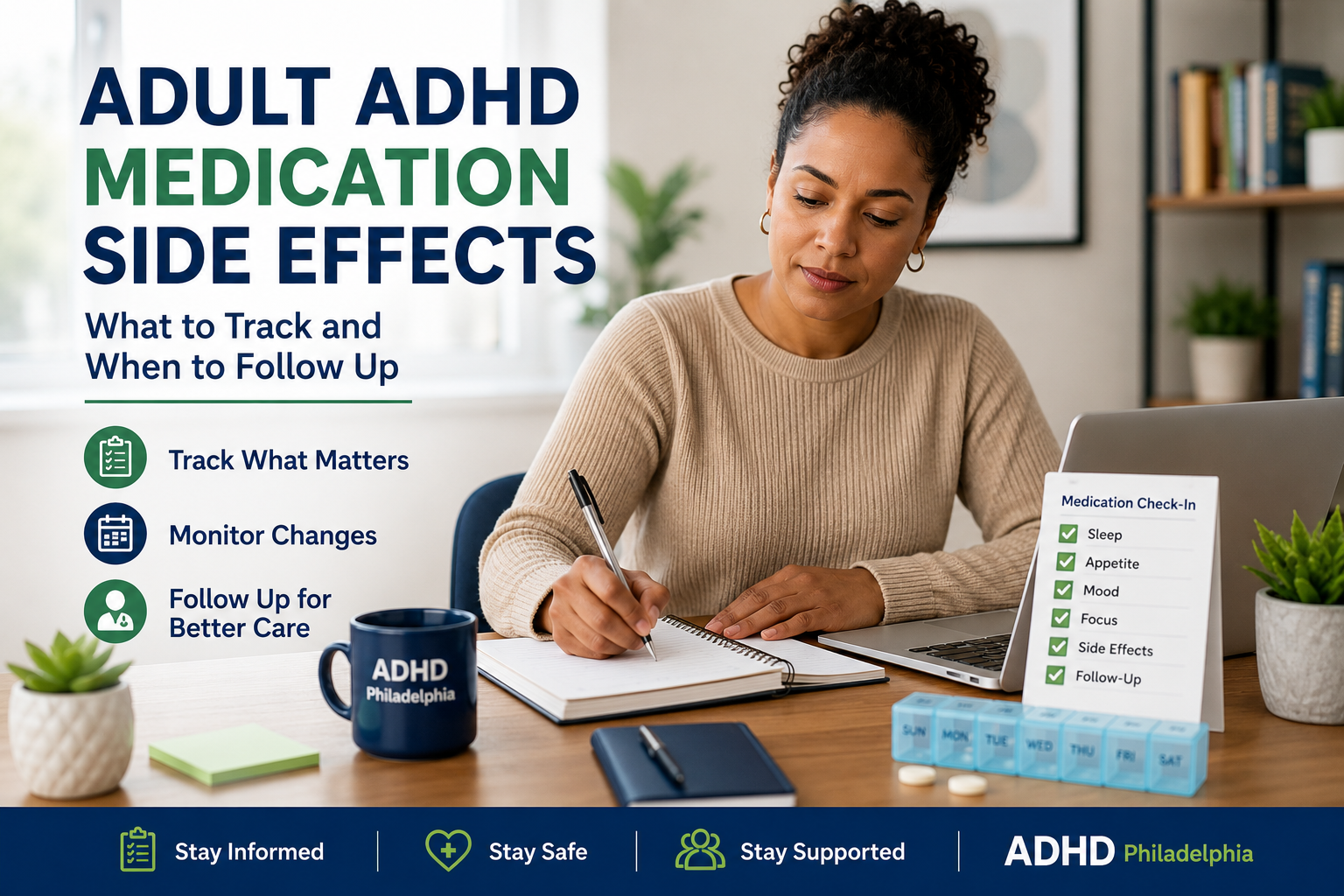
Starting ADHD medication can feel hopeful, but it can also bring questions.
Is this side effect normal?
How long should I wait before saying something?
Is the medication working, or am I just feeling different?
Should I track sleep, appetite, mood, focus, or blood pressure?
Adult ADHD medication management should not be a guessing game. Side effects, benefits, timing, and daily functioning all matter. The more clearly you can describe your experience, the easier it is for your provider to adjust the treatment plan safely and thoughtfully.
At ADHD Philadelphia, we provide ADHD treatment and medication management for adults in Pennsylvania and Delaware. The goal is not just to start medication. The goal is to monitor how treatment affects your real life.
Why Side Effect Tracking Matters
ADHD medication can help some adults improve focus, task initiation, follow-through, and daily functioning. But medication response is not the same for everyone.
Some adults notice improvement quickly.
Some need dose adjustments.
Some need a different medication.
Some experience side effects that need to be addressed.
Some find that medication helps focus but does not fully solve overwhelm, procrastination, routines, or emotional regulation.
Tracking side effects helps your provider understand the difference between a medication that is helping, a dose that needs adjustment, and a treatment plan that may need to change.
If you are just beginning treatment, you may want to first read Adult ADHD Medication Management in Pennsylvania and Delaware: What to Know Before Starting Treatment.
Common ADHD Medication Side Effects Adults May Notice
Side effects can vary depending on the medication, dose, timing, health history, sleep, nutrition, and other medications.
Adults may want to track changes in:
Sleep
Appetite
Headaches
Dry mouth
Stomach discomfort
Nausea
Anxiety
Irritability
Mood changes
Feeling emotionally flat
Feeling overstimulated
Heart rate or blood pressure concerns
Medication wearing off too early
Medication lasting too long
Fatigue or tiredness
Rebound symptoms later in the day
Not every person will experience these concerns. Some adults tolerate medication well. Others need adjustments. The important point is that side effects should be discussed, not ignored.
Side Effects Do Not Always Mean Treatment Has Failed
Many adults worry that reporting side effects means they will lose access to care or that medication will automatically be stopped.
That is not the goal of good follow-up care.
Side effects are clinical information. They help guide the next step.
For example:
If medication works but wears off too early, timing may need to be reviewed.
If medication helps focus but disrupts sleep, the dose or schedule may need adjustment.
If appetite is affected, meal timing and medication timing may need discussion.
If anxiety increases, the provider may need to look at dose, medication type, sleep, caffeine, anxiety history, or other factors.
If focus improves but emotional regulation does not, treatment may need to include therapy-informed strategies or executive function support.
This is why adult ADHD medication follow-up care is so important after medication starts.
What to Track During the First Few Weeks
You do not need a complicated spreadsheet.
A simple note in your phone can be enough.
Try tracking:
What time you take the medication
Whether you ate before taking it
When you first notice benefit
When the benefit seems strongest
When it wears off
Your focus level
Task completion
Mood
Anxiety
Irritability
Sleep quality
Appetite
Headaches or stomach discomfort
Any missed doses
Any unusual symptoms
One useful format is:
“Medication taken at 8 AM. Focus improved from 9 AM to 1 PM. Appetite lower at lunch. Felt irritable around 3 PM. Slept okay.”
That kind of detail can help your provider make better treatment decisions than a general statement like, “I think it works sometimes.”
Sleep Is One of the Most Important Things to Track
Sleep can strongly affect ADHD symptoms.
Poor sleep can worsen attention, memory, irritability, motivation, emotional regulation, and follow-through. It can also make it harder to know whether medication is helping.
When tracking sleep, pay attention to:
What time you fall asleep
How often you wake up
Whether you feel rested
Whether medication seems to interfere with sleep
Whether caffeine, stress, screen time, or schedule changes may be contributing
If sleep gets worse after starting or changing medication, bring that up during follow-up care.
Appetite and Nutrition Matter Too
Some ADHD medications can affect appetite.
Adults may notice they are less hungry during the day, skipping meals, or eating very little until evening. This can lead to headaches, irritability, fatigue, or a medication “crash” later in the day.
Helpful things to track include:
Breakfast before medication
Lunch appetite
Dinner appetite
Hydration
Headaches
Energy dips
Irritability later in the day
You do not have to solve this alone. Bring the pattern to your provider so the treatment plan can be reviewed.
Mood, Anxiety, and Emotional Changes Should Be Discussed
Adult ADHD can overlap with anxiety, depression, trauma-related stress, and burnout. Medication can sometimes improve emotional regulation, but some adults may notice anxiety, irritability, or feeling unlike themselves.
Track changes such as:
Feeling calmer
Feeling more anxious
Feeling emotionally flat
Feeling more irritable
Feeling more impatient
Mood swings
Increased restlessness
Changes in motivation
A thoughtful adult ADHD diagnosis process and ongoing monitoring can help clarify whether symptoms are related to ADHD, medication response, another mental health concern, sleep, stress, or a combination of factors.
Stimulant Medication Side Effect Monitoring
Stimulant medications may be helpful for some adults with ADHD, but they require careful monitoring.
At ADHD Philadelphia, adults are encouraged to review the Medication Management & Stimulant Treatment Policy so expectations are clear before and during treatment.
Monitoring may include discussion of:
Benefits
Side effects
Sleep
Appetite
Mood
Blood pressure or heart rate concerns
Medication timing
Refill expectations
Safe storage
Substance use considerations
Misuse or diversion risk
PDMP review when appropriate
Whether additional medical clearance, EKG, urine drug screening, or in-person care may be needed
This structure helps support safe prescribing and responsible care.
Non-Stimulant Medication Side Effect Monitoring
Non-stimulant ADHD medications may be a good option for some adults, especially when stimulants are not preferred, not tolerated, or not clinically appropriate.
Non-stimulants may work more gradually, so tracking may need to happen over several weeks rather than just a few days.
Adults may want to track:
Focus
Impulsivity
Mood
Sleep
Energy
Fatigue
Drowsiness
Digestive symptoms
Blood pressure or heart rate concerns, depending on medication
Overall functioning
If you are unsure about medication options, you may also want to read about stimulant vs non-stimulant ADHD medications.
When to Contact Your Provider
You should contact your provider if side effects are uncomfortable, persistent, worsening, or interfering with daily functioning.
You should also reach out if:
You feel significantly more anxious or irritable
Sleep becomes difficult
Appetite changes are affecting nutrition
You feel emotionally unlike yourself
Medication seems too strong
Medication does not seem to help
Medication wears off too early
You are unsure whether symptoms are side effects or ADHD symptoms
You accidentally take medication differently than prescribed
You have concerns about safe use
If symptoms feel urgent, severe, or unsafe, seek immediate medical help or emergency care.
ADHD Medication Side Effect Support in Pennsylvania
Adults in Pennsylvania may seek ADHD medication support when they are starting treatment, changing doses, experiencing side effects, or wondering whether medication is helping enough.
Whether you live in Philadelphia, Bala Cynwyd, Pittsburgh, Allentown, Reading, Erie, Harrisburg, Lancaster, West Chester, Bryn Mawr, Delaware County, or elsewhere in Pennsylvania, ADHD medication management should include structured follow-up and clear communication.
If you are still at the beginning of care, you may want to review adult ADHD testing in Pennsylvania and Delaware before starting treatment.
ADHD Medication Side Effect Support in Delaware
Adults in Delaware may also need support with ADHD medication monitoring, side effects, and treatment adjustments.
If you live in Wilmington, Newark, Dover, Middletown, Bear, Smyrna, Milford, Seaford, Rehoboth Beach, or elsewhere in Delaware, follow-up care can help determine whether treatment is improving daily life safely and effectively.
You can review ADHD Philadelphia’s Pennsylvania and Delaware ADHD locations to learn more about service areas.
Treatment Should Be Monitored, Not Rushed
ADHD medication can be helpful, but good care requires more than a prescription.
A strong treatment plan should include education, side effect monitoring, follow-up appointments, safe prescribing practices, and strategies for daily functioning.
If you are building a broader plan, you may also find it helpful to read Adult ADHD Treatment Plans in Pennsylvania and Delaware: Medication, Therapy, and Executive Function Support.
You deserve ADHD care that is thoughtful, structured, and responsive to your actual experience.
Book Now: Adult ADHD Medication Management in Pennsylvania and Delaware
ADHD Philadelphia provides adult ADHD testing, diagnosis, treatment, and medication management for adults in Pennsylvania and Delaware.
If you are starting ADHD medication, experiencing side effects, or wondering whether your current treatment plan is working, the next step is to schedule an appointment.
Schedule an adult ADHD evaluation or treatment appointment today.
Educational content only. This blog is not medical advice, not a diagnosis, and not a substitute for individualized care. If you are in crisis or feel unsafe, call 988 or go to the nearest emergency room.

Adult ADHD Treatment Plans in Pennsylvania and Delaware: Medication, Therapy, and Executive Function Support
Adult ADHD treatment is not one-size-fits-all. Learn how treatment plans for adults in Pennsylvania and Delaware may include medication management, therapy-informed support, executive function strategies, safe prescribing, and structured follow-up care.

Adult ADHD Treatment Plans in Pennsylvania and Delaware: Medication, Therapy, and Executive Function Support
Getting diagnosed with adult ADHD can bring relief, but it can also bring new questions.
What happens next?
Do I need medication?
Would therapy help?
What if I need better routines, structure, or executive function support?
How do I know if treatment is working?
Adult ADHD treatment is not one-size-fits-all. A good treatment plan should look at your symptoms, your life demands, your health history, your goals, and the supports you need to function more consistently.
At ADHD Philadelphia, we provide ADHD treatment and medication management for adults in Pennsylvania and Delaware. The goal is not simply to reduce symptoms on paper. The goal is to help you move through daily life with more clarity, follow-through, and confidence.
Adult ADHD Treatment Should Start With Clarity
Before treatment begins, it is important to understand what is actually causing the difficulty.
Many adults seek help because they struggle with focus, procrastination, time management, organization, forgetfulness, emotional overwhelm, or unfinished tasks. But these symptoms can overlap with anxiety, depression, trauma-related stress, sleep problems, burnout, substance use concerns, or medical issues.
That is why a careful adult ADHD diagnosis matters.
A thoughtful diagnostic process can help answer:
Are the symptoms consistent with ADHD?
Were symptoms present earlier in life?
Are symptoms affecting more than one area of life?
Are anxiety, depression, trauma, sleep, or stress also contributing?
What kind of treatment support would actually help?
If you are still early in the process, you may want to begin with adult ADHD testing in Pennsylvania and Delaware before starting treatment.
Medication Can Be One Part of Adult ADHD Treatment
For some adults, medication can be an important part of ADHD treatment.
Medication may help improve focus, reduce impulsivity, support task initiation, and make daily responsibilities feel more manageable. But medication should not be treated like a magic fix. It works best when it is part of a larger plan that includes monitoring, education, and realistic strategies.
A medication treatment plan should include discussion of:
Potential benefits
Possible side effects
Sleep
Appetite
Mood
Anxiety
Blood pressure or heart rate concerns
Medication duration
Follow-up expectations
Safe use and storage
What to do if the medication is not helping
Adults who are considering medication may find it helpful to review Adult ADHD Medication Management in Pennsylvania and Delaware: What to Know Before Starting Treatment.
Medication Follow-Up Is Part of the Treatment Plan
Starting medication is not the final step. Follow-up care helps determine whether treatment is working safely and effectively.
During follow-up appointments, your provider may ask:
Is your focus improving?
Are you starting tasks more easily?
Are you finishing more of what you begin?
How is your sleep?
How is your appetite?
Are there side effects?
Does the medication last long enough?
Are you more anxious, irritable, or emotionally flat?
Is daily functioning improving?
Do we need to adjust the plan?
If you recently started treatment or are thinking about medication, you may also want to read Adult ADHD Medication Follow-Up Care in Pennsylvania and Delaware: Why Monitoring Matters.
Therapy and Skills Support Can Help ADHD in Daily Life
Medication may help the brain access focus more effectively, but adults still need systems for real life.
Therapy-informed support and skills-based strategies can help adults understand patterns, reduce shame, and build more realistic ways to manage daily responsibilities.
This may include support with:
Task initiation
Planning
Prioritizing
Time awareness
Emotional regulation
Procrastination
Avoidance
Communication
Self-esteem
Stress management
Work routines
Home routines
For many adults, ADHD treatment is not only about paying attention. It is also about learning how to create structure that works with the brain instead of against it.
Executive Function Support Matters
Adult ADHD often affects executive functions. These are the brain-based skills that help with planning, organizing, starting tasks, shifting attention, remembering steps, regulating emotions, and following through.
You may have ADHD-related executive function struggles if you often think:
“I know what I need to do, but I cannot start.”
“I make plans but do not follow them.”
“I lose track of time constantly.”
“I forget things even when they matter.”
“I wait until the last minute even when I care.”
“I feel overwhelmed by simple tasks.”
“I can work under pressure, but I cannot stay consistent.”
This is why adult ADHD treatment should include more than symptom labels. It should help you identify the real-life points where your system breaks down.
If follow-through is one of your biggest struggles, you may also relate to why adult ADHD makes follow-through so difficult even when you care.
Stimulant and Non-Stimulant Medication Options
Some adults benefit from stimulant medications. Others may benefit from non-stimulant medications. Some adults cannot take stimulants, prefer not to take stimulants, or need a different approach because of side effects, medical history, anxiety, sleep problems, or substance use concerns.
The right option depends on the person.
Adults who are unsure about medication options may also want to read about stimulant vs non-stimulant ADHD medications.
A good medication discussion should include benefits, risks, side effects, expectations, alternatives, and follow-up.
Safe Prescribing Requires Structure
Safe ADHD medication management requires clear expectations.
This is especially true when stimulant medications are involved. Stimulants are controlled substances, which means careful monitoring and documentation are part of responsible care.
At ADHD Philadelphia, adults can review the Medication Management & Stimulant Treatment Policy so expectations are clear before starting or continuing medication treatment.
This type of structure may include:
Regular follow-up appointments
Medication response monitoring
Side effect review
PDMP review when appropriate
Substance use discussion
Safe storage discussion
Refill expectations
Urine drug screening when clinically appropriate
EKG or medical clearance when clinically appropriate
This is not about making care harder. It is about making care safer.
ADHD Treatment in Pennsylvania
Adults in Pennsylvania may seek ADHD treatment when symptoms are affecting work, school, parenting, relationships, organization, or daily functioning.
Whether you live in Philadelphia, Bala Cynwyd, Pittsburgh, Allentown, Reading, Erie, Harrisburg, Lancaster, West Chester, Bryn Mawr, Delaware County, or another part of Pennsylvania, ADHD treatment should be structured, respectful, and individualized.
A strong plan may include diagnosis, testing, medication management, therapy-informed support, executive function strategies, and follow-up care.
ADHD Treatment in Delaware
Adults in Delaware may also benefit from structured ADHD treatment when symptoms interfere with work, school, home responsibilities, or emotional stability.
If you live in Wilmington, Newark, Dover, Middletown, Bear, Smyrna, Milford, Seaford, Rehoboth Beach, or elsewhere in Delaware, treatment should focus on your real-life functioning, not just a checklist.
You can review ADHD Philadelphia’s Pennsylvania and Delaware ADHD locations to learn more about service areas.
Your Treatment Plan Should Fit Your Life
A good ADHD treatment plan should not make you feel judged, rushed, or misunderstood.
It should help answer:
What is ADHD affecting in my life?
What symptoms are most impairing?
What treatment options are appropriate?
What side effects or risks should I understand?
What routines or systems would help?
How will we know if treatment is working?
What should we monitor over time?
What is the next step?
You do not need a perfect plan on day one. You need a thoughtful starting point, honest follow-up, and support that can adjust as your needs become clearer.
Book Now: Adult ADHD Treatment in Pennsylvania and Delaware
ADHD Philadelphia provides adult ADHD testing, diagnosis, treatment, and medication management for adults in Pennsylvania and Delaware.
If you are ready to discuss ADHD treatment options, medication management, therapy-informed strategies, or executive function support, the next step is to schedule an appointment.
Schedule an adult ADHD evaluation or treatment appointment today.
Educational content only. This blog is not medical advice, not a diagnosis, and not a substitute for individualized care. If you are in crisis or feel unsafe, call 988 or go to the nearest emergency room.

ADHD Testing for Adults in Pennsylvania and Delaware: Why Summer Can Be the Time to Get Answers
Summer can make adult ADHD harder to ignore. When routines shift, travel increases, kids are home, and work schedules change, adults may notice more procrastination, overwhelm, forgetfulness, and difficulty following through. Learn how adult ADHD testing in Pennsylvania and Delaware can help you get clarity and support.

Summer can make adult ADHD symptoms more noticeable. Adult ADHD testing in Pennsylvania and Delaware can help you get clarity and support.
Summer can make adult ADHD harder to ignore.
For some adults, the structure of the school year, regular work routines, or predictable family schedules helps hold everything together. Then summer arrives. Kids are home. Vacations interrupt routines. Work schedules shift. Social events increase. Holiday weekends throw off sleep. Longer days can bring more stimulation, more decisions, and less structure.
For adults with ADHD, that change can feel like everything is suddenly harder.
You may notice more procrastination, more unfinished tasks, more emotional overwhelm, more missed details, or more difficulty getting back on track after interruptions. You may wonder, “Why can everyone else seem to manage this, but I keep falling behind?”
Sometimes the answer is not laziness. Sometimes it is not poor discipline. Sometimes it is untreated adult ADHD.
At ADHD Philadelphia, we provide adult ADHD testing in Pennsylvania and Delaware, diagnosis, and treatment for adults. If summer has made your symptoms more visible, this may be the right time to finally get answers.
Why Summer Can Make Adult ADHD More Noticeable
Adult ADHD often becomes more obvious when structure disappears.
During the year, you may rely on routines, deadlines, work expectations, school schedules, or outside pressure to stay organized. When summer changes that rhythm, the support system you were depending on may weaken.
You may notice:
You have trouble restarting tasks after interruptions.
You forget appointments, errands, bills, or messages.
You feel overwhelmed by simple planning.
You stay busy all day but do not finish what matters.
You avoid tasks until they become urgent.
You feel emotionally drained by noise, people, travel, or schedule changes.
You struggle to keep up with work while also managing family or social demands.
You feel guilty because you care deeply, but still cannot stay consistent.
This is one reason many adults begin looking for ADHD testing during stressful life transitions. ADHD may have been present for years, but symptoms can become harder to compensate for when life gets less predictable. If this sounds familiar, you may also relate to why adult ADHD makes follow-through so difficult even when you care.
Signs It May Be Time for Adult ADHD Testing
Adult ADHD testing may be helpful when symptoms are affecting your daily life, not just when you are occasionally distracted.
You may want to consider an ADHD evaluation if you often experience:
Difficulty starting tasks, even important ones.
Trouble finishing projects.
Chronic lateness or poor time awareness.
Disorganization at home, work, or school.
Forgetfulness with appointments, emails, texts, or responsibilities.
Difficulty focusing during conversations, meetings, reading, or paperwork.
Restlessness, racing thoughts, or feeling internally “driven.”
Impulsive decisions, spending, interrupting, or emotional reactions.
A long history of being told you are smart but inconsistent.
A pattern of anxiety, burnout, depression, or low self-esteem connected to unfinished responsibilities.
Many adults with ADHD have spent years blaming themselves. They may have been called lazy, careless, scattered, too sensitive, or unmotivated. A structured adult ADHD diagnosis can help separate character from symptoms and clarify whether ADHD may be part of the pattern.
ADHD Testing for Adults in Pennsylvania
If you live in Pennsylvania, adult ADHD testing can help clarify whether ADHD may be contributing to your struggles with attention, organization, follow-through, emotional regulation, or time management.
At ADHD Philadelphia, adult ADHD testing in Pennsylvania and Delaware may include a clinical consultation, symptom review, rating scales, computerized testing when appropriate, and a careful look at how symptoms affect work, school, relationships, home life, and daily functioning.
The goal is not to rush to a label. The goal is to understand what is happening and what type of support may actually help.
For adults in Philadelphia, Bala Cynwyd, Pittsburgh, Harrisburg, Lancaster, Allentown, and other parts of Pennsylvania, telehealth can make the ADHD evaluation process more accessible.
ADHD Testing for Adults in Delaware
Adults in Delaware also seek ADHD testing when symptoms begin interfering with work, relationships, parenting, school, or daily responsibilities.
If you live in Wilmington, Newark, Dover, Milford, or elsewhere in Delaware, adult ADHD evaluation can help determine whether your symptoms fit ADHD, anxiety, depression, trauma-related stress, sleep problems, or another concern.
You can also review ADHD Philadelphia’s Pennsylvania and Delaware ADHD locations to learn more about service areas and location-specific pages.
This matters because ADHD symptoms can overlap with other mental health conditions. Difficulty concentrating can come from ADHD, anxiety, depression, poor sleep, trauma, substance use, or burnout. A thoughtful evaluation helps identify what is most likely driving the pattern.
For many adults, getting tested is not about finding an excuse. It is about finally having language for something they have been fighting alone for years.
Why ADHD Can Be Missed in Adults
Adult ADHD is often missed because many people learn how to hide or compensate for symptoms.
Some adults overwork to keep up.
Some rely on anxiety to create urgency.
Some choose jobs or routines that provide constant stimulation.
Some avoid paperwork, planning, finances, or administrative tasks.
Some appear successful from the outside but feel exhausted inside.
Others were never evaluated as children because they were quiet, bright, high-achieving, anxious, or able to “get by” until adult responsibilities became more demanding.
ADHD can also be missed in women, parents, professionals, Black adults, LGBTQIA+ adults, and adults from communities where mental health symptoms may be misunderstood, minimized, or stigmatized.
If procrastination is one of your biggest concerns, you may also find it helpful to read about why adults with ADHD start tasks at the last minute.
ADHD, Disability Pride, and Asking for Support Without Shame
Many adults with ADHD carry shame.
They may think, “I should be able to do this by now.”
They may compare themselves to coworkers, partners, siblings, classmates, or friends. They may wonder why basic routines feel so much harder for them than for other people.
But ADHD is not a moral failure. It is a neurodevelopmental condition that can affect attention, impulse control, planning, organization, emotional regulation, and follow-through.
Support does not mean you are broken. Support means you are learning how your brain works and creating systems that fit your actual life.
That may include ADHD education, executive function strategies, therapy, coaching-style support, medication management, environmental changes, sleep improvement, or a combination of approaches.
What Happens During an ADHD Evaluation at ADHD Philadelphia?
At ADHD Philadelphia, adult ADHD evaluation is designed to be structured, supportive, and clinically thoughtful.
The process may include:
A clinical ADHD consultation.
Review of current symptoms.
Review of childhood history when available.
Screening for anxiety, depression, trauma, sleep issues, and other possible contributors.
Rating scales.
Computerized testing when clinically appropriate.
Discussion of how symptoms affect work, school, relationships, home life, and daily functioning.
A treatment discussion based on your needs and clinical picture.
The evaluation is not just about whether you can focus during one test. It is about understanding the larger pattern of your life.
To understand the steps from consultation to testing and treatment planning, review the ADHD Patient Journey before your appointment. You can also read more about how ADHD testing works for adults in Pennsylvania and Delaware.
When to Consider ADHD Treatment or Medication Management
If ADHD is diagnosed, treatment may include behavioral strategies, therapy-informed support, lifestyle changes, executive function tools, non-stimulant medication, stimulant medication when appropriate, or a combination of options.
Medication is not the only treatment for ADHD, but for some adults it can be an important part of care. A careful medication management plan should include discussion of benefits, risks, side effects, medical history, mental health history, substance use considerations, follow-up expectations, and safe prescribing practices.
For some adults, ADHD treatment and medication management may be part of a larger plan that includes education, routines, executive function tools, and follow-up care.
At ADHD Philadelphia, treatment decisions are individualized. The goal is not to change who you are. The goal is to help you function with more clarity, consistency, and confidence.
Summer Can Be a Reset Point
You do not have to wait until everything falls apart to seek help.
Summer can be a good time to pause and ask:
Why do routines collapse so easily?
Why do transitions throw me off so much?
Why do I keep starting over?
Why do I feel overwhelmed by planning?
Why do I care so much but still struggle to follow through?
Why have I been blaming myself for symptoms I never fully understood?
If you are an adult in Pennsylvania or Delaware and you are wondering whether ADHD may be part of your story, testing can help you move from confusion to clarity.
Book an Adult ADHD Evaluation in Pennsylvania or Delaware
ADHD Philadelphia provides adult ADHD testing, diagnosis, and treatment for adults in Pennsylvania and Delaware.
If you are struggling with focus, follow-through, time management, procrastination, organization, or emotional overwhelm, a structured ADHD evaluation can help you get clarity.
Schedule an adult ADHD evaluation today.
Educational content only. This blog is not a diagnosis or a substitute for individualized medical care. If you are in crisis or feel unsafe, call 988 or go to the nearest emergency room.