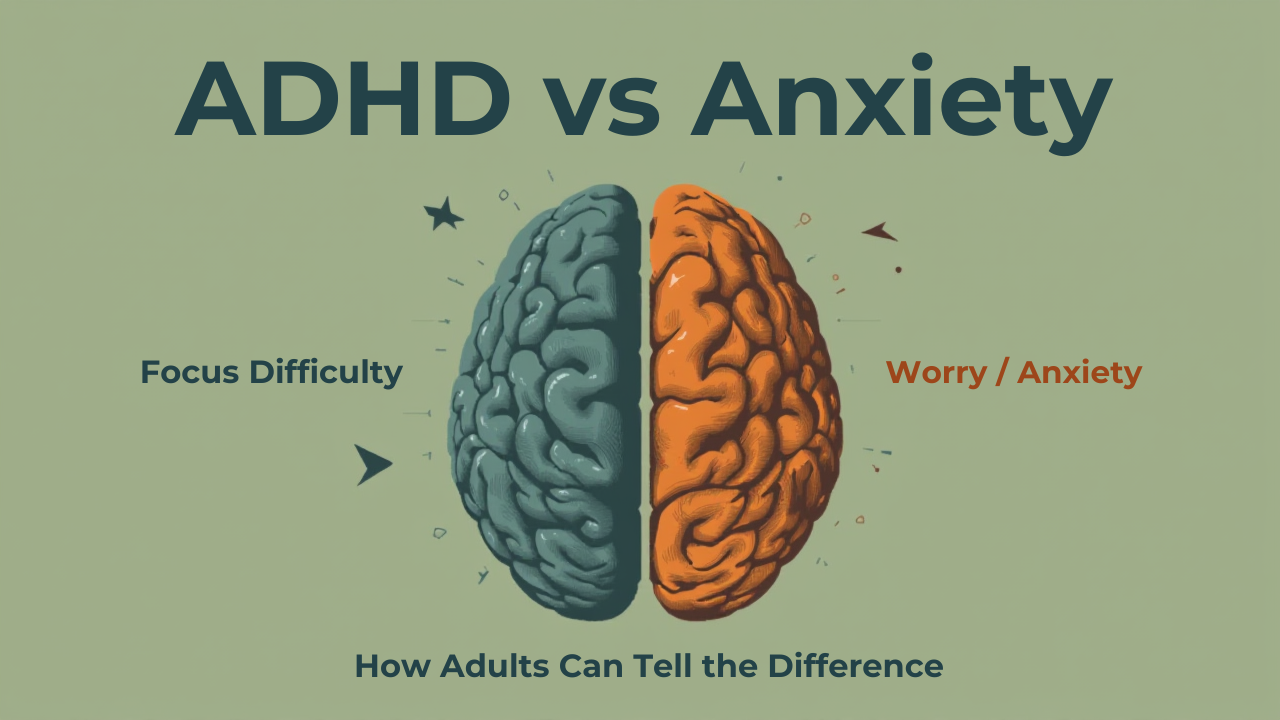
ADHD vs Anxiety: How Adults Can Tell the Difference
Many adults struggle with focus, racing thoughts, and overwhelm and assume anxiety is the cause. However, ADHD and anxiety often overlap. Learn how clinicians distinguish ADHD from anxiety and when adults in Pennsylvania and Delaware may benefit from ADHD testing.
Many adults who struggle with focus, racing thoughts, or difficulty completing tasks assume they may have anxiety.
However, symptoms of ADHD and anxiety often overlap, which can make it difficult to determine the underlying cause.
Understanding the difference can help individuals decide whether an ADHD evaluation for adults may be helpful.
Why ADHD and Anxiety Are Often Confused
Both conditions can involve:
• difficulty concentrating
• restlessness
• racing thoughts
• feeling overwhelmed
• trouble completing tasks
Many adults first begin exploring these questions when they recognizesigns of ADHD in adultsthat have affected them for years.
Key Differences Between ADHD and Anxiety
ADHD
ADHD primarily affects attention regulation and executive functioning.
Common patterns include:
• difficulty starting tasks
• losing items frequently
• procrastination
• time blindness
• impulsive decisions
These symptoms often occur even when a person feels calm.
Anxiety
Anxiety is primarily related to excessive worry or fear about future events.
Common patterns include:
• persistent worry
• physical tension
• difficulty relaxing
• fear of making mistakes
• overthinking decisions
Concentration problems usually occur because the mind is preoccupied with worry.
For some LGBTQ+ adults, ADHD and anxiety can be even harder to separate when masking, identity-related stress, burnout, and executive dysfunction overlap.
When ADHD and Anxiety Occur Together
Many adults experience both ADHD and anxiety.
In fact, untreated ADHD can lead to anxiety because individuals may struggle with:
• missed deadlines
• disorganization
• difficulty keeping up with responsibilities
Over time, this stress can increase anxiety symptoms.
When ADHD is identified and treated, many adults experience improvement in both focus and anxiety symptoms, especially when appropriate ADHD medications for adults are considered.
How ADHD Evaluations Help Clarify the Diagnosis
An ADHD evaluation typically includes:
• review of symptom history
• discussion of attention patterns
• evaluation of executive functioning
• screening for anxiety and other conditions
This process helps determine whether ADHD, anxiety, or a combination of factors may be affecting daily functioning.
ADHD Testing and Treatment for Adults
Adults located in Pennsylvania or Delaware who experience persistent focus difficulties may benefit from a professional ADHD evaluation for adults in Pennsylvania and Delaware.
ADHDPhiladelphia.com provides adult ADHD testing and treatment through telehealth and follow-up care.
Understanding the cause of attention challenges can help individuals develop effective strategies for improving focus, productivity, and quality of life.

Why Adult ADHD Is So Often Missed — and How Proper Treatment Changes Everything
Adult ADHD is frequently overlooked or misdiagnosed as anxiety, depression, or burnout. Learn why ADHD is often missed in adults and how evidence-based treatment can help restore focus, emotional regulation, and daily functioning.
Many adults live for years believing they’re “bad at life,” unmotivated, or simply overwhelmed — without realizing the real issue is undiagnosed ADHD.
Adult ADHD doesn’t usually look like hyperactivity. It shows up as:
Chronic overwhelm
Difficulty starting or finishing tasks
Emotional dysregulation
Inconsistent performance at work
Burnout despite effort
Because these symptoms overlap with anxiety and depression, ADHD is often missed or misattributed, delaying effective treatment for years.
Why ADHD Is Commonly Missed in Adults
Symptoms evolve with age
High-functioning adults mask struggles
ADHD is mistaken for stress or personality traits
Many were never evaluated as children
ADHD is a neurodevelopmental condition, not a character flaw. When untreated, it impacts executive functioning — the brain’s ability to plan, regulate emotion, manage time, and sustain effort.
What Proper ADHD Treatment Looks Like
Effective treatment is structured, personalized, and evidence-based, often including:
Comprehensive ADHD evaluation
Medication when appropriate
Education about executive functioning
Ongoing follow-up and adjustments
When treated correctly, many adults report:
Improved focus and task completion
Reduced emotional reactivity
Better work performance
Less burnout and self-blame
Care That Fits Real Adult Life
At ADHD Philadelphia, care is designed for adults with real schedules — remote workers, parents, professionals, and students — across Pennsylvania and Delaware.
📍 Appointments start via telehealth
📍 In-person visits are scheduled after the initial online appointment
📍 No walk-ins — care is intentional and structured
Call to Action
If you’ve tried therapy, productivity hacks, or antidepressants — and still feel stuck — ADHD may be the missing piece.
👉 Book a same-day ADHD evaluation:
https://www.adhdphiladelphia.com/book-a-same-day-appointment