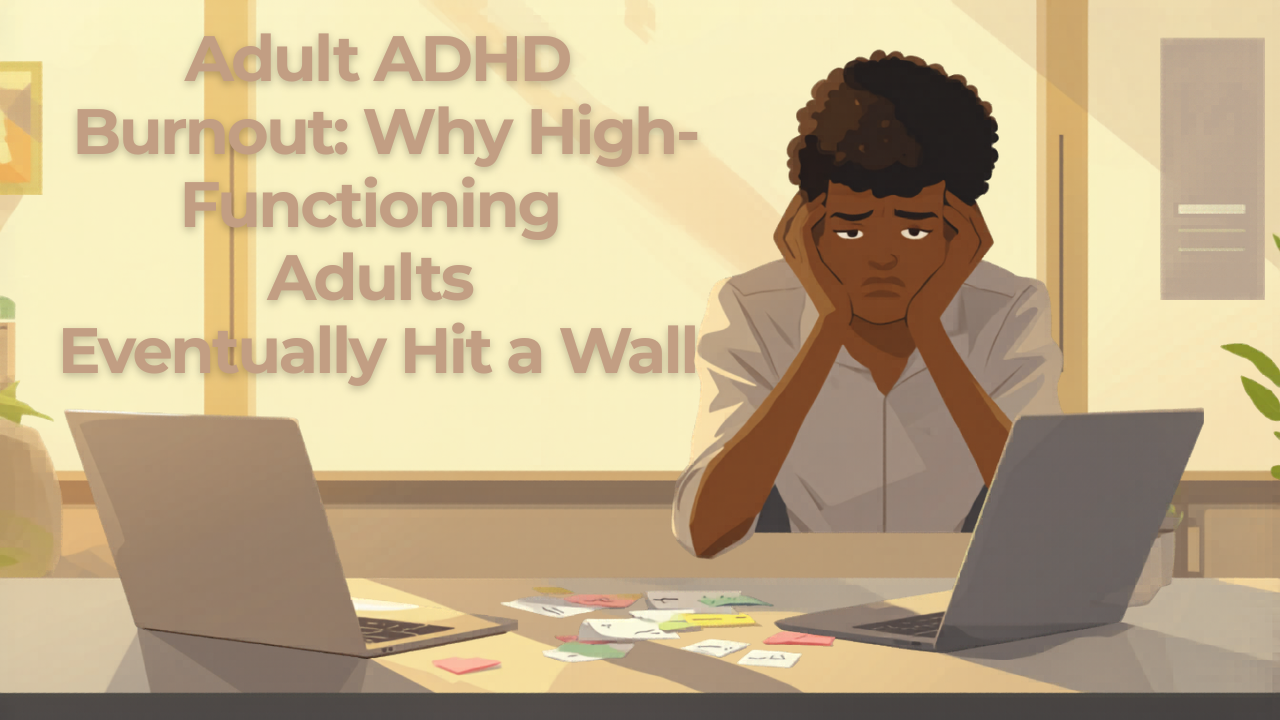
Adult ADHD Burnout: Why High-Functioning Adults Eventually Hit a Wall
Adult ADHD burnout is common among high-functioning professionals who have spent years compensating for attention difficulties. Learn how ADHD evaluations work for adults in Pennsylvania and Delaware and how diagnosis and treatment can help restore focus and productivity.
Many adults with ADHD spend years pushing themselves to keep up with responsibilities at work, school, and home. They develop systems, reminders, and coping strategies to stay organized and productive.
From the outside, they may appear successful and high-functioning.
But internally, many adults with ADHD experience a constant mental effort just to maintain focus, complete tasks, and manage daily responsibilities.
Over time, this effort can lead to something many adults describe as ADHD burnout.
For individuals who have lived for years without understanding their symptoms, burnout can feel confusing and overwhelming.
Understanding how ADHD burnout develops is often the first step toward finding effective support and treatment.
What ADHD Burnout Looks Like in Adults
ADHD burnout is not simply feeling tired from a busy week.
It often develops after years of managing attention difficulties without proper support or diagnosis.
Adults experiencing ADHD burnout may notice:
• Difficulty starting tasks they previously managed
• Feeling mentally exhausted even after small responsibilities
• Increased procrastination
• Emotional frustration with themselves
• Trouble organizing thoughts or priorities
• Reduced motivation despite wanting to succeed
Many adults describe feeling as though their brain has simply “hit a wall.”
In reality, ADHD burnout is often the result of long-term cognitive overload.
If these experiences sound familiar, learning more about the Adult ADHD diagnosis process in Pennsylvania and Delaware can help clarify whether ADHD may be contributing to these patterns.
Why High-Functioning Adults Often Go Undiagnosed
Many adults with ADHD performed reasonably well in school and early career environments.
Because of this, teachers, parents, and employers may never have suspected ADHD.
Instead, these individuals often relied on:
• Working longer hours than others
• Using intense effort to stay organized
• Constant reminders and lists
• Last-minute deadline pressure to trigger productivity
While these strategies can work temporarily, they often become unsustainable as responsibilities increase.
Professionals who maintain strong performance through chronic overwork, urgency, or extensive compensation may not realize how much ADHD is affecting them until those strategies become difficult to sustain. Learn more about Adult ADHD Care for Professionals.
Career demands, family responsibilities, financial stress, and complex schedules can make ADHD symptoms more noticeable.
This is why many adults seek an ADHD evaluation later in life, sometimes in their 30s, 40s, or even 50s.
If you are wondering whether ADHD may be affecting your attention or productivity, you can learn more about ADHD testing and evaluation for adults in Pennsylvania and Delaware.
How ADHD Evaluations Help Adults Move Forward
An ADHD evaluation helps determine whether attention difficulties are related to ADHD or another condition affecting focus and executive functioning.
At ADHD Philadelphia, the evaluation process is designed to be structured, transparent, and accessible for adults.
The evaluation generally includes two steps.
ADHD Consultation
The first step is a clinical consultation conducted through secure telehealth.
During this visit we discuss:
• Current attention and focus concerns
• Childhood ADHD symptom history
• Work and daily functioning
• Medical and mental health history
• Screening for other conditions that can affect attention
Consultation cost: $150
ADHD Testing
When appropriate, structured ADHD testing may be recommended.
This may include evidence-based questionnaires and computerized testing designed to support the diagnostic process.
Testing cost: $150
Total evaluation cost: $300
This transparent structure allows adults to receive a thorough evaluation without the extremely high costs sometimes associated with large neuropsychological testing programs.
ADHD Treatment After Diagnosis
If ADHD is diagnosed, treatment options may include:
• ADHD medication management
• Executive functioning strategies
• Behavioral approaches for attention regulation
• Lifestyle strategies to support productivity and focus
Medication is not required for every patient, but when appropriate it can significantly improve attention regulation and daily functioning.
Learn more about ADHD treatment and medication management for adults in Pennsylvania and Delaware here:
Telehealth ADHD Evaluations in Pennsylvania and Delaware
Many adults prefer telehealth evaluations because they allow them to complete their consultation from home.
At ADHD Philadelphia, telehealth ADHD consultations are available for adults located in:
• Pennsylvania
• Delaware
In-person appointments may be scheduled after the first telehealth appointment when clinically appropriate.
When to Consider an ADHD Evaluation
Adults often consider ADHD testing when they notice patterns such as:
• Difficulty focusing at work
• Struggling to complete projects
• Feeling mentally scattered or overwhelmed
• Chronic procrastination
• Difficulty transitioning between tasks
An ADHD evaluation can help determine whether ADHD may be contributing to these challenges and whether treatment options may help improve daily functioning.
Long-term ADHD burnout often develops when individuals spend years trying to compensate for attention and executive functioning challenges without support. The constant effort required to stay organized, meet deadlines, and manage responsibilities can eventually lead to exhaustion and overwhelm. This is why understanding why adults with ADHD feel overwhelmed and how treatment can help is an important step toward recovery.
Schedule an ADHD Evaluation
If you live in Pennsylvania or Delaware and believe ADHD may be affecting your focus, productivity, or daily functioning, an evaluation may be the next step.
Appointments are available through secure telehealth.
Book an ADHD consultation here: Same-day appointment.

Why Adult ADHD Makes Decision-Making So Mentally Exhausting
Adults with ADHD often feel mentally drained by everyday decisions. Learn how executive dysfunction and working memory overload contribute to decision fatigue—and how proper ADHD testing and treatment can help.
Many adults with ADHD end the day feeling mentally depleted — even when they didn’t complete anything extraordinary.
The exhaustion isn’t always physical.
It’s cognitive.
Small decisions accumulate:
What to prioritize
When to respond
How to structure the day
What to say in a conversation
What to ignore
For an ADHD brain, every one of those choices carries extra weight.
Executive Dysfunction and Decision Load
Decision-making depends heavily on executive function. The brain must:
Hold multiple variables in working memory
Weigh consequences
Inhibit distractions
Filter irrelevant input
Choose and commit
In adult ADHD, working memory and inhibitory control require more effort. That means each decision consumes more mental energy than it would for someone without ADHD.
Why Even Simple Choices Feel Draining
When executive systems fatigue quickly, the brain has fewer resources left for sustained effort.
This can look like:
Avoiding decisions
Overthinking minor details
Delaying responses
Feeling paralyzed by options
Snapping after a long day
Over time, adults may internalize the belief that they are indecisive or inefficient — when in reality, their cognitive load is simply higher.
The Link Between Decision Fatigue and Burnout
When decision fatigue accumulates daily, it contributes to burnout.
Mental exhaustion increases emotional reactivity, reduces task initiation, and weakens follow-through — reinforcing the very patterns we discussed earlier in the week.
It’s not laziness.
It’s overload.
How ADHD Treatment Reduces Mental Exhaustion
When adult ADHD is properly identified, treatment aims to:
Improve executive efficiency
Reduce working memory strain
Support structured decision-making
Decrease cognitive overload
Many adults report clearer thinking and reduced mental fatigue once ADHD is addressed directly.
At ADHD Philadelphia, evaluation begins with structured telehealth appointments. In-person visits are scheduled after the initial online evaluation when appropriate. There are no walk-ins, allowing care to remain focused and individualized.
If decision-making feels disproportionately exhausting, ADHD may be part of the explanation.
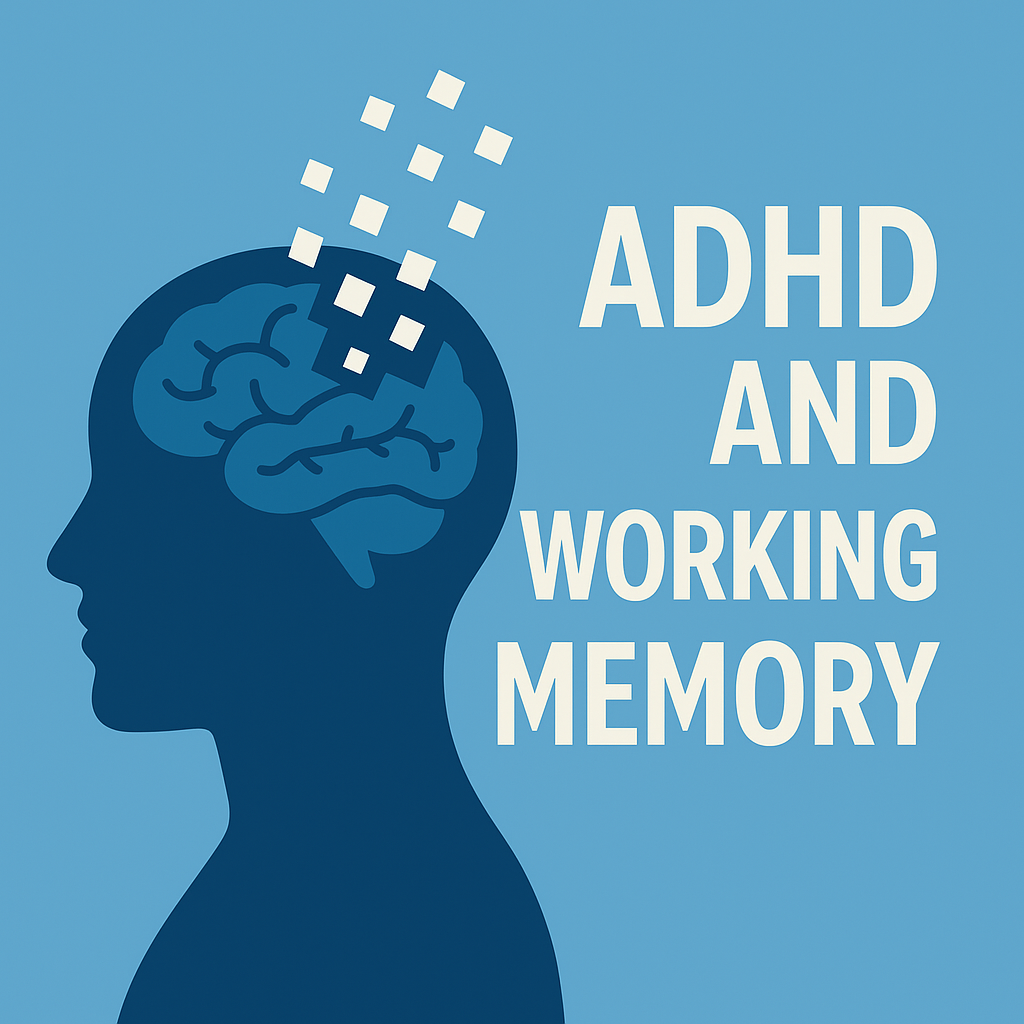
ADHD and Working Memory: Why You Forget Things Even When You Care
Working memory struggles are one of the most common—and misunderstood—symptoms of adult ADHD. Learn why ADHD brains drop information so quickly and how to strengthen your memory using science-backed tools.
By Charles Thornton, PMHNP-BC — ADHD Philadelphia
If you have ADHD, you’ve probably said things like:
“I walked into the room and forgot why.”
“I meant to reply to that message.”
“I know what I need to do… I just can’t hold it in my mind.”
This isn’t carelessness.
It’s a working memory impairment, one of the core executive function challenges in adult ADHD.
For a complete explanation of how working memory affects conversations, instructions, task completion, relationships, and daily responsibilities, read our guide to working memory in adults with ADHD.
According to Russell Barkley, PhD, working memory deficits are as central to ADHD as distractibility or hyperactivity.
At ADHD Philadelphia, we help adults across Pennsylvania and Delaware understand why this happens—and how to rebuild working memory using practical, neuroscience-informed strategies.
🧠 What Is Working Memory?
Working memory is your brain’s ability to hold information in mind long enough to use it.
Examples:
Remembering what someone just said
Holding a task list in your head
Following multi-step directions
Keeping track of time while doing a task
Adults with ADHD often describe working memory as “slippery.” Information slides out before you can act on it.
🔬 Why Working Memory Is Weak in ADHD
1️⃣ The Prefrontal Cortex Processes Information Differently
The PFC is responsible for holding and manipulating short-term information.
In ADHD, the PFC shows reduced activation and connectivity, making it harder to keep information online.
2️⃣ Dopamine Controls the Signal-to-Noise Ratio
Per research from Barkley & Nowell:
When dopamine is low or inconsistent, the brain struggles to filter and store key information.
This causes:
Losing track of tasks
Forgetting instructions
Difficulty recalling conversations
Mental “blanking out” under pressure
3️⃣ The Default Mode Network Interrupts Focus
The DMN (the wandering-mind network) turns on too easily in ADHD.
This pulls you out of the moment and breaks memory encoding.
This is why adults say:
“I heard you… but I didn’t retain it.”
🔧 3 Ways to Strengthen Working Memory
1️⃣ Cognitive Offloading (Dawson & Wilke-Deaton)
Externalizing memory dramatically reduces overwhelm.
Try:
Sticky notes
Planners
Digital reminders
Voice notes
Writing the “next step” before leaving a task
Offloading isn’t cheating—it’s a treatment strategy.
2️⃣ Use Neuroplasticity Through Micro-Repetition
Dr. Nowell notes that repetition builds neural strength.
You can train working memory by:
Reviewing lists out loud
Practicing short recall exercises
Repeating instructions back to people
Daily 2-minute “memory runs”
Small reps → big rewiring.
3️⃣ ADHD Medication Improves Memory Encoding
Stimulants and non-stimulants improve:
Information retention
Recall speed
Task follow-through
Medication doesn’t create memory—it increases the brain’s ability to store and retrieve it.
Many adults describe their experience as:
“It’s like my mind finally has a grip on things.”
🌱 Your Memory Can Improve
Working memory struggles are frustrating but treatable.
With the right tools, routines, and treatment, adults experience more clarity, fewer dropped tasks, and greater confidence.
👉 Schedule your ADHD evaluation today
Serving adults in Pennsylvania and Delaware through telehealth and in-person care.