ADHD and Working Memory: Why You Forget Things Even When You Care
By Charles Thornton, PMHNP-BC — ADHD Philadelphia
If you have ADHD, you’ve probably said things like:
“I walked into the room and forgot why.”
“I meant to reply to that message.”
“I know what I need to do… I just can’t hold it in my mind.”
This isn’t carelessness.
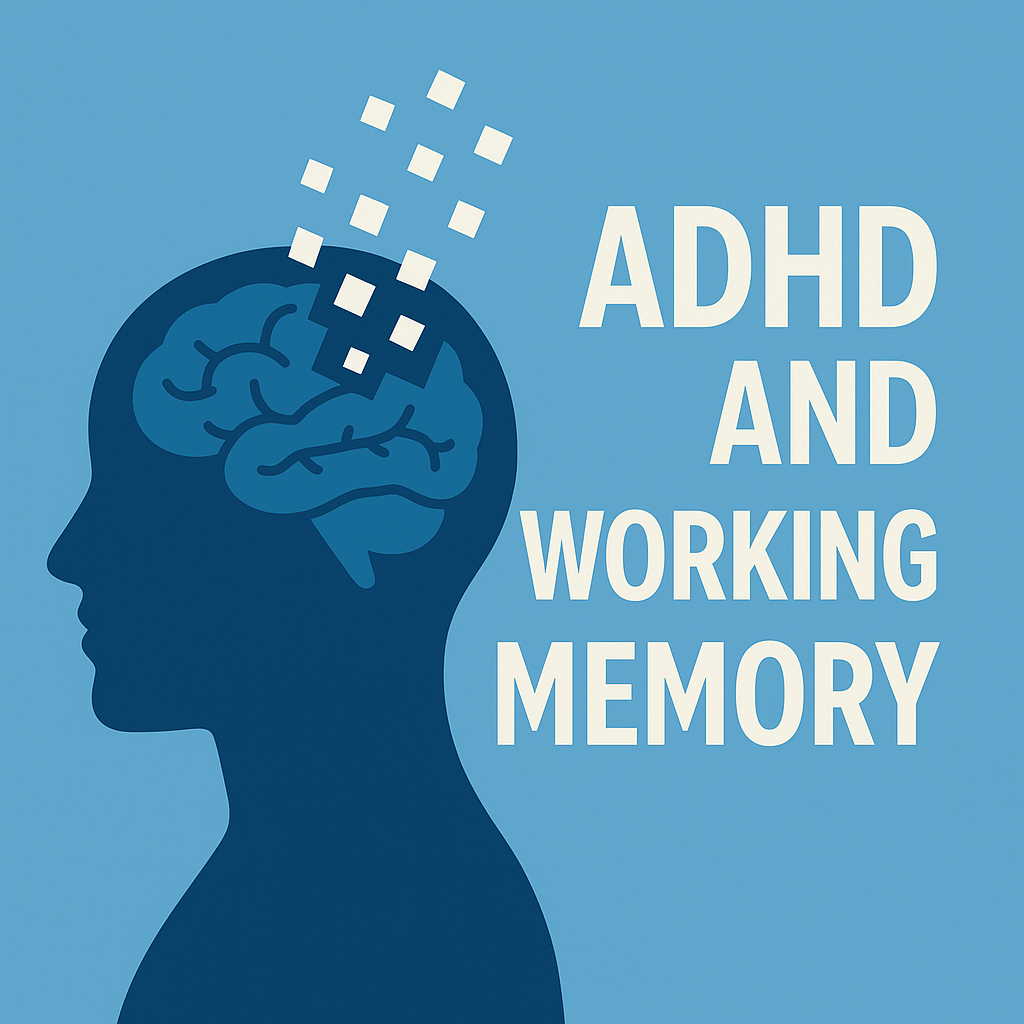
It’s a working memory impairment, one of the core executive function challenges in adult ADHD.
For a complete explanation of how working memory affects conversations, instructions, task completion, relationships, and daily responsibilities, read our guide to working memory in adults with ADHD.
According to Russell Barkley, PhD, working memory deficits are as central to ADHD as distractibility or hyperactivity.
At ADHD Philadelphia, we help adults across Pennsylvania and Delaware understand why this happens—and how to rebuild working memory using practical, neuroscience-informed strategies.
🧠 What Is Working Memory?
Working memory is your brain’s ability to hold information in mind long enough to use it.
Examples:
Remembering what someone just said
Holding a task list in your head
Following multi-step directions
Keeping track of time while doing a task
Adults with ADHD often describe working memory as “slippery.” Information slides out before you can act on it.
🔬 Why Working Memory Is Weak in ADHD
1️⃣ The Prefrontal Cortex Processes Information Differently
The PFC is responsible for holding and manipulating short-term information.
In ADHD, the PFC shows reduced activation and connectivity, making it harder to keep information online.
2️⃣ Dopamine Controls the Signal-to-Noise Ratio
Per research from Barkley & Nowell:
When dopamine is low or inconsistent, the brain struggles to filter and store key information.
This causes:
Losing track of tasks
Forgetting instructions
Difficulty recalling conversations
Mental “blanking out” under pressure
3️⃣ The Default Mode Network Interrupts Focus
The DMN (the wandering-mind network) turns on too easily in ADHD.
This pulls you out of the moment and breaks memory encoding.
This is why adults say:
“I heard you… but I didn’t retain it.”
🔧 3 Ways to Strengthen Working Memory
1️⃣ Cognitive Offloading (Dawson & Wilke-Deaton)
Externalizing memory dramatically reduces overwhelm.
Try:
Sticky notes
Planners
Digital reminders
Voice notes
Writing the “next step” before leaving a task
Offloading isn’t cheating—it’s a treatment strategy.
2️⃣ Use Neuroplasticity Through Micro-Repetition
Dr. Nowell notes that repetition builds neural strength.
You can train working memory by:
Reviewing lists out loud
Practicing short recall exercises
Repeating instructions back to people
Daily 2-minute “memory runs”
Small reps → big rewiring.
3️⃣ ADHD Medication Improves Memory Encoding
Stimulants and non-stimulants improve:
Information retention
Recall speed
Task follow-through
Medication doesn’t create memory—it increases the brain’s ability to store and retrieve it.
Many adults describe their experience as:
“It’s like my mind finally has a grip on things.”
🌱 Your Memory Can Improve
Working memory struggles are frustrating but treatable.
With the right tools, routines, and treatment, adults experience more clarity, fewer dropped tasks, and greater confidence.
👉 Schedule your ADHD evaluation today
Serving adults in Pennsylvania and Delaware through telehealth and in-person care.