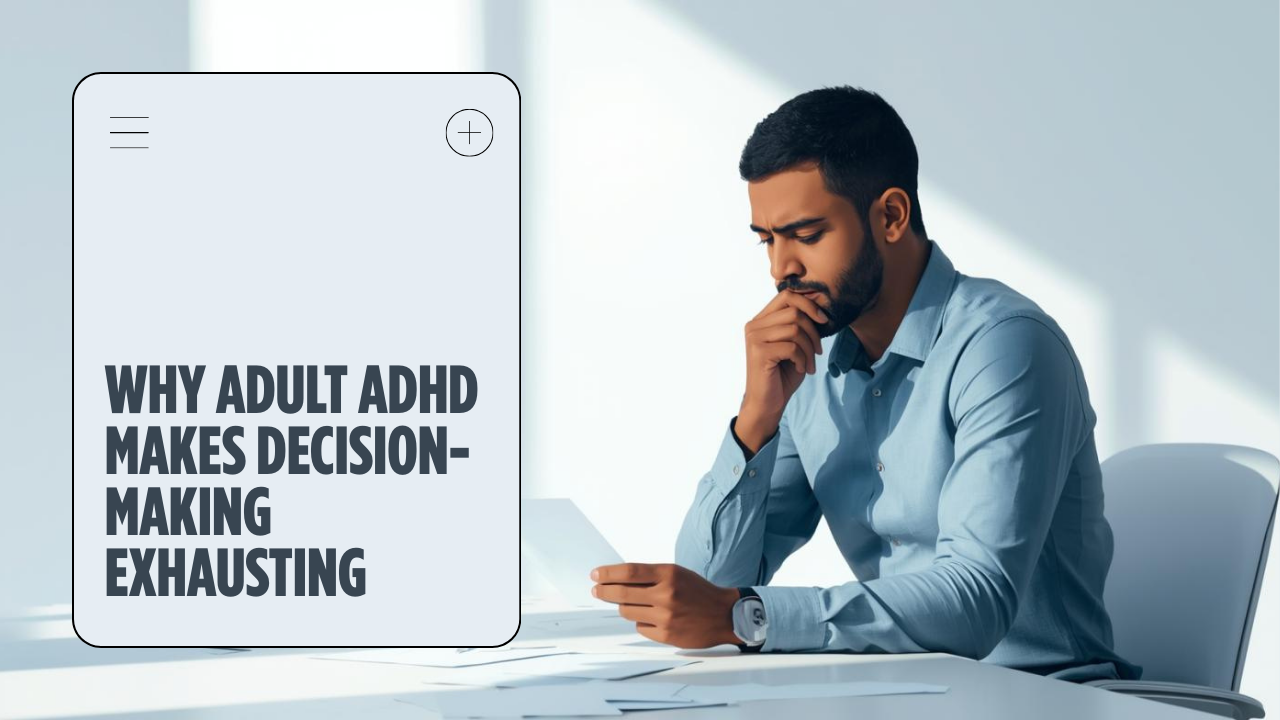
Why Adult ADHD Makes Decision-Making So Mentally Exhausting
Adults with ADHD often feel mentally drained by everyday decisions. Learn how executive dysfunction and working memory overload contribute to decision fatigue—and how proper ADHD testing and treatment can help.
Many adults with ADHD end the day feeling mentally depleted — even when they didn’t complete anything extraordinary.
The exhaustion isn’t always physical.
It’s cognitive.
Small decisions accumulate:
What to prioritize
When to respond
How to structure the day
What to say in a conversation
What to ignore
For an ADHD brain, every one of those choices carries extra weight.
Executive Dysfunction and Decision Load
Decision-making depends heavily on executive function. The brain must:
Hold multiple variables in working memory
Weigh consequences
Inhibit distractions
Filter irrelevant input
Choose and commit
In adult ADHD, working memory and inhibitory control require more effort. That means each decision consumes more mental energy than it would for someone without ADHD.
Why Even Simple Choices Feel Draining
When executive systems fatigue quickly, the brain has fewer resources left for sustained effort.
This can look like:
Avoiding decisions
Overthinking minor details
Delaying responses
Feeling paralyzed by options
Snapping after a long day
Over time, adults may internalize the belief that they are indecisive or inefficient — when in reality, their cognitive load is simply higher.
The Link Between Decision Fatigue and Burnout
When decision fatigue accumulates daily, it contributes to burnout.
Mental exhaustion increases emotional reactivity, reduces task initiation, and weakens follow-through — reinforcing the very patterns we discussed earlier in the week.
It’s not laziness.
It’s overload.
How ADHD Treatment Reduces Mental Exhaustion
When adult ADHD is properly identified, treatment aims to:
Improve executive efficiency
Reduce working memory strain
Support structured decision-making
Decrease cognitive overload
Many adults report clearer thinking and reduced mental fatigue once ADHD is addressed directly.
At ADHD Philadelphia, evaluation begins with structured telehealth appointments. In-person visits are scheduled after the initial online evaluation when appropriate. There are no walk-ins, allowing care to remain focused and individualized.
If decision-making feels disproportionately exhausting, ADHD may be part of the explanation.
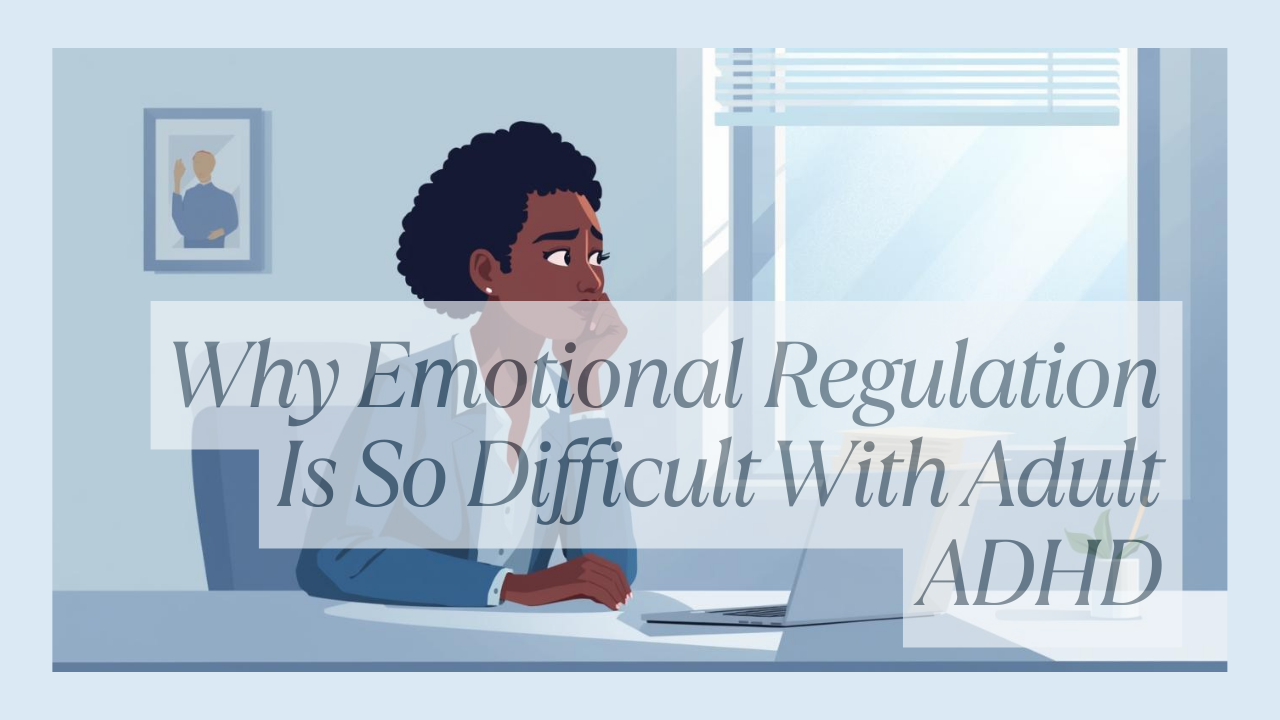
Why Emotional Regulation Is So Difficult With Adult ADHD
Emotional regulation challenges are a core part of adult ADHD. Learn why frustration escalates quickly, how executive dysfunction affects emotional control, and how proper ADHD testing and treatment can help.
When people think of ADHD, they often think about attention.
But for many adults, the most disruptive symptom isn’t focus — it’s emotion.
Frustration rises quickly.
Disappointment feels sharper.
Stress escalates faster than expected.
This isn’t about personality.
It’s about regulation.
For a more comprehensive explanation of emotional intensity, recovery after stress, rejection sensitivity, overlapping conditions, and practical strategies, read our complete guide to emotional regulation in adults with ADHD.
ADHD and Emotional Control
Emotional regulation depends on executive function systems that help the brain:
Pause before reacting
Shift perspective
Moderate intensity
Recover after stress
In adult ADHD, those systems can be less efficient. Emotions don’t necessarily last longer — but they often feel stronger and harder to contain.
Why Reactions Feel Immediate
ADHD affects inhibitory control — the ability to slow down a reaction.
That split-second pause that allows someone to think, “Let me respond differently,” can be weaker. The result may look like:
Irritability
Impatience
Overwhelm
Emotional shutdown
This can create tension at work and in relationships, especially when others don’t understand what’s happening.
Stress Makes Emotional Regulation Harder
When the nervous system is already overloaded, emotional responses intensify.
Deadlines, multitasking, and decision fatigue drain executive resources. With fewer internal buffers, reactions feel bigger and faster.
Over time, adults may internalize shame about being “too sensitive” or “too reactive.”
But emotional dysregulation is a recognized component of adult ADHD.
How Treatment Supports Emotional Stability
Effective ADHD treatment doesn’t just improve attention — it helps regulate emotional intensity.
Care may focus on:
Strengthening executive function
Reducing nervous system overload
Improving pause-and-reflect capacity
Supporting consistent routines
Many adults experience more stability once their ADHD is properly addressed.
At ADHD Philadelphia, evaluation begins with structured telehealth appointments, with in-person visits scheduled afterward when appropriate. There are no walk-ins, allowing care to remain individualized and intentional.
If emotional reactions feel bigger than they should, ADHD may be part of the explanation.
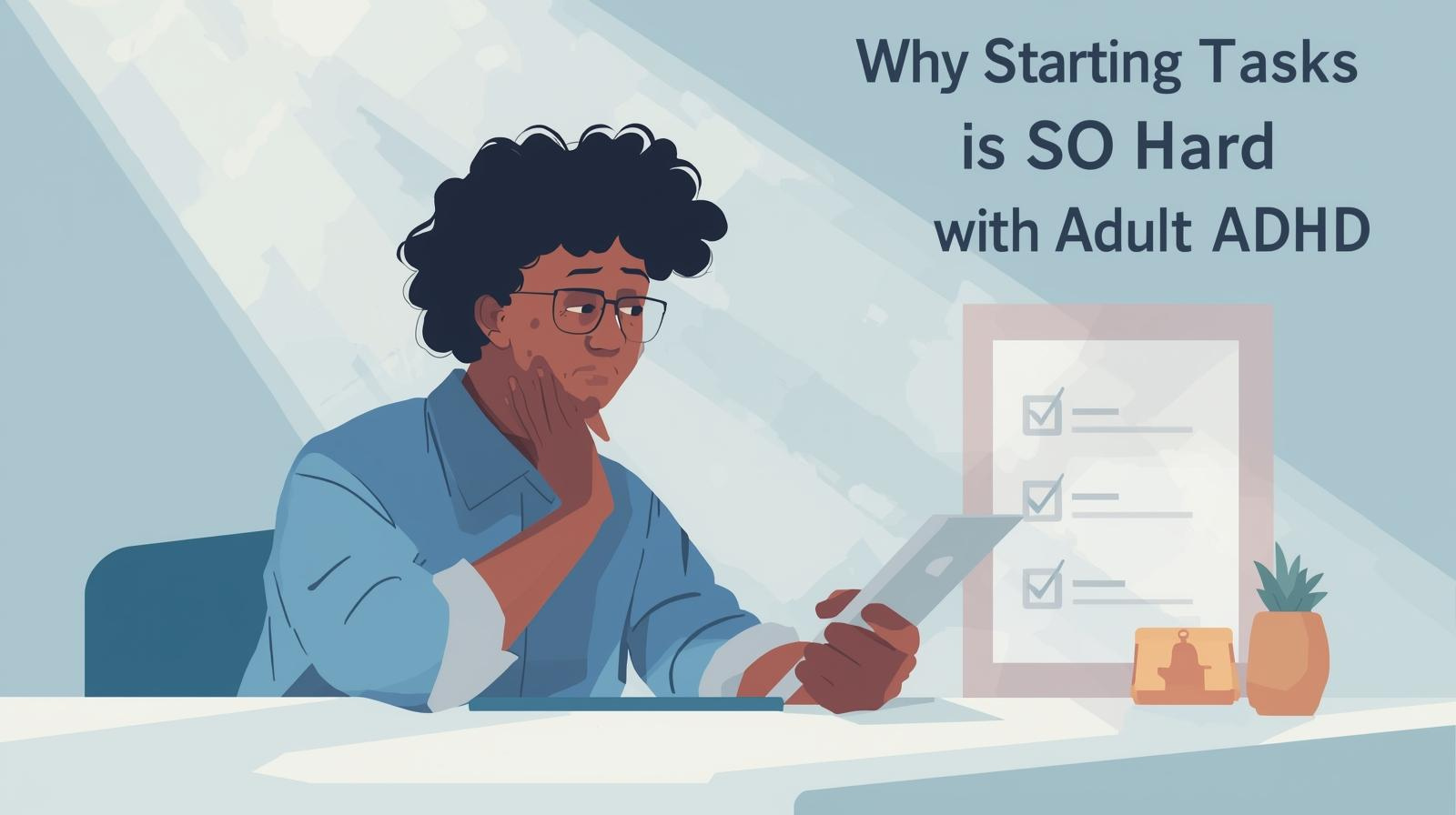
Why Starting Tasks Is So Hard With Adult ADHD
Adults with ADHD often struggle most with starting tasks, not finishing them. Learn how executive dysfunction affects task initiation, why motivation isn’t the solution, and how proper ADHD testing and treatment can help.
For many adults with ADHD, the hardest part of a task isn’t doing it —
it’s starting it.
This is one of the most misunderstood aspects of adult ADHD. From the outside, it can look like procrastination or avoidance. Internally, it feels like being stuck in place, even when you know exactly what needs to be done.
That disconnect is not a motivation problem.
It’s a task initiation problem.
What Task Initiation Really Is
Task initiation is an executive function skill. It allows the brain to:
Shift from intention to action
Activate attention at the right moment
Transition between tasks smoothly
In adults with ADHD, this system doesn’t reliably “turn on” when it should. Knowing what to do doesn’t automatically create the neurological momentum needed to begin.
This is why adults with ADHD often describe feeling “frozen” or “paralyzed” at the start of tasks — even important ones.
Many adults who struggle with task paralysis also experience a broader sense of mental overload. This feeling of being constantly behind or unable to catch up is often connected to the way ADHD affects executive functioning. If you want to understand this pattern in more detail, you can learn more about why adults with ADHD feel overwhelmed and how treatment can help.
Why Motivation Isn’t the Fix
Many people are told they just need more motivation, better discipline, or stronger routines. But motivation is unreliable in ADHD because it’s not the primary driver of action.
ADHD brains rely more heavily on:
Interest
Urgency
External structure
Emotional engagement
When those elements are missing, starting feels nearly impossible — no matter how much someone wants to begin.
The Role of Emotional Load
Task initiation becomes even harder when a task carries emotional weight.
If a task feels:
Overwhelming
Unclear
Tied to past failures
High-stakes
The nervous system may interpret it as a threat rather than a neutral activity. That triggers avoidance — not because of fear or laziness, but because the brain is trying to protect itself from overload.
What Actually Helps With Starting
Effective ADHD treatment focuses on reducing the friction at the starting line.
This often includes:
Supporting executive function directly
Lowering cognitive and emotional load
Creating external structure instead of relying on willpower
Addressing nervous system regulation
When ADHD is properly identified and treated, many adults report that starting tasks becomes more manageable — not effortless, but possible.
Care is not about forcing productivity.
It’s about helping the brain engage when it needs to.
At ADHD Philadelphia, care begins with structured telehealth evaluation, with in-person appointments scheduled afterward when appropriate. There are no walk-ins, allowing treatment to remain intentional and individualized.
If starting tasks feels harder than it should, ADHD may be the missing explanation.
Book an ADHD Evaluation
Adults across Pennsylvania and Delaware can schedule an ADHD consultation online.
Learn more and book your ADHD consultation online.

ADHD Burnout Isn’t a Personal Failure — It’s a Nervous System Issue
ADHD burnout is often mistaken for a lack of motivation or resilience. Learn why chronic exhaustion in adults with ADHD is a nervous system issue—and how proper support can help restore balance.
Burnout has a way of turning into self-blame.
Many adults with ADHD don’t just feel tired — they feel ashamed. Ashamed that tasks feel harder. Ashamed that motivation comes and goes. Ashamed that rest doesn’t seem to reset them the way it does for others.
But ADHD burnout isn’t a personal failure. It’s a nervous system issue.
ADHD affects executive functioning — the brain’s ability to regulate attention, emotions, energy, and task initiation. When this system is under constant demand, the result is often chronic stress, emotional exhaustion, and shutdown.
This is why telling yourself to “try harder” doesn’t work. The issue isn’t effort. It’s regulation.
When adult ADHD is properly identified and treated, many people experience:
Less emotional exhaustion
Improved self-compassion
Better pacing of energy
More sustainable focus
Care doesn’t mean pushing harder. It means supporting how your brain actually works.
At ADHD Philadelphia, care begins with a structured telehealth evaluation, followed by in-person appointments when appropriate. There are no walk-ins — care is intentional and individualized.
If you’ve been carrying burnout as a personal flaw, it may be time to look at it differently.
👉 Read more and explore next steps:
https://www.adhdphiladelphia.com/book-a-same-day-appointment
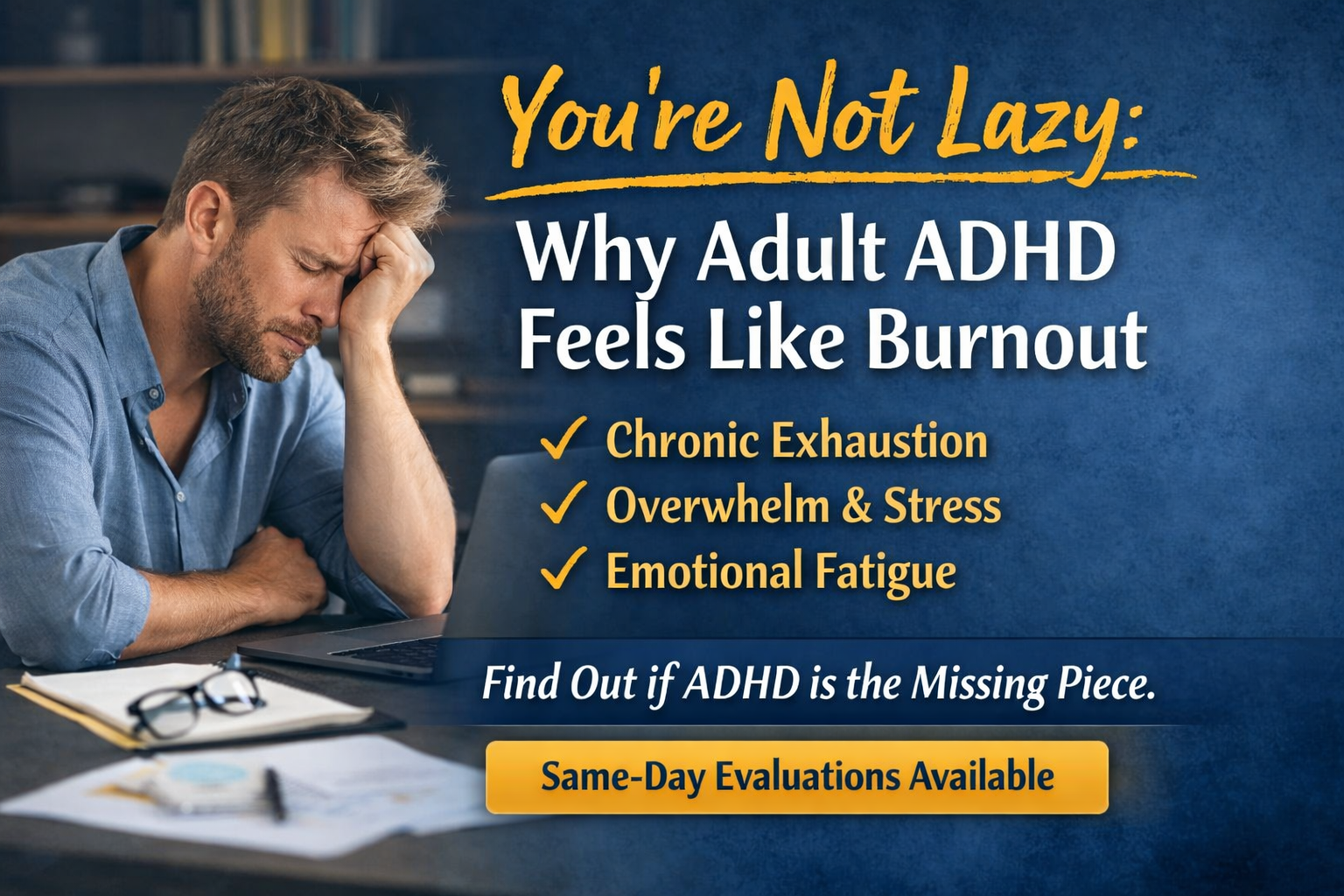
You’re Not Lazy: Why Adult ADHD Feels Like Burnout
Adult ADHD often feels like chronic burnout rather than hyperactivity. Learn why untreated ADHD leads to exhaustion and how proper treatment can restore focus, energy, and emotional balance.
Many adults with ADHD don’t feel hyper — they feel exhausted.
By the time people reach adulthood, ADHD often looks less like excess energy and more like burnout, overwhelm, and emotional fatigue. Tasks feel harder than they should. Motivation comes in short bursts. And no matter how much effort you put in, it never seems consistent.
That’s not a character flaw. It’s executive dysfunction.
Executive function controls planning, task initiation, emotional regulation, and follow-through. When ADHD goes untreated, adults often compensate by overworking, masking symptoms, or pushing themselves until burnout sets in.
This is why so many adults with ADHD are first diagnosed with anxiety or depression. The emotional toll is real — but the root cause is often neurological, not motivational.
When adult ADHD is properly identified and treated, many people report:
Less mental exhaustion
Improved task initiation
Better emotional regulation
A greater sense of control over daily life
At ADHD Philadelphia, care begins with a structured telehealth evaluation, followed by in-person appointments when appropriate. There are no walk-ins — care is intentional and personalized.
If burnout feels like your baseline, ADHD may be the missing piece.
👉 Schedule a same-day ADHD evaluation:
https://www.adhdphiladelphia.com/book-a-same-day-appointment

Why Adult ADHD Is So Often Missed — and How Proper Treatment Changes Everything
Adult ADHD is frequently overlooked or misdiagnosed as anxiety, depression, or burnout. Learn why ADHD is often missed in adults and how evidence-based treatment can help restore focus, emotional regulation, and daily functioning.
Many adults live for years believing they’re “bad at life,” unmotivated, or simply overwhelmed — without realizing the real issue is undiagnosed ADHD.
Adult ADHD doesn’t usually look like hyperactivity. It shows up as:
Chronic overwhelm
Difficulty starting or finishing tasks
Emotional dysregulation
Inconsistent performance at work
Burnout despite effort
Because these symptoms overlap with anxiety and depression, ADHD is often missed or misattributed, delaying effective treatment for years.
Why ADHD Is Commonly Missed in Adults
Symptoms evolve with age
High-functioning adults mask struggles
ADHD is mistaken for stress or personality traits
Many were never evaluated as children
ADHD is a neurodevelopmental condition, not a character flaw. When untreated, it impacts executive functioning — the brain’s ability to plan, regulate emotion, manage time, and sustain effort.
What Proper ADHD Treatment Looks Like
Effective treatment is structured, personalized, and evidence-based, often including:
Comprehensive ADHD evaluation
Medication when appropriate
Education about executive functioning
Ongoing follow-up and adjustments
When treated correctly, many adults report:
Improved focus and task completion
Reduced emotional reactivity
Better work performance
Less burnout and self-blame
Care That Fits Real Adult Life
At ADHD Philadelphia, care is designed for adults with real schedules — remote workers, parents, professionals, and students — across Pennsylvania and Delaware.
📍 Appointments start via telehealth
📍 In-person visits are scheduled after the initial online appointment
📍 No walk-ins — care is intentional and structured
Call to Action
If you’ve tried therapy, productivity hacks, or antidepressants — and still feel stuck — ADHD may be the missing piece.
👉 Book a same-day ADHD evaluation:
https://www.adhdphiladelphia.com/book-a-same-day-appointment

Does Undiagnosed Adult ADHD Shorten Life Expectancy?
Emerging research suggests untreated adult ADHD may increase long-term health risks. Learn how proper diagnosis and structured treatment can improve stability and reduce preventable risks for adults in Pennsylvania and Delaware.
Recent research has raised an important question:
Does untreated adult ADHD affect long-term health and life expectancy?
Emerging data suggests that adults with untreated ADHD may face increased health risks that indirectly impact longevity. These risks are not caused by ADHD itself — but by the behavioral, emotional, and lifestyle patterns that often accompany untreated symptoms.
For adults in Pennsylvania and Delaware, understanding these risks is critical.
Why Would ADHD Impact Long-Term Health?
ADHD is a neurodevelopmental condition that affects executive functioning — including impulse control, planning, and self-regulation.
When symptoms are untreated, adults may experience:
• Increased risk-taking behaviors
• Higher rates of smoking or substance use
• Poor sleep patterns
• Irregular eating habits
• Reduced physical activity
• Higher rates of depression and anxiety
Over time, these patterns can contribute to cardiovascular risk, metabolic concerns, and accidental injury.
It’s Not ADHD — It’s Untreated ADHD
ADHD does not directly shorten life expectancy.
However, untreated ADHD can increase:
• Motor vehicle accident risk
• Substance-related complications
• Mental health comorbidities
• Chronic stress-related health effects
When symptoms are identified early and treated appropriately, many of these risks can be significantly reduced.
How Treatment Improves Long-Term Outcomes
Comprehensive ADHD treatment may include:
• Structured medication management
• Executive functioning support
• Cognitive behavioral therapy
• Lifestyle optimization strategies
Medication, when clinically appropriate, can reduce impulsivity and improve decision-making — which may reduce risky behaviors.
You can learn more about our Medication Management & Stimulant Treatment Policy here.
The Importance of Adult ADHD Diagnosis
Many adults in Pennsylvania and Delaware reach their 30s, 40s, or even 50s before receiving an accurate ADHD diagnosis.
Without understanding the root cause of executive dysfunction, individuals may internalize years of frustration, burnout, and self-blame.
A structured diagnostic process helps clarify whether ADHD symptoms are present and whether other conditions may be contributing to attention and executive functioning difficulties.
If you are unsure how ADHD is formally diagnosed, you can learn more about our adult ADHD diagnosis process here.
Early Identification Matters
When adult ADHD is properly diagnosed and managed:
• Risk-taking behavior decreases
• Emotional regulation improves
• Occupational functioning stabilizes
• Health routines become easier to maintain
Treatment is not just about productivity.
It’s about long-term health stability.
Adult ADHD Care in Pennsylvania & Delaware
At ADHD Philadelphia, adult ADHD evaluation and treatment are structured, safety-focused, and individualized.
Telehealth services are available throughout Pennsylvania and Delaware.
In-person appointments may be scheduled after the initial evaluation when clinically appropriate.
Adults across Pennsylvania and Delaware often wonder whether their symptoms are related to ADHD or anxiety. Understanding the difference can help guide the next step in treatment. Our guide on ADHD vs anxiety in adults explains how these conditions differ.
Take the First Step
If you suspect untreated ADHD may be affecting your health, relationships, or long-term stability, a comprehensive evaluation is the first step toward clarity.