
Why So Many Moms Don’t Realize They Have ADHD Until Motherhood
Adults with ADHD often want healthier, more consistent habits but struggle to make them stick. Learn why habits can be hard to build with ADHD and what may help.
Many women live with ADHD for years without realizing it.
They may have spent most of their lives feeling overwhelmed, disorganized, forgetful, emotionally exhausted, or inconsistent, while assuming they were simply not trying hard enough.
Then motherhood changes the picture.
Suddenly, the demands on attention, time management, emotional regulation, planning, memory, routines, and follow-through increase dramatically. The coping strategies that worked before may stop working. Life becomes harder to hold together. What once felt manageable may start to feel impossible.
At ADHD Philadelphia, this is one of the most common stories adult women describe: they did not fully recognize the pattern until motherhood made their symptoms much harder to ignore.
Why ADHD Often Goes Unrecognized in Women
Many women with ADHD were never identified in childhood.
Some did well enough in school to avoid concern. Others were bright, hardworking, anxious, perfectionistic, or constantly compensating. Some were not disruptive, so their struggles were overlooked. Others were misread as careless, emotional, scattered, lazy, or “just stressed.”
ADHD in women often becomes easier to miss when the symptoms show up less as visible hyperactivity and more as:
chronic overwhelm
disorganization
difficulty following through
forgetfulness
emotional exhaustion
inconsistent routines
internal restlessness
mental clutter
That means many women reach adulthood without understanding why everyday life feels harder than it seems to be for other people.
Why Motherhood Can Bring ADHD Symptoms Into Focus
Motherhood increases executive functioning demands in every direction.
A mother may need to:
remember appointments
manage schedules
keep track of forms and deadlines
plan meals
maintain household routines
juggle work and family demands
regulate her own emotions while responding to a child’s needs
handle constant interruptions
switch attention quickly across multiple responsibilities
That level of cognitive and emotional load can make underlying ADHD much more visible.
For many moms, motherhood does not create ADHD. It reveals how much effort it was already taking to keep everything together.
Common Signs ADHD Becomes More Noticeable After Motherhood
1. Overwhelm gets much worse
Many moms describe feeling like they are constantly behind, constantly reacting, or constantly trying to catch up.
This often overlaps with feeling mentally overwhelmed, especially when there is never enough quiet time to reset.
2. Routines keep falling apart
A mother may try planners, schedules, checklists, meal plans, family systems, chore systems, or new daily routines, only to find that they work briefly and then collapse.
That is one reason many adults with ADHD struggle to stay consistent with routines.
3. Follow-through becomes harder
Motherhood often brings more unfinished tasks, more interruptions, and more competing demands.
That can make it even harder to complete what was started, return to tasks later, and stay consistent with responsibilities over time.
This is one reason adults with ADHD often have trouble following through.
4. Task initiation becomes a daily battle
Even when a mom knows exactly what needs to be done, getting started can still feel disproportionately hard.
Laundry, dishes, email, forms, meal prep, scheduling, and simple administrative tasks may all begin to pile up.
That is one reason many adults with ADHD struggle to start tasks.
5. Simple responsibilities feel heavier than they should
A lot of mothers with ADHD say the hardest part is not knowing what to do.
It is how mentally heavy everything feels.
Tasks that look small from the outside may feel cognitively exhausting on the inside.
That is one reason ADHD can make daily life feel so heavy.
6. Consistency becomes painful
Many moms care deeply. They care about their children, their families, their homes, and doing things well.
That is why it hurts so much when they still cannot seem to stay steady, organized, or consistent the way they want to.
This is one reason many adults with ADHD struggle with consistency even when they care.
What This Can Look Like in Real Life
A mother with undiagnosed ADHD might:
constantly lose track of paperwork, forms, or school deadlines
forget things she fully intended to remember
feel like she is always running late
become emotionally overloaded by noise, mess, or interruptions
start organizing systems but not maintain them
struggle to keep routines going for herself or the household
feel embarrassed by clutter or unfinished responsibilities
feel guilty for needing more structure than she can consistently maintain
wonder why everyday parenting feels harder than it seems for other mothers
Sometimes she has already developed a high level of resilience and coping.
Sometimes she has spent years holding everything together through stress, anxiety, last-minute urgency, perfectionism, or overcompensation.
But motherhood often increases the demand enough that the old coping system no longer works.
Why So Many Moms Blame Themselves
This is one of the hardest parts.
Many mothers assume the problem is:
lack of discipline
lack of effort
poor time management
stress
burnout
not being organized enough
“just needing to try harder”
And of course stress and burnout can absolutely be part of the picture.
But in some cases, the deeper issue is untreated or unrecognized ADHD.
When ADHD is not considered, a mother may spend years blaming herself for symptoms that actually reflect executive functioning difficulties, not lack of love or lack of commitment.
It Is Not a Reflection of How Much You Love Your Child
This matters.
A mother can love her child deeply and still struggle with:
organization
follow-through
memory
planning
consistency
mental overload
emotional regulation under pressure
ADHD does not mean a person cares less.
Often, it means she is carrying far more internal strain than other people can see.
Why an ADHD Evaluation Can Matter
For some women, finally understanding the pattern is a major turning point.
An adult ADHD evaluation can help clarify whether long-standing struggles with overwhelm, disorganization, follow-through, routines, and attention regulation may be part of ADHD rather than a personal failure.
That is why some moms decide to seek an ADHD evaluation for adults after years of feeling like they should be coping better than they are.
What Can Help?
The good news is that support can help.
For adults with ADHD, useful treatment may include:
structured evaluation
education about adult ADHD
practical systems that reduce cognitive load
medication when clinically appropriate
behavioral strategies
external reminders and supports
simpler routines that are easier to restart
treatment plans designed around real adult life
For some women, structured ADHD treatment can improve focus, follow-through, emotional regulation, and day-to-day functioning enough that life begins to feel more manageable.
A Mother’s Day Reflection
Mother’s Day can bring gratitude, joy, exhaustion, reflection, and sometimes guilt.
For mothers who may be living with undiagnosed ADHD, it can also bring a quiet recognition:
“Why does this feel so much harder for me than it seems to for other people?”
That question deserves compassion, not shame.
Sometimes the answer is not that a mother is failing.
Sometimes the answer is that she has been carrying ADHD symptoms for years without the language, evaluation, or support to understand them clearly.
Final Thought
If motherhood made your ADHD symptoms more noticeable, that does not mean you became weaker.
It may simply mean the demands increased enough to expose a pattern that had been there all along.
Understanding that can be the beginning of real relief.
If you are ready to explore adult ADHD testing and treatment in Pennsylvania or Delaware, you can book online today.

Why Smart Adults Often Miss an ADHD Diagnosis (And What To Do About It)
High-functioning adults often compensate for ADHD symptoms until stress and burnout increase. Learn how intelligence can mask executive dysfunction and why a structured ADHD evaluation in Pennsylvania and Delaware matters.
Many high-achieving adults are surprised to learn they have ADHD.
They finished college.
They built careers.
They manage responsibilities.
So how could ADHD have been missed?
The answer is simple: intelligence can compensate — until it can’t.
For many adults in Pennsylvania and Delaware, ADHD isn’t obvious in childhood. Instead, it becomes more visible when life demands exceed coping strategies.
Why ADHD Is Often Overlooked in Smart Adults
ADHD is not a measure of intelligence.
In fact, many adults with ADHD are:
• Creative
• Verbally strong
• High-performing under pressure
• Capable of last-minute success
Strong cognitive ability can mask executive dysfunction for years.
Deadlines get met — but through stress.
Assignments get completed — but at the last minute.
Work gets done — but at personal cost.
Eventually, the compensatory strategies stop working.
This pattern is particularly common among high-achieving adults whose professional success may hide significant executive-function strain. Learn more in our guide to Adult ADHD Care for Professionals.
What Changes in Adulthood?
As responsibilities increase, ADHD symptoms become harder to hide.
Adults may begin noticing:
• Chronic procrastination
• Decision fatigue
• Difficulty initiating tasks
• Inconsistent productivity
• Emotional overwhelm
• Burnout despite effort
At this stage, many are misdiagnosed with anxiety, depression, or simple stress.
A structured adult ADHD evaluation helps clarify the difference.
You can learn more about our adult ADHD evaluation process here.
The Hidden Cost of Compensation
When ADHD is undiagnosed, adults often internalize the struggle.
They may think:
“I’m lazy.”
“I’m not disciplined.”
“I should be doing better.”
Over time, chronic stress can impact sleep, emotional regulation, and overall health.
Research suggests untreated ADHD may contribute to long-term risk patterns related to impulsivity and lifestyle instability.
You can read more about how undiagnosed ADHD may impact long-term health here.
Why Proper Diagnosis Matters
A comprehensive ADHD evaluation includes:
• Structured clinical interview
• Functional impairment assessment
• Review of childhood history
• Screening for overlapping conditions
• When appropriate, ADHD testing
Diagnosis is not based on intelligence.
It is based on persistent patterns of executive dysfunction and impairment.
If ADHD is diagnosed, structured treatment options are reviewed.
Learn more about our ADHD treatment and medication management approach.
What To Do If This Sounds Familiar
If you are a high-functioning adult who has always “managed” but never felt stable, it may be worth exploring whether ADHD is part of the picture.
Clarity is not about labeling.
It is about understanding how your brain works — and building sustainable systems around it.
Adult ADHD Care in Pennsylvania & Delaware
At ADHD Philadelphia, we specialize exclusively in adult ADHD diagnosis and structured treatment.
Telehealth appointments are available throughout Pennsylvania and Delaware.
In-person appointments may be scheduled after the initial evaluation when clinically appropriate.
There are no walk-in appointments.
Ready to Take the Next Step?
If you suspect ADHD may have been overlooked, a structured evaluation can provide clarity.

How Do You Know If ADHD Medication Is Working in Adults?
Learn how to tell if ADHD medication is working in adults. Discover what improvement should look like, when adjustments are needed, and how structured monitoring supports safe ADHD treatment in Pennsylvania and Delaware.
One of the most common questions adults ask after starting ADHD medication is:
“Is this actually working?”
For adults diagnosed with ADHD, improvement is not always dramatic. It is often subtle — but clinically meaningful.
Understanding what improvement should look like helps ensure treatment remains safe, appropriate, and effective.
If you are unsure how adult ADHD is diagnosed, you can learn more about our comprehensive evaluation process here.
What Improvement Should Look Like
When medication is properly matched and monitored, adults often notice:
• Improved task initiation
• Reduced procrastination
• Increased sustained attention
• Better organization
• Fewer careless mistakes
• Improved emotional regulation
It may not feel like a “burst of motivation.”
Instead, it often feels like:
“It’s easier to start.”
What Medication Should NOT Do
Medication should not:
• Make you feel euphoric
• Cause severe anxiety
• Dramatically alter personality
• Eliminate normal fatigue
• Replace healthy habits
If side effects outweigh benefits, adjustments are needed.
How Long Does It Take?
Stimulants may begin working the same day.
Non-stimulants may take several weeks.
However, effectiveness must be evaluated over time.
That’s why structured 30-day monitoring is important.
Medication effectiveness should always be evaluated in the context of overall functioning, medical history, and safety considerations.
👉 Learn more about our Medication Management & Stimulant Treatment Policy.
Measuring Functional Improvement
Medication success is measured by:
• Workplace performance
• Academic productivity
• Household task completion
• Time management
• Emotional stability
It is not measured by “feeling different.”
It is measured by functioning better.
When Adjustments Are Needed
You may need adjustment if:
• Benefits are inconsistent
• Focus improves but anxiety worsens
• Sleep becomes disrupted
• Blood pressure increases
• Motivation improves but organization does not
Medication is one tool — not the entire solution.
Comprehensive ADHD treatment often includes behavioral strategies, executive functioning support, and lifestyle optimization alongside medication management.
ADHD Treatment in Pennsylvania & Delaware
At ADHD Philadelphia, medication effectiveness is evaluated through structured follow-up and symptom review.
Treatment decisions are individualized and may include stimulant or non-stimulant options depending on clinical presentation.
You can also read our detailed comparison of stimulant vs non-stimulant ADHD medications here.
Telehealth available throughout Pennsylvania & Delaware.
In-person appointments may be scheduled after the initial visit.
We serve adults in Philadelphia, Montgomery County, Bucks County, Chester County, Wilmington, Newark, Dover, and surrounding communities.
Ready to Begin?
If you are an adult located in Pennsylvania or Delaware and unsure whether ADHD medication may be appropriate, schedule a comprehensive evaluation to review your symptoms, medical history, and treatment options.

Stimulant vs Non-Stimulant ADHD Medication for Adults in Pennsylvania & Delaware
Compare stimulant and non-stimulant ADHD medication options for adults in Pennsylvania and Delaware. Learn how structured diagnosis, $150 per visit medication management, and consistent follow-up support safe and effective treatment.
If you are searching for ADHD medication for adults, you may be wondering:
Should I take a stimulant?
Is a non-stimulant safer?
What is the difference?
The answer depends on your clinical history, symptom pattern, and treatment goals.
At ADHD Philadelphia, medication decisions are made only after a structured diagnostic evaluation has been completed. If you are unsure whether you meet criteria for ADHD, learn more about our Adult ADHD Diagnosis process before considering medication options.
Two Main Categories of ADHD Medication
There are two primary categories used in adult ADHD treatment:
• Stimulant medications
• Non-stimulant medications
Both can be effective. The right choice depends on individual factors.
Stimulant Medications
Stimulants are the most commonly prescribed medications for ADHD.
They work by increasing levels of dopamine and norepinephrine in areas of the brain responsible for attention regulation and executive functioning.
Common Benefits:
• Faster onset of symptom improvement
• Strong effect on focus and task completion
• Improved productivity and mental clarity
Important Considerations:
• Require careful monitoring
• May affect sleep or appetite
• Require monthly follow-up appointments
At ADHD Philadelphia, stimulant medications require monthly monitoring visits to ensure safety, symptom response, and dosage accuracy.
All medication management visits are $150 per appointment.
Structured monitoring supports responsible, evidence-based care.
Non-Stimulant Medications
Non-stimulants may be recommended when:
• Stimulants are not tolerated
• There is a history of side effects
• Anxiety is a significant concern
• A slower, steadier response is preferred
Non-stimulants typically take longer to show full benefit but may provide stable symptom improvement without stimulant-related side effects.
Monitoring Structure:
Follow-up appointments are typically scheduled every 30–90 days, depending on response and stability.
All visits remain $150 per appointment.
Which Is Better?
There is no universal “better” medication.
Treatment decisions are based on:
• Symptom severity
• Medical history
• Co-occurring conditions
• Lifestyle factors
• Functional impairment
• Patient preference
Medication is never prescribed casually.
Diagnosis requires structured clinical evaluation, functional assessment, and screening for overlapping conditions. If you have not yet completed evaluation, visit our ADHD Testing & Evaluation page to understand how diagnosis is established.
What Happens After Starting Medication?
Once medication begins:
• Follow-up schedule is clearly outlined
• Symptom response is reviewed
• Side effects are monitored
• Functional improvement is tracked
• Adjustments are made when clinically appropriate
The goal is not just symptom reduction — it is improved daily functioning.
Telehealth ADHD Medication Management in Pennsylvania & Delaware
Adult ADHD treatment at ADHD Philadelphia begins via secure telehealth consultation for adults residing in Pennsylvania and Delaware.
In-person appointments may be scheduled afterward when clinically appropriate.
There are no walk-in appointments.
Care is structured.
Monitoring is consistent.
Treatment decisions are evidence-based.
The Bottom Line
Stimulant and non-stimulant medications both have a role in adult ADHD treatment.
The key is not choosing a category at random.
The key is accurate diagnosis and structured follow-up.
If you are searching for:
• ADHD medication for adults
• ADHD doctor Pennsylvania
• ADHD psychiatrist Delaware
• ADHD treatment near me
Clarity begins with structured evaluation.

Do I Need ADHD Testing as an Adult in Pennsylvania or Delaware?
Not every adult needs computerized ADHD testing. Learn when ADHD testing is helpful, how structured evaluations work, and what to expect during adult ADHD diagnosis in Pennsylvania and Delaware.
If you are searching for “ADHD test for adults” or wondering whether you need ADHD testing before treatment, it is important to understand how adult ADHD is properly diagnosed.
ADHD testing can be helpful — but not every adult requires computerized testing to receive an accurate diagnosis.
At ADHD Philadelphia, diagnosis begins with a structured clinical evaluation conducted through secure telehealth appointments for adults residing in Pennsylvania and Delaware.
What Is ADHD Testing?
ADHD testing refers to structured tools used to measure:
• Attention regulation
• Impulse control
• Executive functioning performance
Testing may include:
• Computerized attention assessments
• Behavioral rating scales
• Symptom questionnaires
• Functional performance measures
Testing provides objective data. However, testing alone does not determine diagnosis.
For a full overview of structured diagnostic criteria, visit our Adult ADHD Diagnosis page.
Do All Adults Need ADHD Testing?
Not always.
Some adults present with a clear clinical history that supports diagnosis through structured interview and impairment review alone.
In other cases, testing strengthens diagnostic confidence — especially when symptoms overlap with anxiety, depression, trauma, or sleep concerns.
Testing decisions are made during your initial evaluation.
For a detailed breakdown of how testing fits into the full assessment process, visit our ADHD Testing & Evaluation page.
Why Online ADHD Quizzes Are Not Enough
Online ADHD quizzes can raise awareness, but they are not diagnostic tools.
A complete adult ADHD evaluation requires:
• Structured clinical interview
• Childhood symptom review
• Functional impairment assessment
• Screening for overlapping conditions
• Professional medical judgment
Diagnosis requires evidence of persistent symptoms and measurable functional impairment.
What Happens After Testing?
If ADHD is diagnosed:
• Treatment options are discussed
• Behavioral strategies may be recommended
• Medication may be considered when appropriate
Stimulant medications require monthly follow-up appointments.
Non-stimulant medications typically require follow-up every 30–90 days depending on stability.
All appointments are $150 per visit.
Structured monitoring supports safe, responsible care.
Telehealth ADHD Evaluation in Pennsylvania & Delaware
Adult ADHD evaluations begin via secure telehealth appointments.
In-person visits may be scheduled afterward when clinically appropriate.
There are no walk-in appointments.
The Bottom Line
ADHD testing is a tool — not a shortcut.
Accurate diagnosis requires structure, clinical judgment, and functional assessment.
If you are searching for:
• ADHD testing near me
• ADHD test for adults
• ADHD evaluation Pennsylvania
• ADHD assessment Delaware
Clarity begins with structured evaluation.
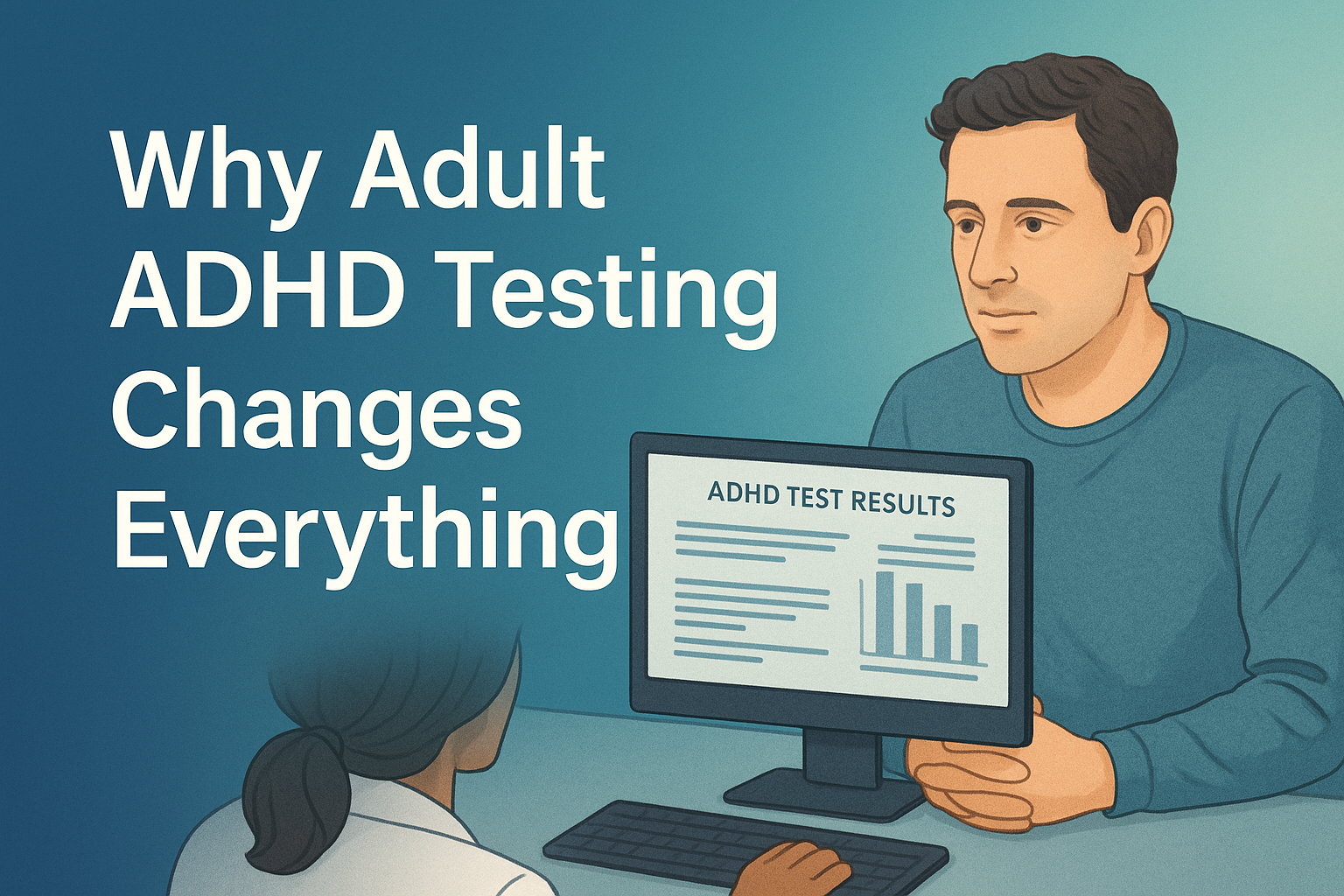
Why Adult ADHD Testing Changes Everything
Adult ADHD testing can transform years of confusion into clarity. Learn why structured ADHD evaluations help adults understand symptoms, prevent misdiagnosis, and create effective treatment plans.
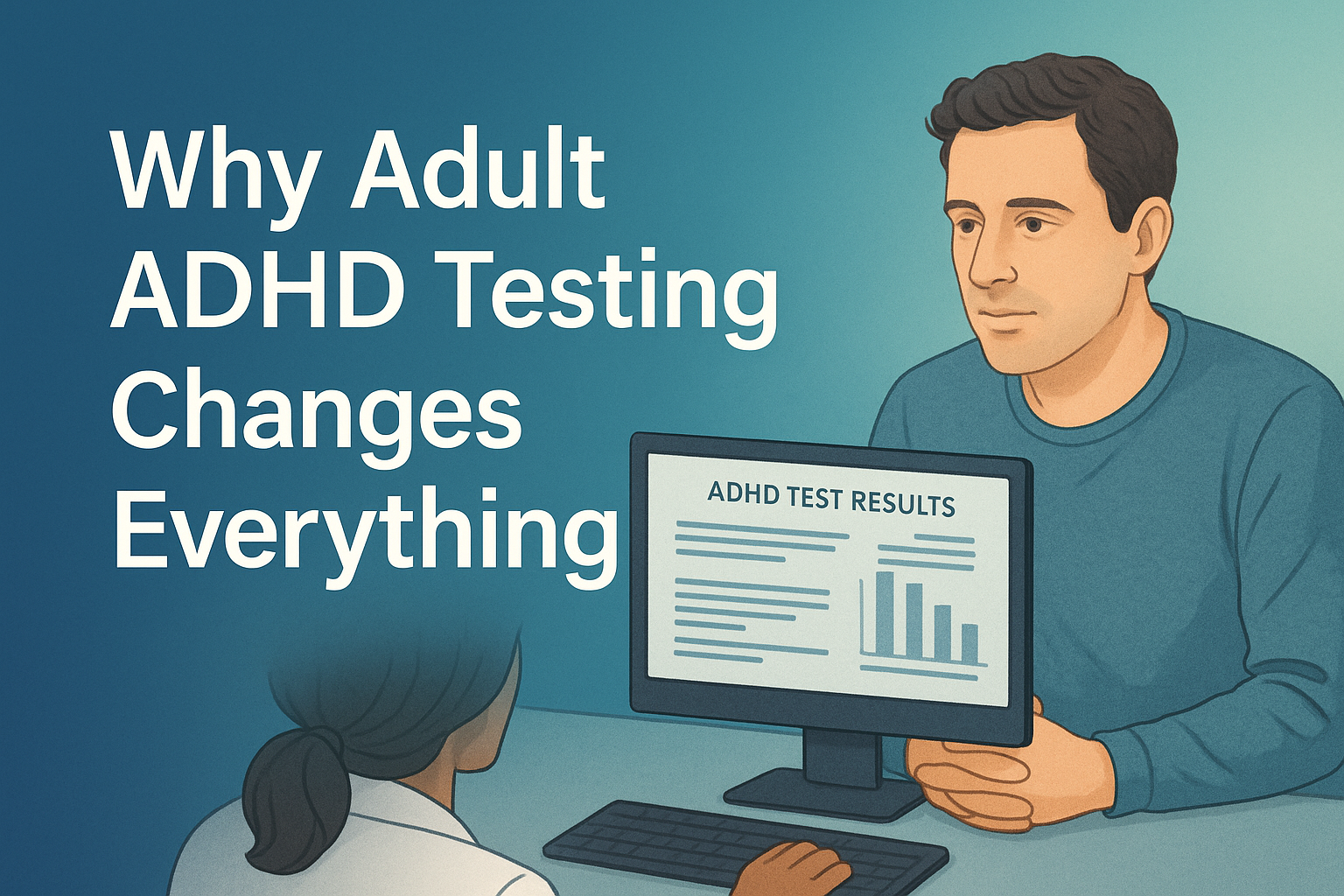
Many adults live for years wondering why everyday tasks feel harder than they should.
They may struggle with:
• Maintaining focus
• Starting important tasks
• Managing time effectively
• Keeping up with work or responsibilities
Often these challenges are misunderstood as laziness, lack of discipline, or stress.
For many adults, ADHD testing becomes the turning point that finally explains these patterns.
A structured evaluation provides clarity, replaces uncertainty, and helps individuals move forward with the right support.
Testing Replaces Guessing
Before testing, many adults spend years trying to figure out what is happening on their own.
Some assume they are simply disorganized. Others believe anxiety or burnout is the only explanation.
A comprehensive ADHD evaluation removes this uncertainty by examining multiple areas of functioning, including:
• Attention regulation
• Impulse control
• Executive functioning
• Emotional regulation
• Functional impairment at work or home
When appropriate, computerized ADHD testing can provide objective data about attention patterns and response time.
If you want to learn more about how testing fits into the diagnostic process, you can read about what happens during an adult ADHD evaluation here.
Clarity Replaces Self-Blame
One of the most powerful outcomes of ADHD testing is emotional clarity.
Many adults report spending years believing they were:
• Lazy
• Unmotivated
• Careless
• “Not trying hard enough”
When testing confirms ADHD, those assumptions are replaced with understanding.
Recognizing that symptoms are connected to a neurological condition — not personal failure — often leads to increased self-compassion and relief.
Accurate Diagnosis Prevents Misdiagnosis
Untreated ADHD can sometimes appear similar to other conditions, including:
• Anxiety
• Depression
• Burnout
• Chronic stress
Without a structured evaluation, ADHD symptoms may be overlooked.
A comprehensive assessment ensures that ADHD is accurately identified and that overlapping conditions are also considered.
You can learn more about how adult ADHD evaluations work here.
Testing Creates a Clear Treatment Path
Testing is not the final step — it is the beginning of a treatment plan.
Once ADHD is confirmed, treatment options may include:
• Medication management
• Executive functioning strategies
• Behavioral support techniques
• Lifestyle adjustments that improve focus and structure
Treatment decisions are individualized based on medical history, symptom patterns, and functional impact.
To learn more about available options, you can review our ADHD treatment and medication management approach here.
Adult ADHD Testing in Pennsylvania and Delaware
At ADHD Philadelphia, we specialize in the evaluation and treatment of adult ADHD.
Our structured assessment process is designed to provide clarity while ensuring responsible, evidence-based care.
Initial consultations begin via secure telehealth for adults located in Pennsylvania and Delaware.
When clinically appropriate, in-person appointments may be scheduled after the initial evaluation.
The Bottom Line
For many adults, ADHD testing changes everything.
It transforms years of confusion into understanding and creates a path toward effective treatment and long-term stability.
If you suspect ADHD may be affecting your work, relationships, or daily functioning, a structured evaluation can provide clarity.
What Patients Often Say About ADHD Treatment and How ADHD Philadelphia Does Things Differently
Many adults with ADHD feel misunderstood, overwhelmed, or ashamed before treatment. Learn what patients often say about ADHD care and how ADHD Philadelphia approaches evaluation and treatment differently.
By Charles Thornton, PMHNP-BC — ADHDPhiladelphia.com

Many adults come to ADHD treatment after years of feeling misunderstood.
They may have been told they are lazy, inconsistent, too emotional, careless, forgetful, irresponsible, or not trying hard enough. Some have spent years blaming themselves for symptoms that were never properly evaluated.
By the time they seek ADHD testing or treatment, many adults are not just looking for medication. They are looking for clarity.
They want to understand why focus feels so difficult.
Why follow-through keeps falling apart.
Why routines do not stick.
Why they can perform well under pressure but struggle with everyday tasks.
Why they care deeply but still cannot stay consistent.
At ADHD Philadelphia, we work with adults in Pennsylvania and Delaware who are trying to understand whether ADHD may be affecting their daily life, work, relationships, emotions, and executive functioning.
This article explains what patients often say about ADHD treatment and how ADHD Philadelphia approaches care differently.
“I Care, But I Still Cannot Follow Through”
One of the most common things adults say is:
“I care, but I still cannot follow through.”
This is one of the most painful parts of untreated or undiagnosed ADHD. Many adults care deeply about their responsibilities, but caring does not always translate into consistent action.
They may care about their work but still miss deadlines.
They may care about their partner but still forget important conversations.
They may care about their health but still struggle to keep routines.
They may care about their goals but still delay starting.
This can create shame because the person assumes the problem must be a lack of discipline. But adult ADHD often affects executive function, including task initiation, planning, working memory, emotional regulation, time management, and follow-through.
At ADHD Philadelphia, we do not reduce ADHD to a simple motivation problem. We look at the patterns behind the symptoms.
Many adults feel relieved when they learn that adult ADHD can make follow-through difficult even when you care, especially when executive function challenges affect task initiation, planning, working memory, and consistency.
“I Thought I Was Just Lazy”
Many adults with ADHD have carried the word “lazy” for years.
They may have been told they had potential but did not apply themselves. They may have been able to succeed in some areas but struggled badly in others. They may have completed school, built careers, started businesses, or managed families while silently feeling overwhelmed.
This confusion is common because ADHD in adults can be inconsistent.
A person may perform well when something is urgent, interesting, structured, or externally accountable. But they may struggle when the task is boring, repetitive, self-directed, delayed in reward, or emotionally uncomfortable.
That inconsistency can look like laziness from the outside. Internally, however, many adults are working extremely hard just to keep up.
ADHD Philadelphia approaches this differently by helping patients understand the difference between character problems and executive function problems.
Recognizing adult ADHD symptoms can help adults understand that problems with focus, procrastination, disorganization, emotional overwhelm, and inconsistency may have a clinical explanation.
“My Brain Feels Overwhelmed All the Time”
Another common concern is mental overwhelm.
Adults may describe their brain as crowded, loud, scattered, overloaded, or constantly behind. They may feel like every task has too many steps. Even simple responsibilities can feel mentally exhausting.
Answering emails may feel like too much.
Cleaning one room may feel like cleaning the entire house.
Making a phone call may feel emotionally heavy.
Starting paperwork may feel impossible.
Choosing what to do first may feel paralyzing.
This often happens because ADHD affects executive functioning. The brain may struggle to sort priorities, break tasks into steps, hold information in working memory, manage emotions, and begin action.
At ADHD Philadelphia, treatment is not only about “paying attention.” It is about understanding how ADHD affects the systems that help adults manage daily life.
Many adults seek treatment because adult ADHD can cause chronic overwhelm, making everyday responsibilities feel heavier, harder to organize, and more difficult to begin.
“I Can Focus on Some Things, So I Did Not Think It Could Be ADHD”
Many adults delay evaluation because they can focus sometimes.
They may say:
“I can focus when I am interested.”
“I can work well under pressure.”
“I can finish things at the last minute.”
“I did well in school when I had structure.”
“I can focus for hours on something I enjoy.”
This does not rule out ADHD.
ADHD is not simply an inability to pay attention. It is often a problem with regulating attention. Many adults with ADHD can focus intensely when something is urgent, stimulating, interesting, or rewarding. The difficulty is often focusing when the task is boring, repetitive, delayed in reward, or self-directed.
This is why adults may feel confused. They can focus sometimes, but not reliably when they need to.
ADHD Philadelphia evaluates these patterns carefully instead of assuming that occasional focus means ADHD cannot be present.
A structured adult ADHD diagnosis and evaluation can help clarify whether inconsistent focus, procrastination, poor time management, and executive dysfunction are related to ADHD or another concern.
“Decision-Making Feels Exhausting”
Many adults with ADHD struggle with decisions.
They may overthink small choices, avoid decisions, second-guess themselves, or feel mentally drained before they begin. Even simple decisions can become overwhelming when the brain has too many options to compare.
This may affect work, home life, finances, relationships, health routines, and daily responsibilities.
Decision-making requires planning, prioritizing, working memory, emotional regulation, and the ability to tolerate uncertainty. These are executive function skills that can be affected by ADHD.
At ADHD Philadelphia, we help adults understand how decision fatigue and executive dysfunction may be part of their ADHD pattern.
For many adults, ADHD can make decision-making hard because executive dysfunction affects prioritizing, organizing options, managing uncertainty, and moving from thought into action.
“I Have Tried So Many Systems, But Nothing Sticks”
Many adults with ADHD have tried planners, apps, notebooks, reminders, alarms, calendars, habit trackers, productivity videos, and self-help strategies.
Some tools may help temporarily. Then life gets busy, the system becomes too complicated, or the person forgets to use it.
This can lead to frustration because the adult may think, “Nothing works for me.”
Often, the issue is not that tools cannot help. The issue is that the tool may not match how the ADHD brain actually works.
A system that requires too many steps may fail.
A planner that stays closed may disappear from awareness.
A reminder without a clear next action may not help.
A routine that depends on perfect consistency may collapse after one disruption.
ADHD Philadelphia focuses on realistic strategies, not perfect systems.
The goal is to build support that is simple, visible, repeatable, and clinically appropriate.
Many adults become frustrated because ADHD can make routines hard to maintain, especially when the system depends on memory, motivation, or perfect consistency.
“I Was Treated for Anxiety or Depression, But Something Still Felt Missing”
Many adults with ADHD have previously been treated for anxiety, depression, or stress.
Sometimes those diagnoses are accurate. Anxiety and depression can occur alongside ADHD. But sometimes ADHD is missed because its symptoms overlap with other conditions.
Difficulty concentrating can occur with anxiety.
Low motivation can occur with depression.
Restlessness can occur with stress.
Sleep problems can affect memory and attention.
Trauma can affect emotional regulation and focus.
A careful ADHD evaluation should not assume that every focus problem is ADHD. It should also not ignore ADHD simply because anxiety or depression is present.
At ADHD Philadelphia, the goal is diagnostic clarity. That means looking at the full picture, including symptoms, history, impairment, functioning, and overlapping concerns.
For many adults, understanding ADHD vs anxiety in adults is important because both can affect concentration, restlessness, sleep, motivation, emotional regulation, and daily functioning.
“I Want Treatment, But I Also Want to Be Monitored Carefully”
Many adults want help, but they also want responsible care.
This is especially important when medication is being considered. ADHD medication management should involve education, monitoring, follow-up, safety review, and individualized treatment planning.
At ADHD Philadelphia, treatment is not a one-time transaction. It is a monitored process.
Patients are assessed and monitored over time. Treatment response, side effects, functioning, safety, and appropriateness are reviewed during follow-up care.
For stimulant medications, ongoing follow-up is required for safety monitoring, treatment response, and dosage adjustments. ADHD Philadelphia also reviews the prescription drug monitoring program as part of controlled-substance prescribing procedures.
This helps support responsible and clinically appropriate ADHD care.
When clinically appropriate, ADHD medication management for adults may be part of a structured treatment plan that includes monitoring, education, follow-up, and safety review.
“I Need Someone to Actually Explain What Is Happening”
Many adults have experienced rushed care, confusing explanations, or treatment plans that did not fully address their concerns.
They may want to understand:
Why symptoms happen
What ADHD is affecting
Whether medication is appropriate
What treatment can realistically improve
What follow-up looks like
How to manage side effects
How to build better systems
How ADHD affects work, home, relationships, and emotions
At ADHD Philadelphia, education is part of treatment.
Patients deserve to understand their diagnosis and treatment plan in clear language. ADHD care should help people feel more informed, not more confused.
Understanding the ADHD Philadelphia patient journey can help adults know what to expect from evaluation, diagnosis, treatment planning, follow-up care, and ongoing monitoring.
How ADHD Philadelphia Does Things Differently
ADHD Philadelphia focuses on adult ADHD evaluation and treatment for patients in Pennsylvania and Delaware.
The approach is designed to be structured, professional, and clear.
Care may include:
Adult ADHD diagnostic evaluation
Review of current symptoms
Review of earlier life patterns when clinically relevant
Screening for overlapping concerns
Assessment of functional impairment
Medication management when clinically appropriate
Education about ADHD and executive functioning
Practical strategies for daily functioning
Ongoing monitoring and follow-up
Responsible prescribing procedures
Clear treatment expectations
The goal is not simply to label symptoms. The goal is to help adults understand what is happening and what can be done next.
At ADHD Philadelphia, adult ADHD treatment is individualized based on symptoms, goals, medical history, treatment response, and clinical appropriateness.
Telehealth ADHD Care in Pennsylvania and Delaware
ADHD Philadelphia provides adult ADHD evaluation and treatment through secure telehealth appointments for patients in Pennsylvania and Delaware.
Telehealth can make care more accessible for adults who are busy, overwhelmed, working remotely, parenting, attending school, or struggling to begin the evaluation process.
Initial appointments begin through telehealth. In-person appointments may be scheduled after the first online appointment when clinically appropriate. There are no walk-in appointments.
This structure helps adults begin care while maintaining appropriate clinical monitoring and follow-up.
Adults searching for ADHD testing in Pennsylvania can begin with a structured telehealth evaluation through ADHD Philadelphia.
Adults searching for ADHD testing in Delaware can also begin with a secure telehealth evaluation through ADHD Philadelphia.
Who May Benefit From an ADHD Evaluation?
An adult ADHD evaluation may be helpful if you regularly struggle with:
Focus and concentration
Procrastination
Task initiation
Follow-through
Disorganization
Time management
Forgetfulness
Emotional overwhelm
Decision fatigue
Restlessness
Inconsistent routines
Trouble completing responsibilities
Feeling behind despite working hard
Difficulty managing work, school, relationships, or home life
Many adults seek ADHD evaluation because they are tired of blaming themselves for the same patterns.
They want to know whether ADHD is part of the explanation and whether treatment may help.
If these patterns are affecting daily life, adult ADHD testing and evaluation may help provide clarity and determine whether treatment may be appropriate.
Frequently Asked Questions About ADHD Philadelphia Treatment
Does ADHD Philadelphia diagnose adult ADHD?
Yes. ADHD Philadelphia provides adult ADHD evaluation and treatment for adults in Pennsylvania and Delaware. The evaluation process is designed to review symptoms, history, impairment, and other possible contributing factors.
Is ADHD treatment only medication?
No. ADHD treatment may include education, executive function strategies, behavioral tools, lifestyle review, medication management when clinically appropriate, and ongoing monitoring.
Can ADHD be missed in adults?
Yes. Adult ADHD is often missed when symptoms are mistaken for stress, anxiety, depression, laziness, burnout, or personality traits. Many adults are diagnosed later in life after years of struggling.
Does ADHD Philadelphia offer telehealth?
Yes. Initial appointments begin through telehealth for adults in Pennsylvania and Delaware. In-person appointments may be scheduled after the first online appointment when clinically appropriate. No walk-in appointments are available.
What makes ADHD Philadelphia different?
ADHD Philadelphia focuses on structured adult ADHD care, clear education, responsible treatment planning, ongoing monitoring, and practical support for real-life executive function challenges.
Take the First Step
If you have spent years feeling misunderstood, inconsistent, overwhelmed, or frustrated by your own follow-through, ADHD may be worth evaluating.
You do not have to keep blaming yourself without answers.
Adult ADHD testing and treatment can help clarify what is happening and whether treatment may improve focus, organization, emotional regulation, decision-making, follow-through, and daily functioning.
If you are an adult in Pennsylvania or Delaware, ADHD Philadelphia can help you take the next step.
Schedule an adult ADHD evaluation today through ADHD Philadelphia.
Medical Disclaimer
This article is for educational purposes only and is not a substitute for medical advice, diagnosis, or treatment. If you are experiencing symptoms of ADHD, anxiety, depression, sleep problems, substance use concerns, or another mental health concern, consult a qualified healthcare professional.

Does Undiagnosed Adult ADHD Shorten Life Expectancy?
Emerging research suggests untreated adult ADHD may increase long-term health risks. Learn how proper diagnosis and structured treatment can improve stability and reduce preventable risks for adults in Pennsylvania and Delaware.
Recent research has raised an important question:
Does untreated adult ADHD affect long-term health and life expectancy?
Emerging data suggests that adults with untreated ADHD may face increased health risks that indirectly impact longevity. These risks are not caused by ADHD itself — but by the behavioral, emotional, and lifestyle patterns that often accompany untreated symptoms.
For adults in Pennsylvania and Delaware, understanding these risks is critical.
Why Would ADHD Impact Long-Term Health?
ADHD is a neurodevelopmental condition that affects executive functioning — including impulse control, planning, and self-regulation.
When symptoms are untreated, adults may experience:
• Increased risk-taking behaviors
• Higher rates of smoking or substance use
• Poor sleep patterns
• Irregular eating habits
• Reduced physical activity
• Higher rates of depression and anxiety
Over time, these patterns can contribute to cardiovascular risk, metabolic concerns, and accidental injury.
It’s Not ADHD — It’s Untreated ADHD
ADHD does not directly shorten life expectancy.
However, untreated ADHD can increase:
• Motor vehicle accident risk
• Substance-related complications
• Mental health comorbidities
• Chronic stress-related health effects
When symptoms are identified early and treated appropriately, many of these risks can be significantly reduced.
How Treatment Improves Long-Term Outcomes
Comprehensive ADHD treatment may include:
• Structured medication management
• Executive functioning support
• Cognitive behavioral therapy
• Lifestyle optimization strategies
Medication, when clinically appropriate, can reduce impulsivity and improve decision-making — which may reduce risky behaviors.
You can learn more about our Medication Management & Stimulant Treatment Policy here.
The Importance of Adult ADHD Diagnosis
Many adults in Pennsylvania and Delaware reach their 30s, 40s, or even 50s before receiving an accurate ADHD diagnosis.
Without understanding the root cause of executive dysfunction, individuals may internalize years of frustration, burnout, and self-blame.
A structured diagnostic process helps clarify whether ADHD symptoms are present and whether other conditions may be contributing to attention and executive functioning difficulties.
If you are unsure how ADHD is formally diagnosed, you can learn more about our adult ADHD diagnosis process here.
Early Identification Matters
When adult ADHD is properly diagnosed and managed:
• Risk-taking behavior decreases
• Emotional regulation improves
• Occupational functioning stabilizes
• Health routines become easier to maintain
Treatment is not just about productivity.
It’s about long-term health stability.
Adult ADHD Care in Pennsylvania & Delaware
At ADHD Philadelphia, adult ADHD evaluation and treatment are structured, safety-focused, and individualized.
Telehealth services are available throughout Pennsylvania and Delaware.
In-person appointments may be scheduled after the initial evaluation when clinically appropriate.
Adults across Pennsylvania and Delaware often wonder whether their symptoms are related to ADHD or anxiety. Understanding the difference can help guide the next step in treatment. Our guide on ADHD vs anxiety in adults explains how these conditions differ.
Take the First Step
If you suspect untreated ADHD may be affecting your health, relationships, or long-term stability, a comprehensive evaluation is the first step toward clarity.

How Treating Undiagnosed Adult ADHD Improves Life for Adults in Delaware and Pennsylvania
Treating undiagnosed adult ADHD can significantly improve focus, productivity, and emotional well-being. Learn how proper diagnosis and treatment help adults in Pennsylvania and Delaware improve daily functioning and long-term stability.
Many adults live for years with undiagnosed ADHD.
They may struggle with focus, organization, and emotional regulation without understanding why everyday tasks feel harder than they should.
For many adults in Delaware and Pennsylvania, receiving a proper ADHD diagnosis can be life-changing.
When ADHD is identified and treated appropriately, improvements often occur across multiple areas of life — including work performance, relationships, and overall mental well-being.
Why ADHD Often Goes Undiagnosed in Adults
Many adults attribute their challenges to stress, burnout, anxiety, or personal shortcomings.
Common experiences include:
• Chronic procrastination
• Difficulty finishing tasks
• Disorganization
• Mental overload
• Emotional frustration
Because ADHD symptoms can overlap with anxiety or depression, the condition may go unrecognized for years.
A structured clinical evaluation helps determine whether ADHD is contributing to these challenges.
You can learn more about our adult ADHD evaluation process here.
Professional and Career Improvements
When ADHD symptoms are properly treated, many adults notice meaningful changes in their work performance.
Common improvements include:
Better Focus and Attention
Adults often find it easier to sustain attention during meetings, projects, and daily work tasks.
Improved Organization and Time Management
Treatment can help individuals create systems that make planning, prioritizing, and completing tasks more manageable.
Increased Productivity
When executive functioning improves, work becomes more efficient and less stressful.
For professionals working remotely or managing complex workloads, these changes can significantly improve career stability.
Stronger Relationships
ADHD can affect communication, follow-through, and emotional regulation.
When symptoms improve, many adults experience:
• Improved listening and communication
• Reduced impulsive reactions
• Better follow-through on commitments
• Less conflict in personal relationships
These changes often lead to stronger connections with partners, family members, and colleagues.
If you’re experiencing chronic focus problems, mental overload, or difficulty finishing tasks, it may help to understand whether ADHD or anxiety is the underlying cause. Our article on ADHD vs anxiety in adults explains the differences and when an evaluation may be helpful.
Improved Emotional Well-Being
Many adults with untreated ADHD experience years of frustration and self-criticism.
After diagnosis and treatment, individuals often report:
• Reduced anxiety and stress
• Improved self-confidence
• Greater emotional stability
• Increased sense of control over daily life
Understanding that ADHD is a neurological condition — not a character flaw — can be profoundly validating.
Research also suggests untreated ADHD may contribute to long-term health risks related to impulsivity and lifestyle instability.
You can read more about how undiagnosed ADHD may impact long-term health here.
ADHD Treatment Options
Treatment for adult ADHD is individualized and may include:
• Medication management
• Executive functioning strategies
• Behavioral support techniques
• Lifestyle adjustments that improve focus and structure
If ADHD is diagnosed, structured treatment options are reviewed based on each individual’s clinical needs.
You can learn more about our ADHD treatment and medication management approach here.
Adult ADHD Care in Delaware and Pennsylvania
At ADHD Philadelphia, we specialize in the diagnosis and treatment of adult ADHD.
Our telehealth model allows adults throughout Delaware and Pennsylvania to access structured evaluation and treatment without long travel times or scheduling barriers.
Initial evaluations begin via secure telehealth appointments.
When clinically appropriate, in-person appointments may be scheduled afterward.
There are no walk-in appointments.
Ready to Begin?
If you suspect ADHD may be affecting your work, relationships, or daily functioning, a structured evaluation can provide clarity.