
Why Adults With ADHD Start Tasks at the Last Minute (And How Treatment Can Help)
Many adults with ADHD find themselves starting important tasks at the last minute. This pattern is often related to executive function differences in the ADHD brain. Learn why it happens and how ADHD testing and treatment can help.
Many adults with ADHD notice a pattern in their work and personal life: important tasks often get started at the last possible moment.
Bills are paid the night before they are due.
Projects begin only hours before a deadline.
Emails sit unanswered until urgency builds.
This pattern can feel frustrating or confusing, especially when the person truly wants to complete the task earlier.
For many adults, this pattern is not about laziness or lack of motivation. Instead, it is often related to how ADHD affects the brain’s executive function system, which regulates attention, planning, motivation, and task initiation.
Difficulty beginning before a deadline becomes urgent may reflect problems with task initiation in adults with ADHD.
Understanding why this happens can help adults recognize ADHD symptoms and explore solutions that improve daily functioning.
ADHD and Executive Function
ADHD is considered a neurodevelopmental condition that affects the brain systems responsible for self-management and attention regulation.
Executive functions include abilities such as:
• starting tasks
• organizing information
• maintaining attention
• managing time
• regulating effort and motivation
When these systems are less efficient, tasks that seem simple for others may require much greater mental effort.
This can lead to a pattern where the brain delays action until urgency creates enough stimulation to begin the task.
Research has shown that ADHD involves differences in brain systems that regulate attention and motivation, particularly those involving dopamine and norepinephrine.
The “Deadline Effect” in ADHD
Many adults with ADHD report that they work best when a deadline is very close.
This phenomenon is sometimes called the deadline effect.
When a task suddenly becomes urgent, the brain experiences increased stimulation and pressure. This can temporarily boost focus and motivation.
As a result, many adults with ADHD find themselves completing work in short bursts of intense productivity right before deadlines.
While this strategy can occasionally produce results, it often comes with downsides:
• high stress
• inconsistent productivity
• sleep disruption
• reduced quality of work
• chronic mental exhaustion
Over time, relying on urgency as a primary motivator can create significant stress in work, school, and personal life.
Why the ADHD Brain Delays Tasks
Several ADHD-related factors can contribute to procrastination and last-minute productivity.
Task Initiation Difficulty
One of the most common ADHD symptoms is difficulty starting tasks, especially those that feel boring, repetitive, or overwhelming.
Even when someone knows a task is important, their brain may struggle to activate the mental energy required to begin.
Motivation and Reward Processing
The ADHD brain often responds strongly to interest, novelty, urgency, or reward.
Tasks that lack these elements may feel harder to engage with, which can lead to delays.
Time Perception Differences
Many adults with ADHD experience differences in how they perceive time.
This can make it difficult to estimate how long tasks will take or recognize when action needs to begin.
As a result, deadlines can arrive sooner than expected.
Difficulty feeling a future deadline until it becomes urgent may be connected to time blindness in adults with ADHD.
Emotional Impact of ADHD Procrastination
Repeated procrastination can have emotional consequences.
Adults may begin to feel:
• frustrated with themselves
• anxious about deadlines
• overwhelmed by unfinished tasks
• worried about work performance
Many people spend years believing these patterns reflect personal shortcomings.
However, for many adults, these experiences are actually consistent with undiagnosed ADHD.
How ADHD Evaluation Can Help
If procrastination, focus problems, and mental exhaustion have been persistent patterns, a professional ADHD evaluation may help clarify what is happening.
An ADHD evaluation typically includes:
• clinical history and symptom review
• discussion of attention and executive function patterns
• assessment of how symptoms affect work and daily life
For many adults, receiving an accurate diagnosis can help them understand long-standing challenges and begin exploring strategies that improve productivity and well-being.
You can learn more about the evaluation process here:
Adult ADHD Diagnosis in Pennsylvania and Delaware
ADHD Treatment Options
ADHD treatment for adults may include a combination of approaches depending on individual needs.
Common options include:
• medication management
• behavioral strategies
• executive function coaching
• lifestyle adjustments that support focus and organization
Evidence-based treatments, including stimulant medications and atomoxetine, have strong research support for improving ADHD symptoms and functioning in many patients.
Treatment decisions are individualized and made collaboratively between the patient and clinician.
When to Consider ADHD Testing
Adults may consider ADHD testing if they notice patterns such as:
• chronic procrastination
• difficulty starting tasks
• problems with focus or organization
• mental exhaustion from routine tasks
• struggling with deadlines despite strong effort
For many people, understanding the underlying cause of these patterns can be an important step toward improvement.
*adult ADHD testing in Pennsylvania and Delaware
ADHD Testing and Treatment in Pennsylvania and Delaware
At ADHDPhiladelphia.com, adults can receive professional ADHD evaluations and treatment focused specifically on adult ADHD.
Appointments are available for adults located in:
• Pennsylvania
• Delaware
Initial evaluations are conducted through telehealth, with in-person visits scheduled when clinically appropriate.
If you have struggled with focus, procrastination, or mental exhaustion for years, learning more about ADHD testing may be a helpful step.
You can schedule an appointment here:
ADHD in Adults: Signs You Were Never Diagnosed (And What to Do Next)
Many adults struggle with focus, organization, and overwhelm without realizing ADHD may be the cause. Learn the key signs of undiagnosed adult ADHD and how to get evaluated in Pennsylvania and Delaware.
Many adults go years—sometimes decades—without realizing they have ADHD.
They may have learned to cope, push through, or compensate. But over time, the challenges often become harder to manage, especially with increased responsibilities, work demands, or life stress.
If you’ve ever wondered whether your struggles with focus, motivation, or organization could be something more, this guide can help you understand the signs of ADHD symptoms in adults and what steps to take next.
Why ADHD Often Goes Undiagnosed in Adults
ADHD is commonly associated with childhood, but many adults were never evaluated growing up.
Some individuals:
Performed well enough in school
Developed coping strategies early
Were misdiagnosed with anxiety or depression
As a result, adult ADHD diagnosis is often delayed until symptoms begin to interfere more significantly with work, relationships, or daily functioning.
Common Signs of Undiagnosed ADHD in Adults
1. Chronic Difficulty Starting Tasks
You may know exactly what needs to be done—but struggle to begin.
This is not procrastination in the traditional sense. It’s often related to executive function challenges in the brain.
2. Feeling Constantly Overwhelmed
Tasks pile up quickly, leading to mental overload.
If this sounds familiar, you may relate to our guide on
👉 Why Adults with ADHD Feel Overwhelmed and How to Regain Control
3. Trouble Staying Organized
You may frequently:
Lose important items
Forget appointments
Struggle to keep systems in place
4. Inconsistent Focus
Some days you’re highly productive.
Other days, even simple tasks feel impossible to complete.
5. Restlessness or Racing Thoughts
Many adults with ADHD describe:
Difficulty “turning off” their mind
Feeling mentally restless
Jumping between thoughts
This can sometimes be confused with anxiety.
ADHD vs Anxiety: Why the Difference Matters
ADHD and anxiety share overlapping symptoms—but they are not the same.
Understanding the difference is key to choosing the right treatment approach.
If you’re unsure which may apply to you, read:
👉 ADHD vs Anxiety: How Adults Can Tell the Difference
When to Consider an ADHD Evaluation
You may benefit from an evaluation if:
Symptoms have been present since childhood
You experience consistent difficulty with focus or organization
Your daily functioning is impacted at work or home
At ADHD Philadelphia, we provide adult ADHD diagnosis in Pennsylvania and Delaware, helping individuals better understand their symptoms and explore treatment options.
ADHD Testing and Treatment Options
If ADHD is identified, treatment can significantly improve daily functioning.
Options may include:
Behavioral strategies
Lifestyle adjustments
Medication management
Learn more about:
👉 ADHD Testing & Evaluation for Adults in Pennsylvania & Delaware
👉 ADHD Treatment & Medication Management for Adults in Pennsylvania & Delaware
Local ADHD Testing in Pennsylvania & Delaware
We provide ADHD evaluations for adults in:
Take the Next Step
If you’ve been struggling with focus, motivation, or feeling overwhelmed, it may be time to explore whether ADHD is the underlying cause.
ADHD is treatable—and understanding your symptoms is the first step toward regaining control.
👉 Book your evaluation at ADHDPhiladelphia.com
ADHD vs Anxiety: How Adults Can Tell the Difference
Many adults struggle with focus, racing thoughts, and overwhelm and assume anxiety is the cause. However, ADHD and anxiety often overlap. Learn how clinicians distinguish ADHD from anxiety and when adults in Pennsylvania and Delaware may benefit from ADHD testing.
Many adults who struggle with focus, racing thoughts, or difficulty completing tasks assume they may have anxiety.
However, symptoms of ADHD and anxiety often overlap, which can make it difficult to determine the underlying cause.
Understanding the difference can help individuals decide whether an ADHD evaluation for adults may be helpful.
Why ADHD and Anxiety Are Often Confused
Both conditions can involve:
• difficulty concentrating
• restlessness
• racing thoughts
• feeling overwhelmed
• trouble completing tasks
Many adults first begin exploring these questions when they recognizesigns of ADHD in adultsthat have affected them for years.
Key Differences Between ADHD and Anxiety
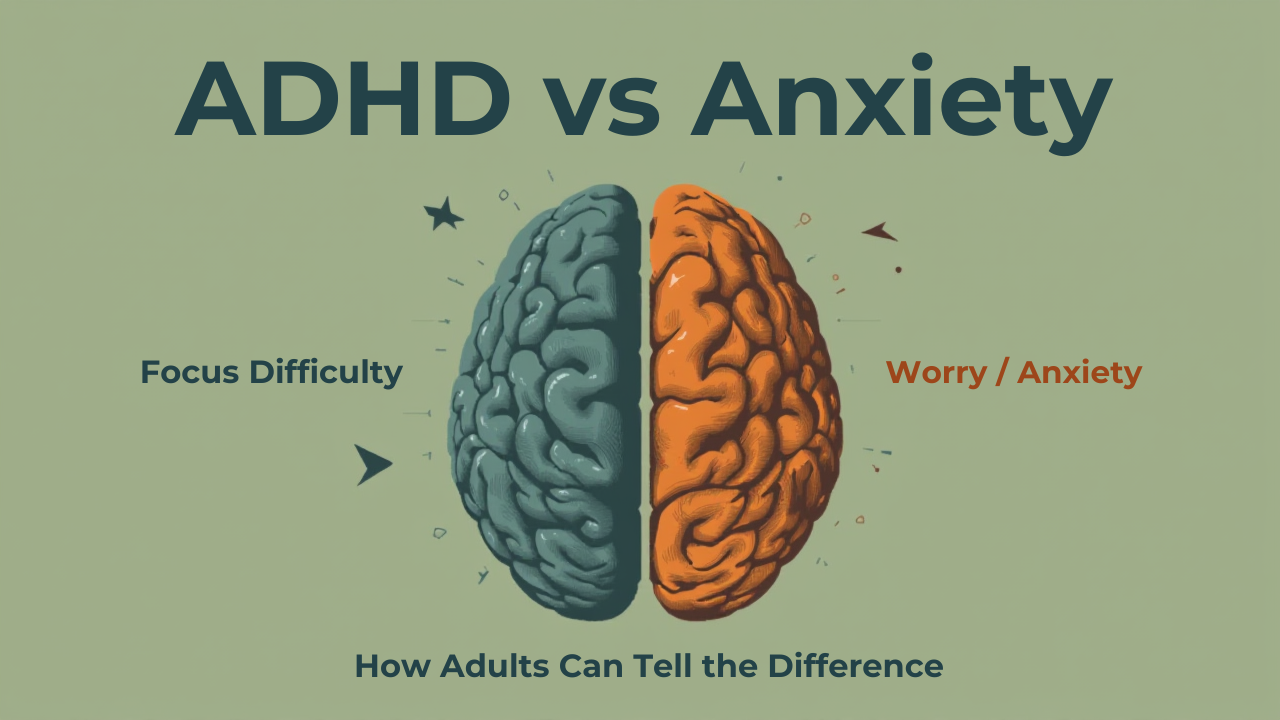
ADHD
ADHD primarily affects attention regulation and executive functioning.
Common patterns include:
• difficulty starting tasks
• losing items frequently
• procrastination
• time blindness
• impulsive decisions
These symptoms often occur even when a person feels calm.
Anxiety
Anxiety is primarily related to excessive worry or fear about future events.
Common patterns include:
• persistent worry
• physical tension
• difficulty relaxing
• fear of making mistakes
• overthinking decisions
Concentration problems usually occur because the mind is preoccupied with worry.
For some LGBTQ+ adults, ADHD and anxiety can be even harder to separate when masking, identity-related stress, burnout, and executive dysfunction overlap.
When ADHD and Anxiety Occur Together
Many adults experience both ADHD and anxiety.
In fact, untreated ADHD can lead to anxiety because individuals may struggle with:
• missed deadlines
• disorganization
• difficulty keeping up with responsibilities
Over time, this stress can increase anxiety symptoms.
When ADHD is identified and treated, many adults experience improvement in both focus and anxiety symptoms, especially when appropriate ADHD medications for adults are considered.
How ADHD Evaluations Help Clarify the Diagnosis
An ADHD evaluation typically includes:
• review of symptom history
• discussion of attention patterns
• evaluation of executive functioning
• screening for anxiety and other conditions
This process helps determine whether ADHD, anxiety, or a combination of factors may be affecting daily functioning.
ADHD Testing and Treatment for Adults
Adults located in Pennsylvania or Delaware who experience persistent focus difficulties may benefit from a professional ADHD evaluation for adults in Pennsylvania and Delaware.
ADHDPhiladelphia.com provides adult ADHD testing and treatment through telehealth and follow-up care.
Understanding the cause of attention challenges can help individuals develop effective strategies for improving focus, productivity, and quality of life.
ADHD Testing vs ADHD Diagnosis — What’s the Difference?
ADHD testing and ADHD diagnosis are not the same. Learn how adult ADHD is evaluated in Pennsylvania and Delaware and why structured clinical assessment matters more than online quizzes.
If you are searching for “ADHD testing near me” or “ADHD diagnosis in Philadelphia,” you may not realize that ADHD testing and ADHD diagnosis are not the same thing.
Understanding the difference can prevent confusion — and ensure you receive the right evaluation.
At ADHD Philadelphia, we provide structured adult ADHD evaluations across Pennsylvania and Delaware, beginning with telehealth appointments and moving to in-person visits when clinically appropriate.
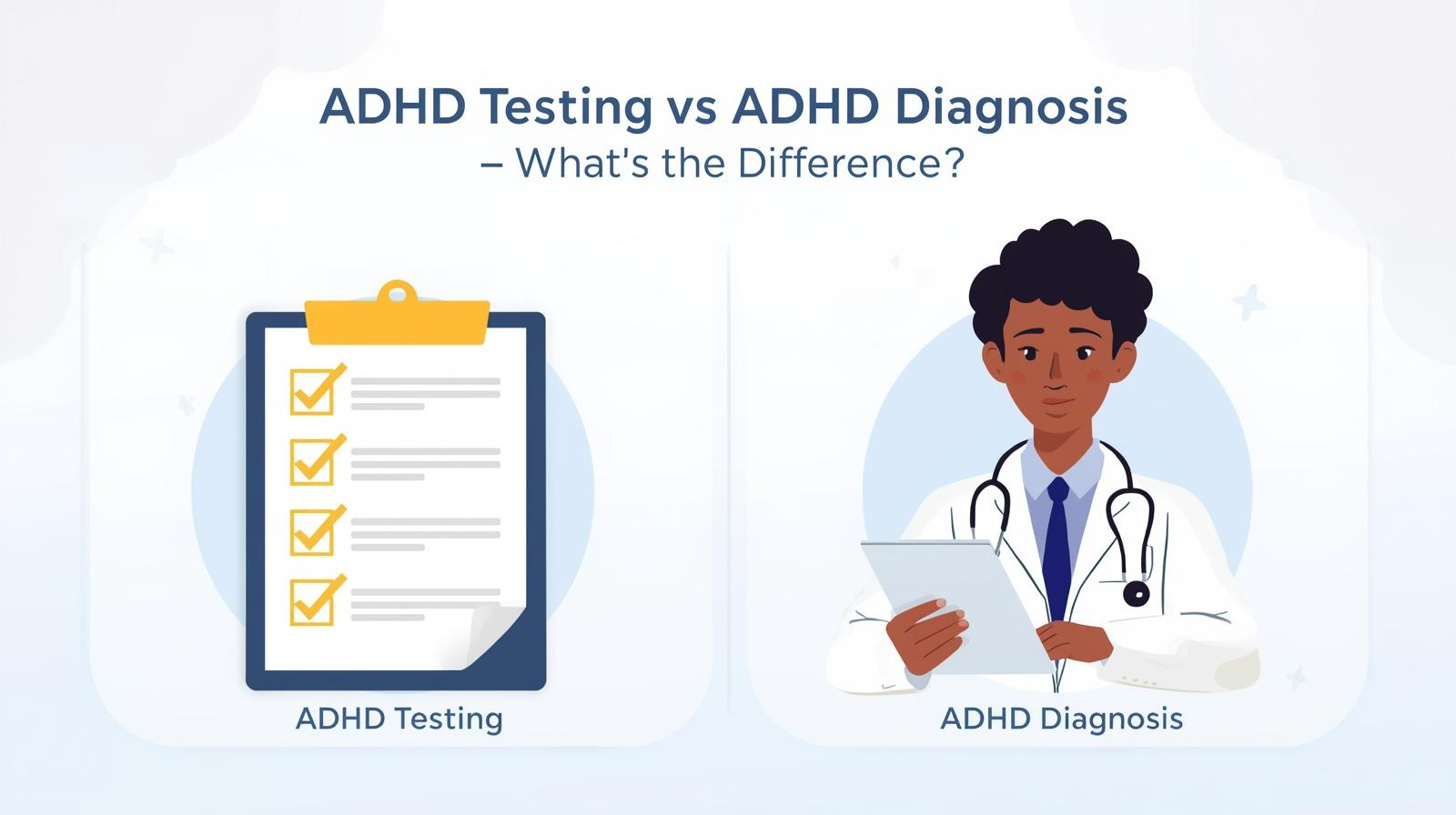
What Is ADHD Testing?
ADHD testing refers to objective tools used to measure attention, impulsivity, and executive functioning.
Testing may include:
Computerized attention assessments
Behavioral questionnaires
Symptom rating scales
Collateral reports when appropriate
Testing provides objective data. It measures performance patterns.
However, testing alone does not equal a diagnosis.
What Is ADHD Diagnosis?
ADHD diagnosis is a clinical decision made after reviewing:
Childhood history
Current symptoms
Functional impairment
Work and academic impact
Emotional regulation patterns
Rule-outs for overlapping conditions
Diagnosis requires clinical judgment.
Testing supports diagnosis — but does not replace a structured evaluation.
Why Testing Alone Is Not Enough
Some individuals complete online ADHD tests and assume the results confirm ADHD.
Online quizzes are not diagnostic tools.
A formal ADHD diagnosis requires:
Persistent symptoms
Functional impairment
Clinical interview
Medical and psychiatric review
Testing provides information.
Diagnosis provides clarity.
Do Adults Need ADHD Testing?
Not every adult requires computerized testing.
In some cases, a structured clinical interview is sufficient.
In other cases, testing strengthens diagnostic confidence.
The decision depends on:
Symptom presentation
History clarity
Functional impairment
Differential diagnosis considerations
A professional evaluation determines what is appropriate.
ADHD Evaluation in Pennsylvania & Delaware
Adult ADHD evaluations at ADHD Philadelphia begin with secure telehealth consultation.
After the initial appointment:
ADHD testing may be recommended
In-person visits may be scheduled when clinically appropriate
Treatment planning is discussed
There are no walk-in appointments.
The Bottom Line
ADHD testing measures performance.
ADHD diagnosis requires structured clinical evaluation.
If you are searching for ADHD testing in Philadelphia or ADHD evaluation in Delaware, make sure you are receiving a complete diagnostic process — not just a test.
Clarity begins with structured evaluation.