
Adult ADHD Treatment Plans in Pennsylvania and Delaware: Medication, Therapy, and Executive Function Support
Adult ADHD treatment is not one-size-fits-all. Learn how treatment plans for adults in Pennsylvania and Delaware may include medication management, therapy-informed support, executive function strategies, safe prescribing, and structured follow-up care.
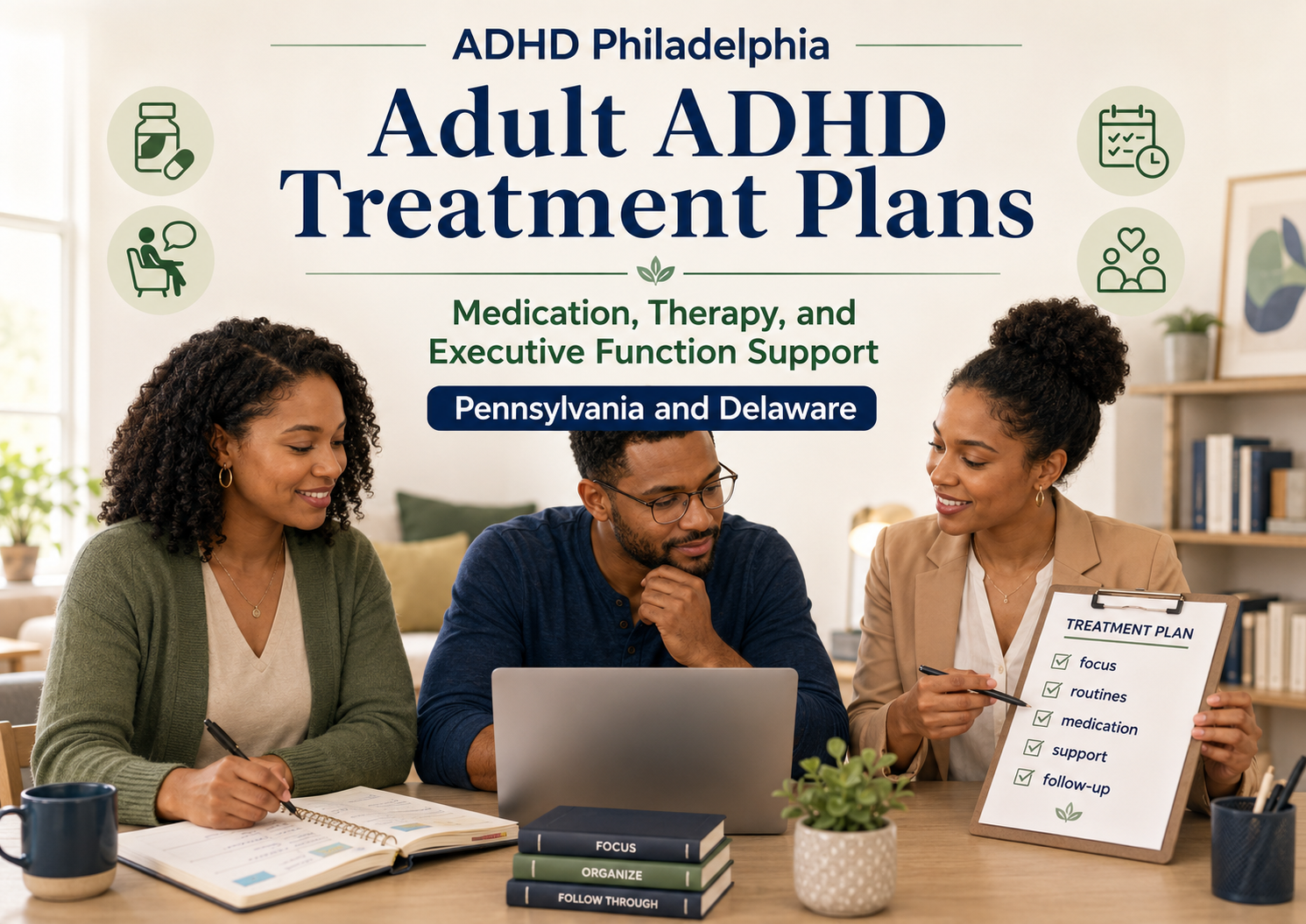
Adult ADHD Treatment Plans in Pennsylvania and Delaware: Medication, Therapy, and Executive Function Support
Getting diagnosed with adult ADHD can bring relief, but it can also bring new questions.
What happens next?
Do I need medication?
Would therapy help?
What if I need better routines, structure, or executive function support?
How do I know if treatment is working?
Adult ADHD treatment is not one-size-fits-all. A good treatment plan should look at your symptoms, your life demands, your health history, your goals, and the supports you need to function more consistently.
At ADHD Philadelphia, we provide ADHD treatment and medication management for adults in Pennsylvania and Delaware. The goal is not simply to reduce symptoms on paper. The goal is to help you move through daily life with more clarity, follow-through, and confidence.
Adult ADHD Treatment Should Start With Clarity
Before treatment begins, it is important to understand what is actually causing the difficulty.
Many adults seek help because they struggle with focus, procrastination, time management, organization, forgetfulness, emotional overwhelm, or unfinished tasks. But these symptoms can overlap with anxiety, depression, trauma-related stress, sleep problems, burnout, substance use concerns, or medical issues.
That is why a careful adult ADHD diagnosis matters.
A thoughtful diagnostic process can help answer:
Are the symptoms consistent with ADHD?
Were symptoms present earlier in life?
Are symptoms affecting more than one area of life?
Are anxiety, depression, trauma, sleep, or stress also contributing?
What kind of treatment support would actually help?
If you are still early in the process, you may want to begin with adult ADHD testing in Pennsylvania and Delaware before starting treatment.
Medication Can Be One Part of Adult ADHD Treatment
For some adults, medication can be an important part of ADHD treatment.
Medication may help improve focus, reduce impulsivity, support task initiation, and make daily responsibilities feel more manageable. But medication should not be treated like a magic fix. It works best when it is part of a larger plan that includes monitoring, education, and realistic strategies.
A medication treatment plan should include discussion of:
Potential benefits
Possible side effects
Sleep
Appetite
Mood
Anxiety
Blood pressure or heart rate concerns
Medication duration
Follow-up expectations
Safe use and storage
What to do if the medication is not helping
Adults who are considering medication may find it helpful to review Adult ADHD Medication Management in Pennsylvania and Delaware: What to Know Before Starting Treatment.
Medication Follow-Up Is Part of the Treatment Plan
Starting medication is not the final step. Follow-up care helps determine whether treatment is working safely and effectively.
During follow-up appointments, your provider may ask:
Is your focus improving?
Are you starting tasks more easily?
Are you finishing more of what you begin?
How is your sleep?
How is your appetite?
Are there side effects?
Does the medication last long enough?
Are you more anxious, irritable, or emotionally flat?
Is daily functioning improving?
Do we need to adjust the plan?
If you recently started treatment or are thinking about medication, you may also want to read Adult ADHD Medication Follow-Up Care in Pennsylvania and Delaware: Why Monitoring Matters.
Therapy and Skills Support Can Help ADHD in Daily Life
Medication may help the brain access focus more effectively, but adults still need systems for real life.
Therapy-informed support and skills-based strategies can help adults understand patterns, reduce shame, and build more realistic ways to manage daily responsibilities.
This may include support with:
Task initiation
Planning
Prioritizing
Time awareness
Emotional regulation
Procrastination
Avoidance
Communication
Self-esteem
Stress management
Work routines
Home routines
For many adults, ADHD treatment is not only about paying attention. It is also about learning how to create structure that works with the brain instead of against it.
Executive Function Support Matters
Adult ADHD often affects executive functions. These are the brain-based skills that help with planning, organizing, starting tasks, shifting attention, remembering steps, regulating emotions, and following through.
You may have ADHD-related executive function struggles if you often think:
“I know what I need to do, but I cannot start.”
“I make plans but do not follow them.”
“I lose track of time constantly.”
“I forget things even when they matter.”
“I wait until the last minute even when I care.”
“I feel overwhelmed by simple tasks.”
“I can work under pressure, but I cannot stay consistent.”
This is why adult ADHD treatment should include more than symptom labels. It should help you identify the real-life points where your system breaks down.
If follow-through is one of your biggest struggles, you may also relate to why adult ADHD makes follow-through so difficult even when you care.
Stimulant and Non-Stimulant Medication Options
Some adults benefit from stimulant medications. Others may benefit from non-stimulant medications. Some adults cannot take stimulants, prefer not to take stimulants, or need a different approach because of side effects, medical history, anxiety, sleep problems, or substance use concerns.
The right option depends on the person.
Adults who are unsure about medication options may also want to read about stimulant vs non-stimulant ADHD medications.
A good medication discussion should include benefits, risks, side effects, expectations, alternatives, and follow-up.
Safe Prescribing Requires Structure
Safe ADHD medication management requires clear expectations.
This is especially true when stimulant medications are involved. Stimulants are controlled substances, which means careful monitoring and documentation are part of responsible care.
At ADHD Philadelphia, adults can review the Medication Management & Stimulant Treatment Policy so expectations are clear before starting or continuing medication treatment.
This type of structure may include:
Regular follow-up appointments
Medication response monitoring
Side effect review
PDMP review when appropriate
Substance use discussion
Safe storage discussion
Refill expectations
Urine drug screening when clinically appropriate
EKG or medical clearance when clinically appropriate
This is not about making care harder. It is about making care safer.
ADHD Treatment in Pennsylvania
Adults in Pennsylvania may seek ADHD treatment when symptoms are affecting work, school, parenting, relationships, organization, or daily functioning.
Whether you live in Philadelphia, Bala Cynwyd, Pittsburgh, Allentown, Reading, Erie, Harrisburg, Lancaster, West Chester, Bryn Mawr, Delaware County, or another part of Pennsylvania, ADHD treatment should be structured, respectful, and individualized.
A strong plan may include diagnosis, testing, medication management, therapy-informed support, executive function strategies, and follow-up care.
ADHD Treatment in Delaware
Adults in Delaware may also benefit from structured ADHD treatment when symptoms interfere with work, school, home responsibilities, or emotional stability.
If you live in Wilmington, Newark, Dover, Middletown, Bear, Smyrna, Milford, Seaford, Rehoboth Beach, or elsewhere in Delaware, treatment should focus on your real-life functioning, not just a checklist.
You can review ADHD Philadelphia’s Pennsylvania and Delaware ADHD locations to learn more about service areas.
Your Treatment Plan Should Fit Your Life
A good ADHD treatment plan should not make you feel judged, rushed, or misunderstood.
It should help answer:
What is ADHD affecting in my life?
What symptoms are most impairing?
What treatment options are appropriate?
What side effects or risks should I understand?
What routines or systems would help?
How will we know if treatment is working?
What should we monitor over time?
What is the next step?
You do not need a perfect plan on day one. You need a thoughtful starting point, honest follow-up, and support that can adjust as your needs become clearer.
Book Now: Adult ADHD Treatment in Pennsylvania and Delaware
ADHD Philadelphia provides adult ADHD testing, diagnosis, treatment, and medication management for adults in Pennsylvania and Delaware.
If you are ready to discuss ADHD treatment options, medication management, therapy-informed strategies, or executive function support, the next step is to schedule an appointment.
Schedule an adult ADHD evaluation or treatment appointment today.
Educational content only. This blog is not medical advice, not a diagnosis, and not a substitute for individualized care. If you are in crisis or feel unsafe, call 988 or go to the nearest emergency room.