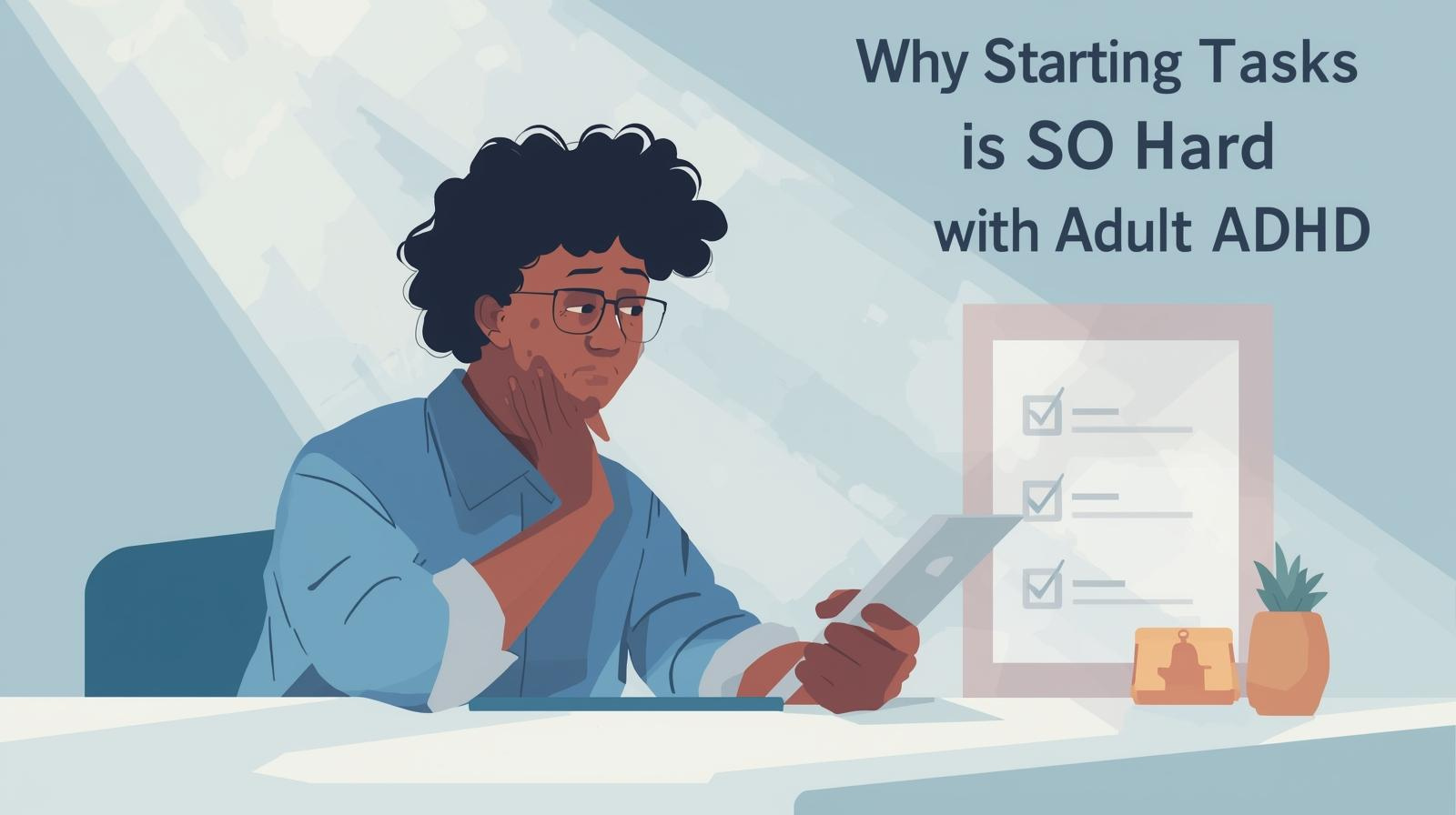
Why Starting Tasks Is So Hard With Adult ADHD
Adults with ADHD often struggle most with starting tasks, not finishing them. Learn how executive dysfunction affects task initiation, why motivation isn’t the solution, and how proper ADHD testing and treatment can help.
For many adults with ADHD, the hardest part of a task isn’t doing it —
it’s starting it.
This is one of the most misunderstood aspects of adult ADHD. From the outside, it can look like procrastination or avoidance. Internally, it feels like being stuck in place, even when you know exactly what needs to be done.
That disconnect is not a motivation problem.
It’s a task initiation problem.
What Task Initiation Really Is
Task initiation is an executive function skill. It allows the brain to:
Shift from intention to action
Activate attention at the right moment
Transition between tasks smoothly
In adults with ADHD, this system doesn’t reliably “turn on” when it should. Knowing what to do doesn’t automatically create the neurological momentum needed to begin.
This is why adults with ADHD often describe feeling “frozen” or “paralyzed” at the start of tasks — even important ones.
Many adults who struggle with task paralysis also experience a broader sense of mental overload. This feeling of being constantly behind or unable to catch up is often connected to the way ADHD affects executive functioning. If you want to understand this pattern in more detail, you can learn more about why adults with ADHD feel overwhelmed and how treatment can help.
Why Motivation Isn’t the Fix
Many people are told they just need more motivation, better discipline, or stronger routines. But motivation is unreliable in ADHD because it’s not the primary driver of action.
ADHD brains rely more heavily on:
Interest
Urgency
External structure
Emotional engagement
When those elements are missing, starting feels nearly impossible — no matter how much someone wants to begin.
The Role of Emotional Load
Task initiation becomes even harder when a task carries emotional weight.
If a task feels:
Overwhelming
Unclear
Tied to past failures
High-stakes
The nervous system may interpret it as a threat rather than a neutral activity. That triggers avoidance — not because of fear or laziness, but because the brain is trying to protect itself from overload.
What Actually Helps With Starting
Effective ADHD treatment focuses on reducing the friction at the starting line.
This often includes:
Supporting executive function directly
Lowering cognitive and emotional load
Creating external structure instead of relying on willpower
Addressing nervous system regulation
When ADHD is properly identified and treated, many adults report that starting tasks becomes more manageable — not effortless, but possible.
Care is not about forcing productivity.
It’s about helping the brain engage when it needs to.
At ADHD Philadelphia, care begins with structured telehealth evaluation, with in-person appointments scheduled afterward when appropriate. There are no walk-ins, allowing treatment to remain intentional and individualized.
If starting tasks feels harder than it should, ADHD may be the missing explanation.
Book an ADHD Evaluation
Adults across Pennsylvania and Delaware can schedule an ADHD consultation online.
Learn more and book your ADHD consultation online.

ADHD Burnout Isn’t a Personal Failure — It’s a Nervous System Issue
ADHD burnout is often mistaken for a lack of motivation or resilience. Learn why chronic exhaustion in adults with ADHD is a nervous system issue—and how proper support can help restore balance.
Burnout has a way of turning into self-blame.
Many adults with ADHD don’t just feel tired — they feel ashamed. Ashamed that tasks feel harder. Ashamed that motivation comes and goes. Ashamed that rest doesn’t seem to reset them the way it does for others.
But ADHD burnout isn’t a personal failure. It’s a nervous system issue.
ADHD affects executive functioning — the brain’s ability to regulate attention, emotions, energy, and task initiation. When this system is under constant demand, the result is often chronic stress, emotional exhaustion, and shutdown.
This is why telling yourself to “try harder” doesn’t work. The issue isn’t effort. It’s regulation.
When adult ADHD is properly identified and treated, many people experience:
Less emotional exhaustion
Improved self-compassion
Better pacing of energy
More sustainable focus
Care doesn’t mean pushing harder. It means supporting how your brain actually works.
At ADHD Philadelphia, care begins with a structured telehealth evaluation, followed by in-person appointments when appropriate. There are no walk-ins — care is intentional and individualized.
If you’ve been carrying burnout as a personal flaw, it may be time to look at it differently.
👉 Read more and explore next steps:
https://www.adhdphiladelphia.com/book-a-same-day-appointment
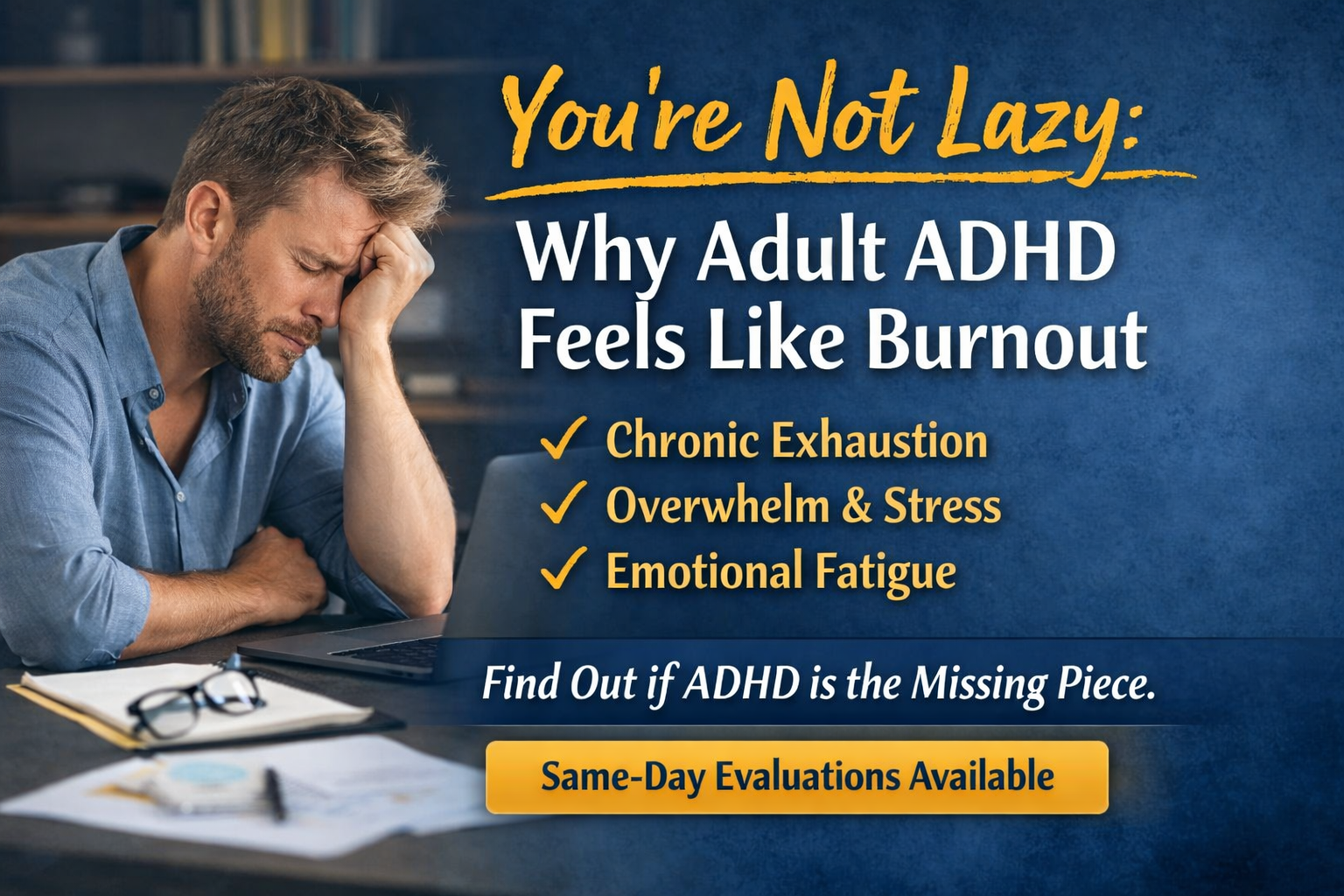
You’re Not Lazy: Why Adult ADHD Feels Like Burnout
Adult ADHD often feels like chronic burnout rather than hyperactivity. Learn why untreated ADHD leads to exhaustion and how proper treatment can restore focus, energy, and emotional balance.
Many adults with ADHD don’t feel hyper — they feel exhausted.
By the time people reach adulthood, ADHD often looks less like excess energy and more like burnout, overwhelm, and emotional fatigue. Tasks feel harder than they should. Motivation comes in short bursts. And no matter how much effort you put in, it never seems consistent.
That’s not a character flaw. It’s executive dysfunction.
Executive function controls planning, task initiation, emotional regulation, and follow-through. When ADHD goes untreated, adults often compensate by overworking, masking symptoms, or pushing themselves until burnout sets in.
This is why so many adults with ADHD are first diagnosed with anxiety or depression. The emotional toll is real — but the root cause is often neurological, not motivational.
When adult ADHD is properly identified and treated, many people report:
Less mental exhaustion
Improved task initiation
Better emotional regulation
A greater sense of control over daily life
At ADHD Philadelphia, care begins with a structured telehealth evaluation, followed by in-person appointments when appropriate. There are no walk-ins — care is intentional and personalized.
If burnout feels like your baseline, ADHD may be the missing piece.
👉 Schedule a same-day ADHD evaluation:
https://www.adhdphiladelphia.com/book-a-same-day-appointment