ADHD and Task Switching: Why Changing Gears Feels Draining for Adults
By Charles Thornton, PMHNP-BC — ADHD Philadelphia
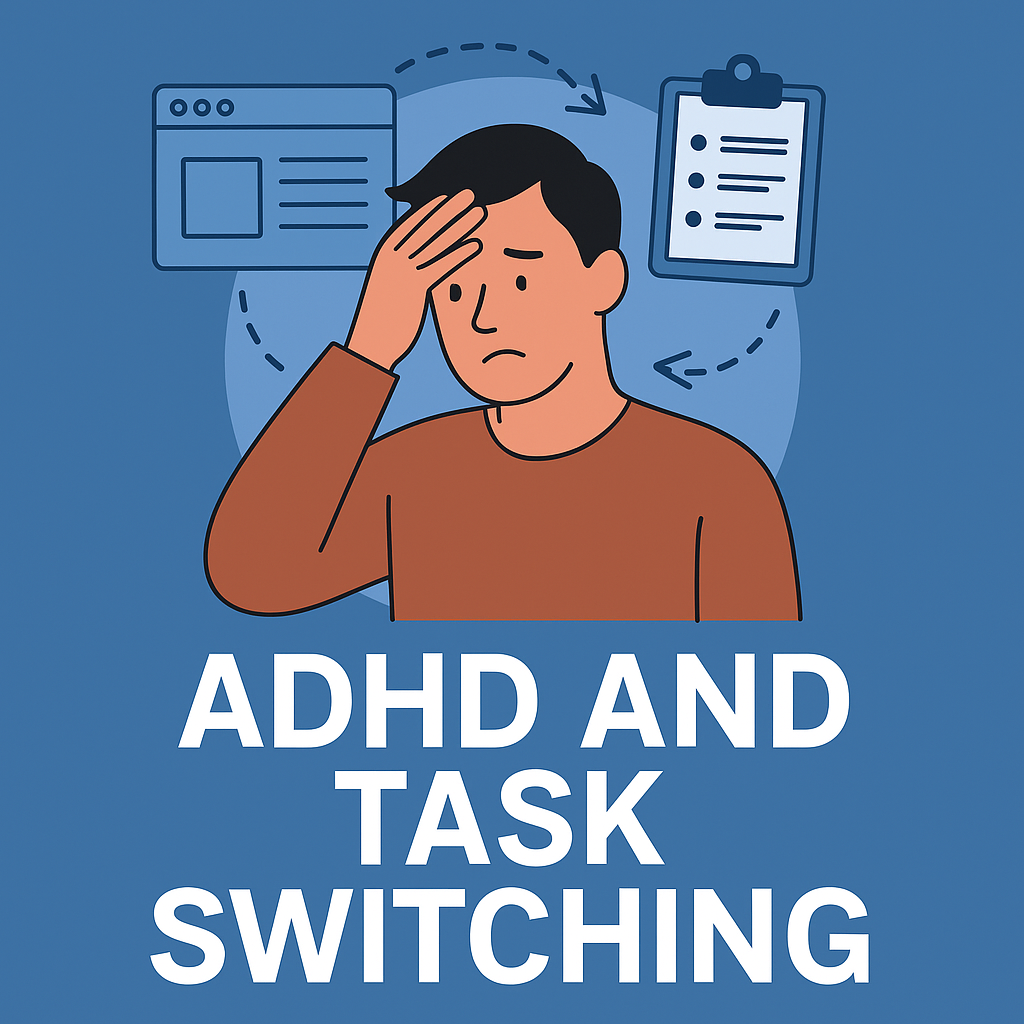
If you have ADHD, jumping between tasks probably feels exhausting.
Even switching from email to a meeting — or from relaxing to doing chores — can feel like you’re “pushing through mental mud.”
This isn’t laziness. It’s a neurobiological challenge.
Research from Russell Barkley, Peg Dawson, and David Nowell confirms that adults with ADHD struggle significantly with task switching, one of the brain’s core executive functions.
At ADHD Philadelphia, we help adults across Pennsylvania and Delaware understand why transitions are so draining — and how to make them easier.
🧠 Why Task Switching Feels Hard in ADHD
1️⃣ The Prefrontal Cortex Has to “Reboot”
The prefrontal cortex (PFC) helps the brain organize, shift, and restart tasks.
In ADHD, the PFC takes longer to disengage from one activity and activate another.
This creates a delay that feels like:
“I can’t get moving.”
“Why is this so hard to start?”
“I feel stuck even though I want to switch tasks.”
2️⃣ Hyperfocus Makes Switching Even Harder
When the ADHD brain is fully engaged, it can lock into a task so tightly that switching out feels physically painful.
Peg Dawson describes this as “executive inertia” — the brain stays glued until external force breaks the cycle.
3️⃣ Working Memory Has to Reload
Task switching forces the brain to drop one mental tab and load a new one.
With limited working memory bandwidth, this feels like a system overload.
Adults often report:
Forgetting what they were switching to
Losing momentum
Feeling frustrated and mentally drained
4️⃣ Dopamine Drops During Transitions
Dr. Nowell explains that ADHD brains rely heavily on dopamine for activation.
When transitioning between tasks:
Dopamine drops
Motivation drops
Mental energy crashes
That’s why even simple switches — like going from couch to dishes — feel disproportionately hard.
🔧 3 Ways to Make Task Switching Easier
1️⃣ The 3-Minute Bridge Technique
Created from executive function research (Dawson):
Before switching tasks, take 3 minutes to close out what you’re doing.
Examples:
Tidy your workspace
Make a quick “next steps” note
Set up the first step of the next task
This creates a cognitive runway instead of a cold start.
2️⃣ Use Transition Anchors
These are small, predictable actions that tell your brain: “We’re switching now.”
Examples:
A glass of water
A 20-second stretch
Walking to another room
Switching background music
Anchors help the PFC re-engage more smoothly.
3️⃣ Use Medication Strategically
Stimulant medication helps the brain maintain dopamine consistency during transitions.
This reduces the “mental crash” when shifting tasks and improves initiation.
Most patients say:
“Switching feels easier.”
“I don’t get stuck in loops as much.”
“I can restart tasks without dread.”
🌱 You Can Learn to Transition More Smoothly
Task switching is a major challenge for adults with ADHD — but with the right tools and treatment, you can learn to shift gears without burnout.
👉 Schedule your ADHD evaluation today
Affordable ADHD testing and ongoing treatment for adults in Pennsylvania and Delaware.