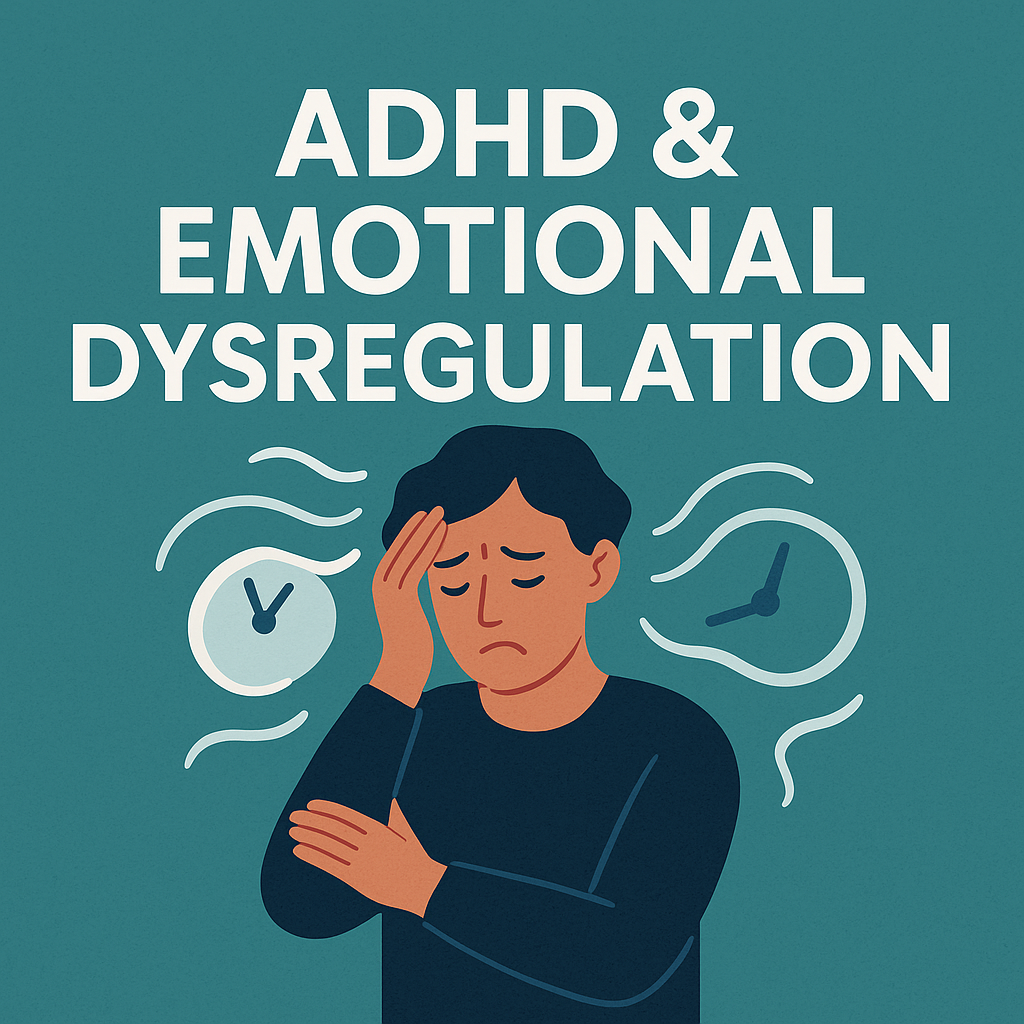
🧠 ADHD and Emotional Dysregulation: Why Your Reactions Feel Bigger Than the Situation. By Charles Thornton, PMHNP-BC — ADHD Philadelphia
Emotional dysregulation is a core but often overlooked symptom of adult ADHD. Learn why emotions feel intense, fast, and overwhelming—and how treatment helps adults regain emotional balance.
Do your emotions ever feel like they arrive at full volume—without warning?
Do small frustrations turn into big reactions before you can stop them?
Do you calm down later and think, “Why did I react like that?”
This isn’t immaturity or lack of self-control.
It’s emotional dysregulation, a core feature of adult ADHD that often goes unrecognized.
At ADHD Philadelphia, I help adults across Pennsylvania and Delaware understand why ADHD affects emotional regulation—and how treatment can dramatically reduce emotional overwhelm.
🧠 What Is Emotional Dysregulation?
Emotional dysregulation refers to difficulty with:
controlling emotional intensity
slowing emotional reactions
shifting from one emotional state to another
calming the nervous system after activation
Adults with ADHD don’t just feel emotions — they feel them faster, stronger, and longer.
🔬 Why ADHD Makes Emotions Feel Bigger
1️⃣ The Prefrontal Cortex Has Less “Brake Power”
The prefrontal cortex helps regulate emotions.
In ADHD, this system activates less efficiently, making it harder to pause, reflect, or modulate reactions in the moment.
Emotion arrives before logic can catch up.
2️⃣ The Amygdala Reacts More Strongly
The amygdala (the brain’s alarm center) fires more quickly in ADHD, interpreting situations as more urgent or threatening than they are.
This leads to:
quick frustration
sudden anger
intense sadness
emotional shutdown
3️⃣ Emotions Shift Faster Than Recovery Time
ADHD brains move quickly from one emotion to another—but recovery lags behind.
This causes:
emotional whiplash
lingering reactions
feeling “stuck” emotionally
4️⃣ Rejection Sensitivity Amplifies Emotional Pain
Many adults with ADHD experience Rejection Sensitive Dysphoria (RSD).
Neutral feedback can feel deeply personal or rejecting, triggering outsized emotional responses.
🧩 How Emotional Dysregulation Shows Up in Daily Life
Adults with ADHD may experience:
snapping during minor stress
crying unexpectedly
shutting down during conflict
regret after emotional reactions
difficulty letting things go
relationship tension
workplace misunderstandings
These patterns often create shame—but they are neurological, not character flaws.
🔧 Tools That Help Regulate Emotions in ADHD
1️⃣ Slow the Nervous System First
Emotion regulation starts in the body, not the mind.
Helpful tools include:
paced breathing
grounding exercises
cold water on the face
brief movement or stretching
These calm the amygdala so thinking can return.
2️⃣ Create a “Pause Buffer”
Build in a pause before responding:
count to 10
take one deep breath
step away briefly
This gives the prefrontal cortex time to engage.
3️⃣ Name the Emotion
Labeling emotions (“I’m frustrated,” “I feel overwhelmed”) reduces intensity by activating regulatory brain networks.
4️⃣ Reduce Baseline Overload
Emotional regulation worsens when you’re:
tired
hungry
overstimulated
overwhelmed
Managing sleep, nutrition, and workload improves emotional control.
5️⃣ Medication Can Help Stabilize Emotions
ADHD medication improves:
emotional regulation
impulse control
reaction time
recovery after emotional spikes
Many adults report fewer emotional “blow-ups” and faster calming.
🌱 Emotional Balance Is Possible
Emotional dysregulation is one of the most validating symptoms to treat.
When adults understand what’s happening in their brain, shame decreases—and emotional control improves.
👉 Schedule your adult ADHD evaluation today
Serving adults throughout Pennsylvania and Delaware via telehealth.

🎯 ADHD and Imposter Syndrome: Why High-Achieving Adults Still Feel “Not Good Enough”. By Charles Thornton, PMHNP-BC — ADHD Philadelphia
Imposter syndrome is common in adults with ADHD—even among high achievers. Learn why ADHD creates chronic self-doubt, overcompensation, and fear of being “found out,” and how treatment helps rebuild confidence.
Many adults with ADHD are incredibly capable.
Some are top performers at work.
Some are praised as “brilliant but inconsistent.”
Some people assume they “have it all together.”
And yet… they privately feel like frauds.
This experience is so common that researchers call it ADHD-Imposter Syndrome — a blend of self-doubt, fear of being exposed, and chronic worry that success isn’t deserved.
At ADHD Philadelphia, I help adults across Pennsylvania and Delaware understand why this happens and how to break the cycle.
🧠 Why ADHD Fuels Imposter Syndrome
1️⃣ Years of Masking Create a Hidden Identity Split
Adults with ADHD spend years compensating by:
overworking
pre-planning every detail
double-checking everything
hiding struggles with focus or memory
pretending tasks are easy
Masking leads to the feeling:
“If anyone knew how hard this is for me, they’d think I’m incompetent.”
2️⃣ Inconsistent Performance Feels Like Personal Failure
ADHD causes variability: some days high-output, other days struggling with basics.
This inconsistency feeds the belief:
“My success was luck.”
“I only performed well because I tried 10x harder.”
“If I can’t do it every time, I don’t deserve credit.”
3️⃣ Emotional Intensity Amplifies Self-Doubt
ADHD intensifies emotions — including fear, embarrassment, or criticism.
So even small mistakes feel like proof of inadequacy.
A minor oversight → emotional spiral → “I’m not good enough.”
4️⃣ Rejection Sensitivity (RSD) Makes Criticism Feel Like Threat
RSD can cause adults with ADHD to interpret neutral feedback as catastrophic, reinforcing the narrative of being an imposter.
This leads to avoidance, people-pleasing, or perfectionism.
5️⃣ Working Memory Gaps Get Misinterpreted as Intelligence Gaps
Forgetting something simple? Losing a train of thought mid-conversation?
Non-ADHD adults shrug it off.
Someone with ADHD thinks:
“I must not be capable.”
But it’s neurological — not character-based.
🔧 How to Break ADHD-Imposter Syndrome
1️⃣ Externalize the Struggle (Not the Self-Worth)
Shift the inner narrative from:
❌ “I’m not capable.”
to
✔️ “My executive function creates challenges, but I can still succeed.”
This reduces shame and improves resilience.
2️⃣ Track Success, Not Just Errors
ADHD brains remember failures more vividly.
Create a “Win Log” — a list of accomplishments, even small ones.
Review weekly to rebalance your perspective.
3️⃣ Reduce Masking by Asking for Micro-Accommodations
Such as:
getting agendas before meetings
using written instructions
chunking complex tasks
scheduling focus blocks
These reduce burnout and increase confidence.
4️⃣ Reframe Variability as Part of ADHD, Not a Flaw
Performance fluctuation is expected with ADHD.
Medical treatment and structured tools decrease the swings.
5️⃣ Consider Medication
Medication often provides:
more consistent output
fewer attention lapses
reduced emotional overwhelm
improved task initiation
This directly reduces imposter syndrome triggers.
🌱 You Are Not a Fraud — You’re an Adult With ADHD
Imposter syndrome is not failure — it’s a reflection of how hard you've worked to succeed despite neurological challenges.
With proper treatment and tools, adults with ADHD learn to:
trust their abilities
value their achievements
stop overcompensating
build sustainable confidence
👉 Schedule your ADHD evaluation today
Serving adults across Pennsylvania and Delaware.
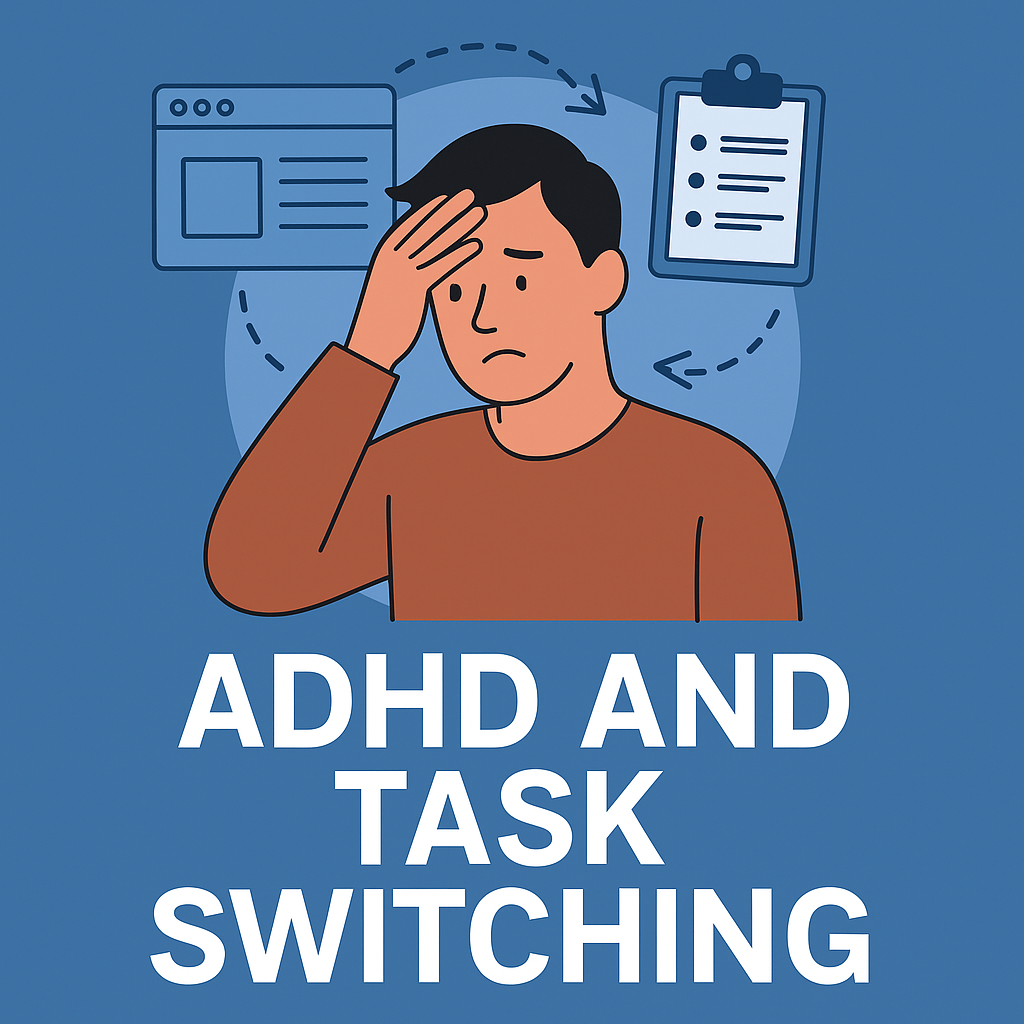
ADHD and Task Switching: Why Changing Gears Feels Draining for Adults
ADHD makes switching tasks feel exhausting because the brain struggles to shift attention and re-engage. Learn why task switching drains adults with ADHD and how to make transitions easier with science-backed tools.
By Charles Thornton, PMHNP-BC — ADHD Philadelphia
If you have ADHD, jumping between tasks probably feels exhausting.
Even switching from email to a meeting — or from relaxing to doing chores — can feel like you’re “pushing through mental mud.”
This isn’t laziness. It’s a neurobiological challenge.
Research from Russell Barkley, Peg Dawson, and David Nowell confirms that adults with ADHD struggle significantly with task switching, one of the brain’s core executive functions.
At ADHD Philadelphia, we help adults across Pennsylvania and Delaware understand why transitions are so draining — and how to make them easier.
🧠 Why Task Switching Feels Hard in ADHD
1️⃣ The Prefrontal Cortex Has to “Reboot”
The prefrontal cortex (PFC) helps the brain organize, shift, and restart tasks.
In ADHD, the PFC takes longer to disengage from one activity and activate another.
This creates a delay that feels like:
“I can’t get moving.”
“Why is this so hard to start?”
“I feel stuck even though I want to switch tasks.”
2️⃣ Hyperfocus Makes Switching Even Harder
When the ADHD brain is fully engaged, it can lock into a task so tightly that switching out feels physically painful.
Peg Dawson describes this as “executive inertia” — the brain stays glued until external force breaks the cycle.
3️⃣ Working Memory Has to Reload
Task switching forces the brain to drop one mental tab and load a new one.
With limited working memory bandwidth, this feels like a system overload.
Adults often report:
Forgetting what they were switching to
Losing momentum
Feeling frustrated and mentally drained
4️⃣ Dopamine Drops During Transitions
Dr. Nowell explains that ADHD brains rely heavily on dopamine for activation.
When transitioning between tasks:
Dopamine drops
Motivation drops
Mental energy crashes
That’s why even simple switches — like going from couch to dishes — feel disproportionately hard.
🔧 3 Ways to Make Task Switching Easier
1️⃣ The 3-Minute Bridge Technique
Created from executive function research (Dawson):
Before switching tasks, take 3 minutes to close out what you’re doing.
Examples:
Tidy your workspace
Make a quick “next steps” note
Set up the first step of the next task
This creates a cognitive runway instead of a cold start.
2️⃣ Use Transition Anchors
These are small, predictable actions that tell your brain: “We’re switching now.”
Examples:
A glass of water
A 20-second stretch
Walking to another room
Switching background music
Anchors help the PFC re-engage more smoothly.
3️⃣ Use Medication Strategically
Stimulant medication helps the brain maintain dopamine consistency during transitions.
This reduces the “mental crash” when shifting tasks and improves initiation.
Most patients say:
“Switching feels easier.”
“I don’t get stuck in loops as much.”
“I can restart tasks without dread.”
🌱 You Can Learn to Transition More Smoothly
Task switching is a major challenge for adults with ADHD — but with the right tools and treatment, you can learn to shift gears without burnout.
👉 Schedule your ADHD evaluation today
Affordable ADHD testing and ongoing treatment for adults in Pennsylvania and Delaware.