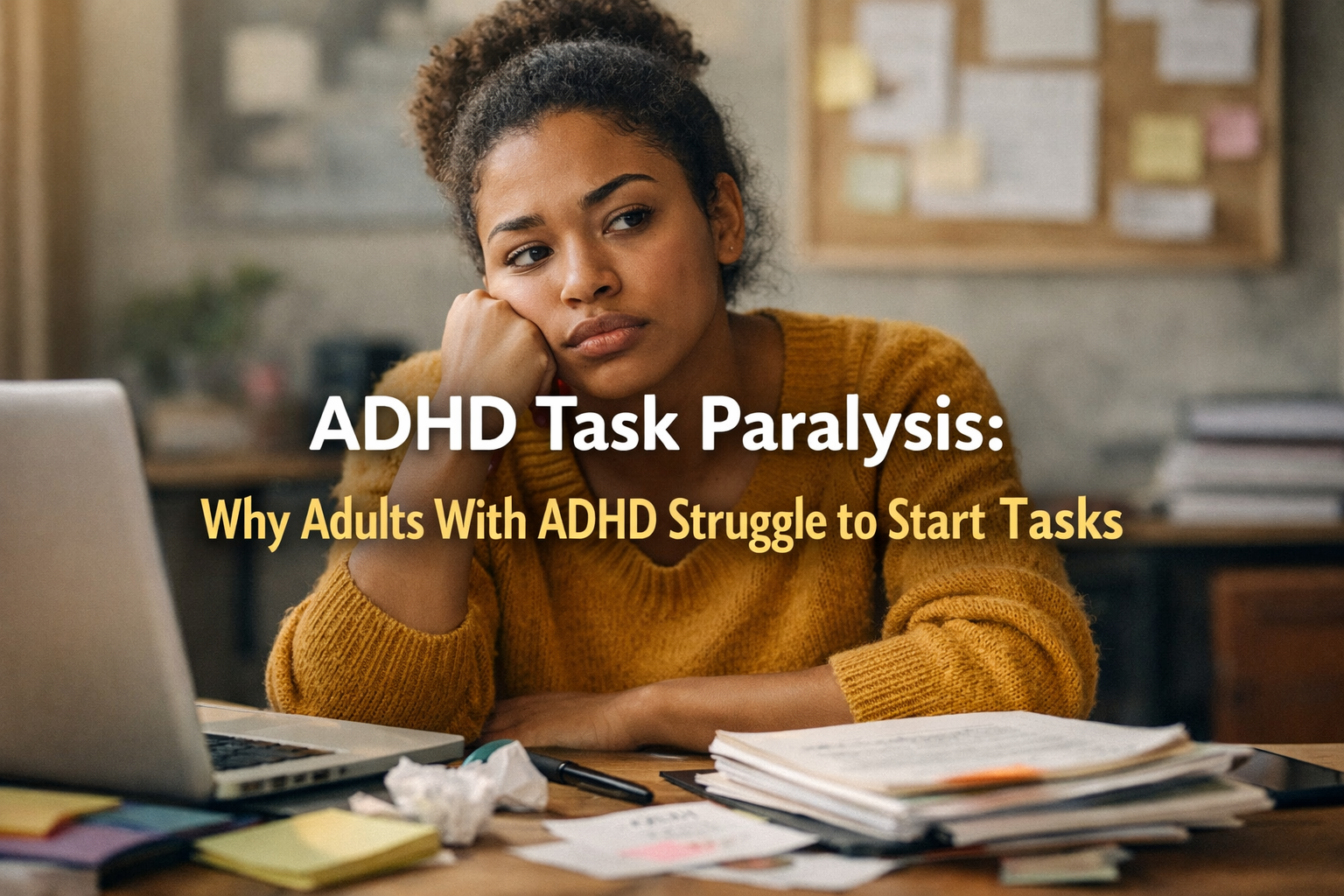
ADHD Task Paralysis: Why Adults With ADHD Struggle to Start Tasks
Adults with ADHD often experience task paralysis — the frustrating feeling of being mentally stuck when trying to start tasks. Understanding why ADHD affects executive functioning can help individuals seek evaluation and treatment.
Many adults with ADHD describe a frustrating experience that others often misunderstand.
They know what needs to be done.
They want to do it.
But somehow, they still cannot start.
This experience is often called ADHD task paralysis.
It is not laziness. It is not lack of motivation. It is a neurological difficulty related to executive functioning, the brain’s system for planning, prioritizing, initiating, and completing tasks.
For many adults, task paralysis becomes one of the most disabling symptoms of undiagnosed ADHD and contributes to the constant feeling of overwhelm many adults describe. You can learn more about this pattern in our guide on why adults with ADHD feel overwhelmed and how treatment can help.
What Is ADHD Task Paralysis?
Task paralysis refers to the inability to initiate tasks despite knowing they are important.
Adults with ADHD often experience:
• difficulty starting work projects
• avoiding emails or paperwork
• delaying simple household tasks
• procrastinating important responsibilities
• feeling mentally frozen when overwhelmed
This occurs because ADHD affects the brain’s self-management system, particularly the executive functions responsible for planning and task initiation.
Executive functioning helps people:
• decide what to do first
• organize steps
• begin tasks
• maintain focus
• finish activities
When these processes are impaired, even simple tasks can feel impossible to start.
If difficulty starting tasks has been a long-standing challenge, a structured ADHD testing and evaluation for adults in Pennsylvania and Delaware can help determine whether ADHD may be contributing to these patterns.
Why ADHD Makes Starting Tasks So Difficult
Several neurological and psychological factors contribute to ADHD task paralysis.
1. Executive Function Impairment
ADHD affects the brain’s executive function system, which controls planning, working memory, and task initiation.
Without strong executive functioning, the brain struggles to move from intention to action.
2. Overwhelm From Too Many Steps
Adults with ADHD often see the entire project at once rather than breaking it into steps.
For example:
Instead of thinking:
“Send one email”
the brain sees:
• open laptop
• find email
• write message
• respond to questions
• deal with consequences
This cognitive overload leads to mental shutdown.
3. Dopamine and Motivation Differences
ADHD brains process dopamine differently, affecting motivation and reward systems.
Tasks that are:
• repetitive
• boring
• unclear
• long-term
may not generate enough stimulation for the brain to begin.
4. Fear of Failure or Mistakes
Many adults with ADHD have experienced years of criticism about productivity or organization.
This can lead to:
• perfectionism
• avoidance
• anxiety about starting
The result is often procrastination that feels involuntary.
Common Signs of ADHD Task Paralysis
Adults may notice patterns such as:
• staring at a task for long periods without starting
• waiting until the last minute to complete work
• avoiding emails, calls, or paperwork
• feeling overwhelmed by simple responsibilities
• spending hours thinking about tasks but not beginning them
Many adults assume these problems are personal failures, when in reality they are often symptoms of untreated ADHD.
Because ADHD symptoms can overlap with anxiety and stress, it can also be helpful to understand the difference between ADHD and anxiety in adults.
How ADHD Treatment Can Help
The good news is that task paralysis can improve significantly with proper treatment.
Treatment for adult ADHD often includes:
ADHD Evaluation
A structured assessment can determine whether symptoms meet criteria for ADHD according to modern diagnostic guidelines.
Medication Treatment
Research consistently shows that stimulant medications and certain non-stimulant medications are among the most effective treatments for ADHD symptoms, including attention regulation and task initiation.
Executive Function Strategies
Adults often benefit from learning practical strategies for:
• breaking tasks into smaller steps
• creating external structure
• improving time awareness
• reducing overwhelm
When to Consider ADHD Testing
Adults should consider an ADHD evaluation if they experience:
• chronic procrastination
• difficulty starting tasks
• frequent overwhelm
• problems finishing projects
• workplace or academic struggles
These symptoms may have been present since childhood but become more noticeable in adulthood when responsibilities increase.
If you are unsure what the evaluation process involves, you can read more about how adults get tested for ADHD and what a structured assessment typically includes.
ADHD Testing and Treatment in Pennsylvania and Delaware
If you believe ADHD task paralysis may be affecting your work, school, or daily life, professional evaluation can help provide clarity.
ADHD Philadelphia offers adult ADHD testing and treatment for individuals located in Pennsylvania and Delaware through structured telehealth appointments.
If ADHD symptoms such as task paralysis, overwhelm, or chronic procrastination are affecting your daily life, you can book an ADHD evaluation online at ADHDPhiladelphia.com.